
Tessellated Tile Services in Adelaide CBD
Adelaide CBD brings together early colonial, Victorian, Federation and later city buildings within a busy metropolitan setting. For a tiled entry, verandah, pathway or interior floor, the right approach starts with the property itself: existing patterns, edges, substrate condition, access and the relationship between original fabric and new work. AHTC can help Adelaide CBD property owners consider tessellated tile design, supply, installation, restoration and stone bullnose or edging coordination.
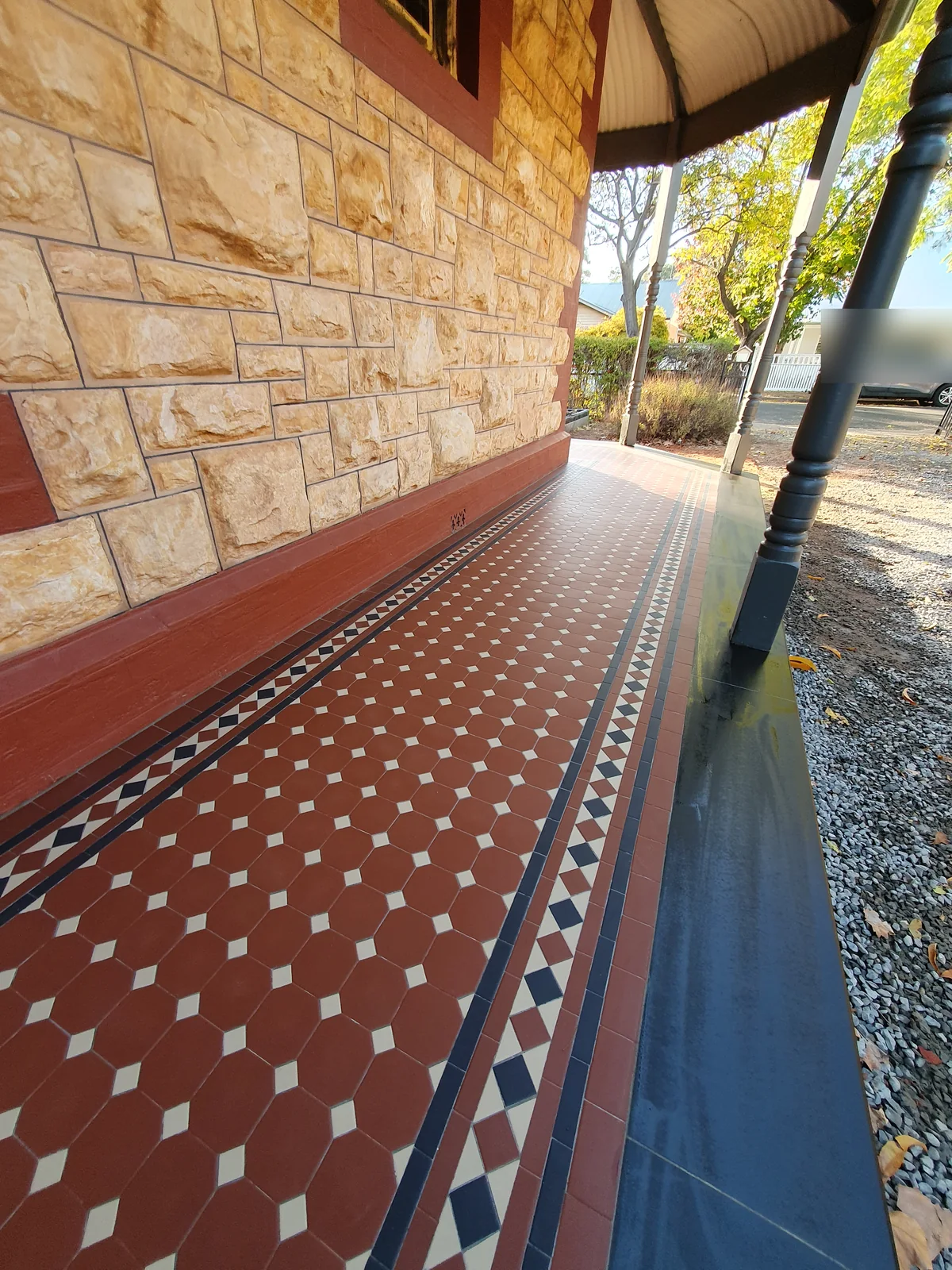
Working with Adelaide CBD's varied built fabric
The City of Adelaide's architectural guide describes a city shaped by several periods, from Settlement and Colonial buildings through Victorian, Federation/Edwardian, Inter-War, Post War/Modern and contemporary work. It also notes that styles can overlap, so a building should not be dated from one visual feature alone. For tiling, that makes proportion, border treatment, colour relationships and the surviving details around a floor or entry more useful starting points than an assumed style label.
Materials recorded in the city's architectural context include limestone, bluestone, sandstone, brick, timber, slate, corrugated iron, cast iron, stucco and render. Those surrounding materials can influence how a tessellated layout reads at a threshold, along a verandah or beside a masonry wall. The design conversation can therefore consider the whole setting rather than treating the tile pattern as an isolated finish.
Adelaide CBD is a central part of metropolitan Adelaide and includes residential, commercial, civic and mixed-use properties. Access, staging and the need to keep adjoining surfaces protected can matter as much as the selected pattern. An initial discussion can clarify whether the brief is a new installation, a carefully matched extension or restoration of an existing tiled area.
Check the particular property before changing existing fabric
PlanSA explains that South Australia's heritage and character settings include different overlays and categories, including State Heritage, Local Heritage, Historic Area, Character Area and Representative Buildings. These settings do not mean every building in Adelaide CBD has the same controls. Before removing, covering or altering older tilework, check the property's applicable planning and heritage information and obtain independent advice about any approval pathway that may apply.
A heritage-sensitive tiling brief can record what remains, identify areas that should be retained, and separate repair from new work. Where a pattern, border or edge is incomplete, careful documentation and proportion-led design can help a new section sit comfortably with the existing floor without pretending that all historic buildings share one standard treatment.
AHTC's role is to discuss design, tessellated tile supply, installation and restoration options for the property. Heritage status and planning decisions remain matters for the relevant authority and the owner or project team to confirm.
Plan a practical CBD tiling brief
Useful early information includes photographs of the existing area, approximate dimensions, the intended use, access constraints and any known history of the floor. For a verandah or pathway, the conversation can cover border proportions, transitions and how the layout meets steps, thresholds or other finishes. For an interior floor, it can focus on the visual rhythm of the room and the condition of the surface beneath the tiles.
Where an existing pattern is being restored or extended, matching should be approached as a site-specific assessment rather than a promise of an exact result before the tilework is inspected. AHTC can help coordinate design decisions with supply, installation, restoration and stone bullnose or edging requirements for an Adelaide CBD property.
Your Heritage Tiling Questions
Does every Adelaide CBD property have heritage protection?
No. South Australian planning guidance separates State Heritage, Local Heritage, Historic Area, Character Area and Representative Building settings. The applicable status and controls need to be checked for the particular property and proposed work rather than assumed from its age or location.
Can tessellated tiles suit a contemporary Adelaide CBD property?
They can, provided the layout responds to the building and the brief. Adelaide's documented architectural context includes both historic and contemporary work, so pattern scale, border treatment, colour and the transition to adjoining finishes should be considered together.
What should I send before discussing a CBD tile project?
Photographs, approximate dimensions, the location of the work, access information and any known history of the existing tiles are useful starting points. If the property may be heritage-listed or within a character or historic area, include any planning information you already have so the design conversation can remain property-specific.
Can an existing Adelaide CBD tessellated floor be repaired or extended?
That depends on the condition of the surviving tiles, the substrate, the pattern and the relationship between the original area and the proposed work. An inspection or clear preliminary photographs can help distinguish restoration, selective repair and new work before a layout and supply approach is chosen.
Discuss Your Heritage Tiling Project
Share your location, project details and photographs using our enquiry form, or call 0433 932 711.