
Tessellated tile services in Mile End
Mile End sits in Adelaide's inner west within the City of West Torrens. For a verandah, entrance, pathway or interior floor, tessellated tile choices work best when they respond to the home's proportions, existing materials and the way the property is used. AHTC can help with design consultation, tessellated tile supply, installation, restoration and stone bullnose or edging coordination.
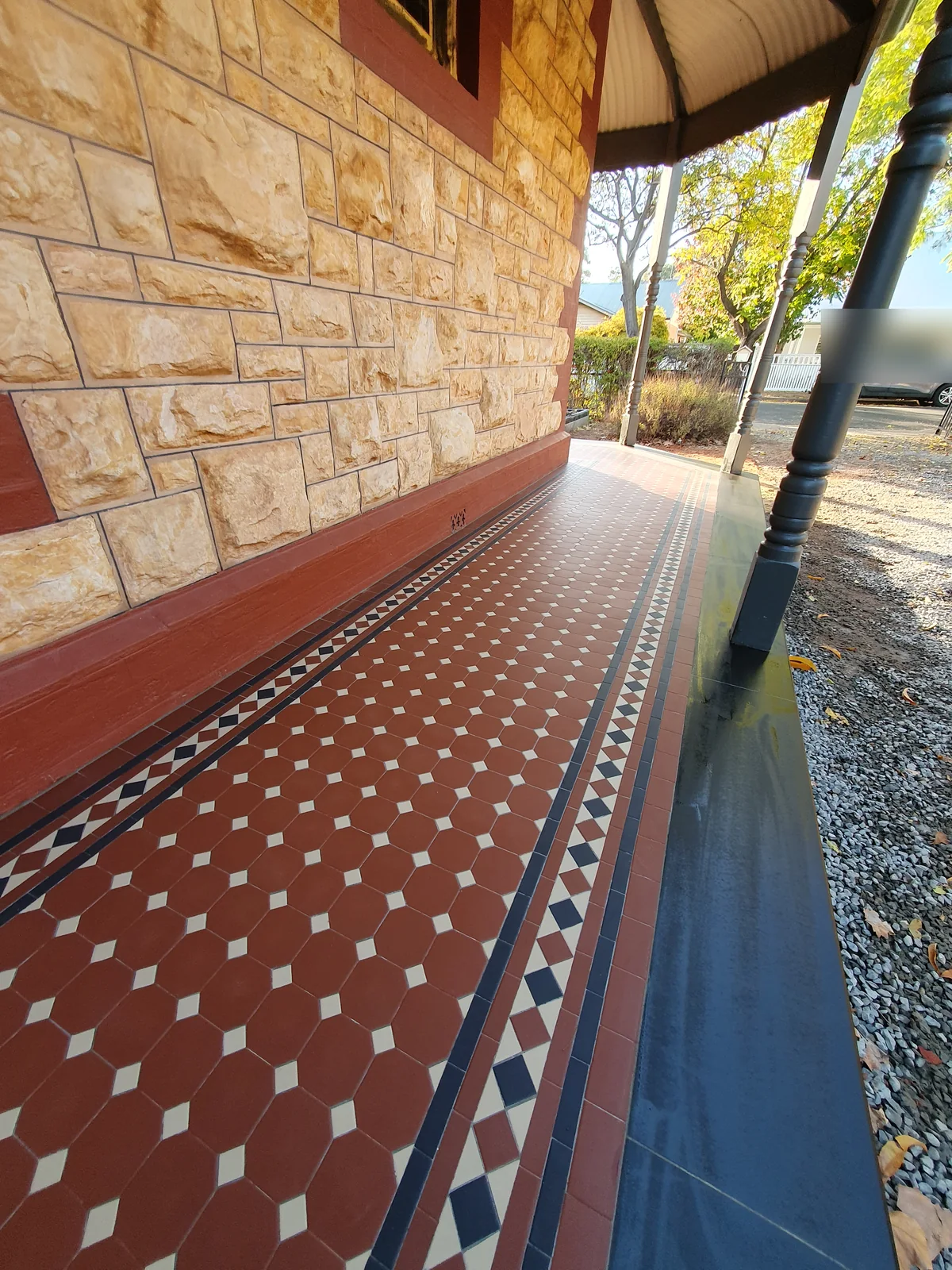
Reading Mile End's architectural context
The South Australian Government's metropolitan map places Mile End in its City West area, while the City of West Torrens records the suburb within its local government area. The wider district has developed through residential growth alongside pockets of secondary industry, so a site visit or clear photographs are useful when deciding whether new tilework should echo an existing frontage or provide a quieter transition to a later addition.
A PlanSA fact sheet for the Mile End historic area describes a local context spanning the 1860s to the 1920s. It identifies Victorian villas, semi-detached dwellings and single-fronted cottages alongside bungalows, inter-war art deco dwellings and parapeted shopfronts. This is a description of the identified historic-area context, not a claim that every Mile End property has the same age, style or protection status.
Design decisions for verandahs, paths and entries
For a front verandah or entry, begin with the width of the space, the direction of approach and the details already visible at the threshold. A border, central field or restrained repeat can clarify the path to the door without competing with a bay window, gable, parapet or existing paving. On a pathway, proportions and transitions matter as much as the tile pattern, particularly where a new surface meets steps, garden edges or an older threshold.
The Mile End historic-area description notes low front fencing, tree-lined streets, generous side and rear setbacks and additions generally placed to the side or rear within the described area. Where those qualities remain at a property, tile layout and edging can be planned to sit comfortably within the established frontage rather than drawing attention away from the dwelling. Final selections still depend on the actual site, substrate, drainage and retained fabric.
Restoring existing tessellated floors carefully
Existing tessellated floors should be assessed before any replacement decision is made. The useful questions include which tiles remain, whether the pattern is legible, how edges and thresholds have changed, and whether localised repair can retain more of the original surface than broad removal. Matching colour and geometry is a design and supply exercise as well as a condition assessment.
Council's heritage review distinguishes formal heritage listing from general historic interest and explains that additional planning policies apply to listed places. If a property is listed or falls within a relevant planning area, confirm the applicable requirements for that property before work begins. Heritage-sensitive tile advice should support that check, not imply council approval or heritage endorsement.
Plan a Mile End tile enquiry
Useful enquiry details include the part of the property involved, approximate dimensions, photographs of the existing floor or threshold, and whether the priority is restoration, a new installation or coordinated supply. For a heritage-sensitive project, note any known planning or listing information and identify fabric that should remain undisturbed while options are reviewed.
Design consultation can then connect the pattern, tile supply, installation approach and any stone bullnose or edging coordination to the actual property rather than assuming a universal period style or construction method.
Your Heritage Tiling Questions
Are all Mile End homes heritage-listed?
No. The City of West Torrens explains that heritage listing is formal legal recognition of a particular place and that extra planning policies apply to listed properties. A property's own listing and planning position should be checked before making changes; the suburb's historic-area context does not automatically apply to every home.
Which parts of a Mile End property can suit tessellated tiles?
Verandahs, entry thresholds, pathways and selected interior floors can all be considered. The right layout depends on proportions, existing materials, access, drainage and how the new work meets retained surfaces. A border or central repeat may suit a formal entry, while a simpler transition can be more appropriate beside a later addition.
Can an existing tessellated floor be repaired instead of replaced?
Often that is the first question worth assessing, but the answer depends on the surviving tiles, pattern, edge condition, substrate and the extent of movement or damage. A careful review can identify whether localised restoration and matching supply are practical before broader replacement is considered.
What should I provide when asking about Mile End tile work?
Share the suburb, the location of the proposed work, approximate measurements, clear photographs and whether you are seeking restoration, new installation, design consultation or supply. If the property is listed or within a planning overlay, include that information so the design discussion can remain property-specific.
Discuss Your Heritage Tiling Project
Share your location, project details and photographs using our enquiry form, or call 0433 932 711.