
Tessellated Tiles in Walkerville
Walkerville's village centre and residential streets bring together verandah-fronted shops, attached dwellings, early cottages and larger Victorian-era homes. Authentic Heritage Tiling Co can help you plan tessellated tile layouts, supply, installation or restoration with the property's scale, existing fabric and intended use in view.
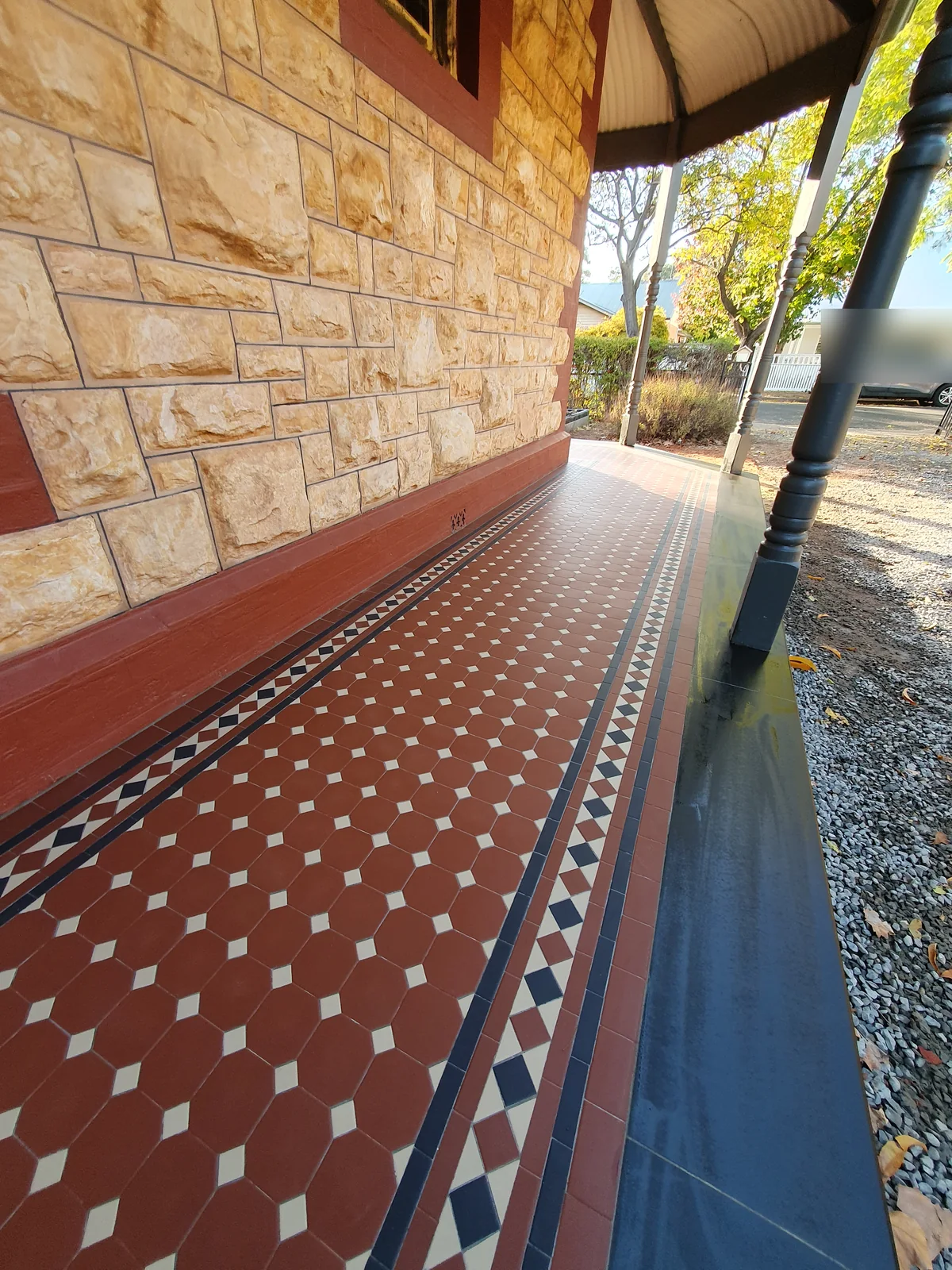
Tiling that responds to Walkerville's built character
Walkerville Terrace grew as a local service and retail strip, while nearby residential areas retain a varied architectural record. The heritage survey describes simple early cottages in stone and brick as well as Victorian masonry homes with verandahs and more elaborate detailing. That variation makes a measured, property-led approach more useful than treating every Walkerville home as if it shared one period style.
For a new verandah, porch or pathway, tile proportions, border treatment, thresholds and stone bullnose or edging can be coordinated with the building's lines and the way the space is used. For an older tiled area, the first step is to understand what remains, what is damaged and which elements are intended to stay visible before discussing replacement or selective restoration.
Heritage-sensitive decisions for a Walkerville property
The Town of Walkerville and South Australian planning material recognise local and State heritage overlays. A heritage reference in the area does not by itself establish that a particular home is listed, so property-specific checks should be made before external changes are settled. Where a property is listed or sits within an applicable historic setting, keep the design discussion focused on retaining significant fabric, recording existing patterns and selecting compatible new work rather than assuming a standard tile treatment.
The council's heritage information also emphasises minimal physical impact on heritage fabric for plaque installation. The same care is sensible when considering tile removal, fixing, transitions or edging: identify the surface, document its condition and clarify any approval pathway with the relevant authority before work begins.
Plan the service around the space
A Walkerville project may involve design consultation, tessellated tile supply, installation, restoration or coordination of stone bullnose and edging. The appropriate sequence depends on whether the work is a new layout, a repair to surviving tiles or a transition between old and new surfaces. Photos and dimensions can help frame the initial discussion, followed by a closer review of the existing substrate and surrounding architectural details where needed.
For verandahs and paths, consider the approach from the street, door thresholds, drainage and the visual relationship between field tiles and borders. For an interior or enclosed entry, assess how the pattern meets adjacent rooms and whether surviving tiles should remain the reference for colour, scale and layout.
Your Heritage Tiling Questions
Does every Walkerville property have heritage protection?
No. Walkerville contains heritage-listed places and areas where heritage overlays may apply, but the status of an individual property must be checked specifically. A suburb's historic character is not the same as a blanket listing for every home.
Can tessellated tiles suit a Walkerville verandah or pathway?
They can be considered where the layout suits the building and the site's practical requirements. Walkerville's documented streetscapes include verandah-fronted shops and homes, while the heritage survey records tessellated verandah flooring in a late-Victorian residence. The pattern, border, transitions and surface condition still need to be assessed for the particular property.
What should I check before changing tiles on an older Walkerville home?
Record the existing pattern and condition, identify whether the property or area is heritage listed or affected by an overlay, and ask the relevant planning authority whether approval is needed. A design and restoration discussion can then distinguish retained fabric from new work.
Can old and new tessellated tiles be coordinated?
Often the starting point is to compare the surviving tiles' scale, colours, border logic and setting with the proposed area. The final approach should be based on the property's fabric and the intended distinction between repair, matching and new work rather than assuming an exact match is always possible.
Discuss Your Heritage Tiling Project
Share your location, project details and photographs using our enquiry form, or call 0433 932 711.