
Tessellated Tiles Ballarat East
Ballarat East's streets and homes reflect a layered goldfields history, from modest timber cottages and verandahs to civic and cultural buildings along established avenues. For a new tessellated floor, verandah or pathway, the proportions, edges and transitions should respond to the individual property rather than treating every period home alike. We can discuss design, tessellated tile supply, installation, restoration and stone bullnose or edging coordination for work in Ballarat East.
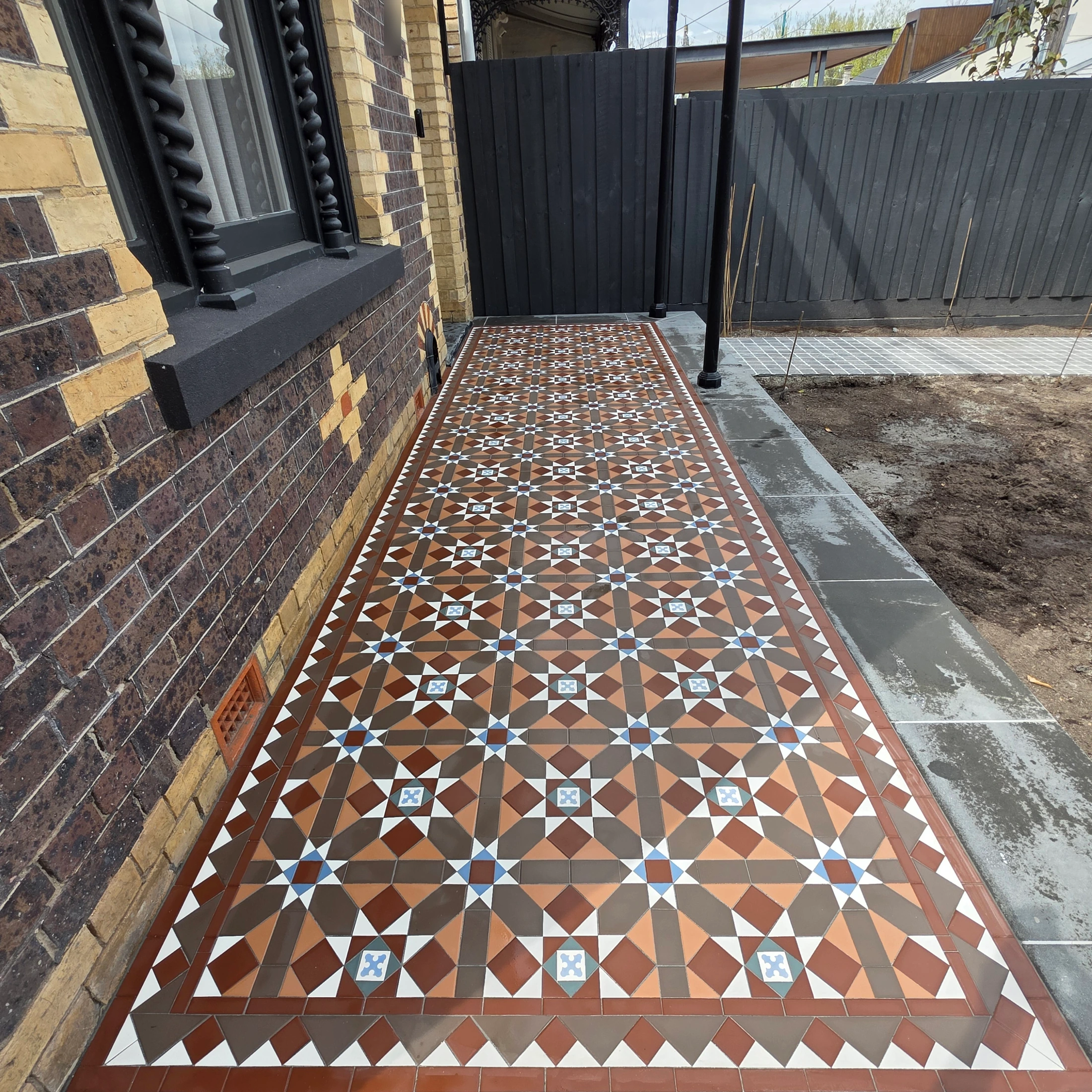
Tiling with Ballarat East's varied streetscape in mind
Ballarat East is not a single uniform housing style. Local studies describe older weatherboard properties, modest single-storey cottages, established trees, grass verges and bluestone drainage features, alongside later housing and civic buildings. That variety makes the home's scale, entry sequence and existing materials important starting points for a tiling decision.
A verandah or front path can be designed to sit comfortably with a small cottage, a larger Victorian or Federation-era residence, or a later alteration. We look at the relationship between the threshold, steps, garden edges and existing hard surfaces so a new pattern adds clarity without overwhelming the building.
Design choices for cottages, verandahs and pathways
The civic and Victoria Street precinct records refer to single-storey cottages, hipped and gabled roofs, verandahs, chimneys, timber or brick construction, mature trees and varied allotment patterns. These details can inform a restrained layout: a border that follows the geometry of the threshold, a scale that suits the room or verandah, and transitions that respect existing steps and garden levels.
Where an older surface survives, its condition and relationship to the building should be understood before removal. Matching or complementing an existing colour rhythm may be more appropriate than imposing a new decorative scheme. A property-specific review is especially sensible where a home sits within a heritage precinct or may be affected by a Heritage Overlay.
Restoration, supply and installation planning
Restoration starts with understanding what remains: loose or cracked tiles, worn thresholds, previous repairs, moisture exposure and the condition of adjoining edges. For a new installation, the design conversation can cover tile selection, pattern scale, setting out, access and the junctions between tiled areas and existing materials.
Ballarat East's established streetscapes include bluestone drainage and changing levels around older roads, paths and gardens. Site conditions should therefore be assessed rather than assumed. Where a stone bullnose or other edging is part of the design, its profile and transition can be coordinated with the tile layout and the surrounding landscape.
Check the property before changing heritage fabric
A heritage precinct or overlay does not mean every property has the same controls. The City of Ballarat advises owners to check the planning controls affecting the individual property and provides heritage guidance for places within the Heritage Overlay. Before altering an older verandah, path or floor, confirm the relevant property information and obtain any advice or permission required for the proposed work.
This page provides design and tiling guidance, not a planning approval. The final approach should follow the property's actual controls, existing fabric and site conditions.
Your Heritage Tiling Questions
Can tessellated tiles suit a Ballarat East weatherboard cottage?
They can be considered where the scale, border, colour balance and threshold details suit the cottage and its verandah or path. Ballarat East includes many modest single-storey timber homes, but each property should be assessed individually rather than given a generic period treatment.
Should I check heritage controls before tiling a Ballarat East property?
Yes. The City of Ballarat recommends checking the controls affecting the individual property. Some parts of Ballarat East are within identified heritage precincts or other planning controls, while not every home has the same status.
Can an existing tessellated floor or verandah be restored instead of replaced?
Often the first step is an assessment of what remains, including loose tiles, damaged areas, previous repairs, edges and moisture exposure. Restoration, selective repair or a carefully matched new section can then be considered against the condition and significance of the existing fabric.
What should be considered for a Ballarat East tiled pathway?
Consider the path's relationship to the house, steps, garden levels, drainage, mature planting and existing street-edge materials. Local descriptions of Ballarat East include grass verges, bluestone drainage features, changing levels and irregular historic patterns, so a site review is more reliable than assuming one standard layout.
Discuss Your Heritage Tiling Project
Share your location, project details and photographs using our enquiry form, or call 0433 932 711.