
Tessellated Tiles in Mount Pleasant, Ballarat
Mount Pleasant's position between the basalt shelf and White Horse Range has helped give the Ballarat locality a distinctive mix of older homes, community buildings and open settings. For a verandah, entry path, porch or interior floor, tessellated tile work should respond to the proportions and surviving details of the property rather than impose a period look that does not belong. AHTC can help with design consultation, tessellated tile supply, installation, restoration and stone bullnose or edging coordination.
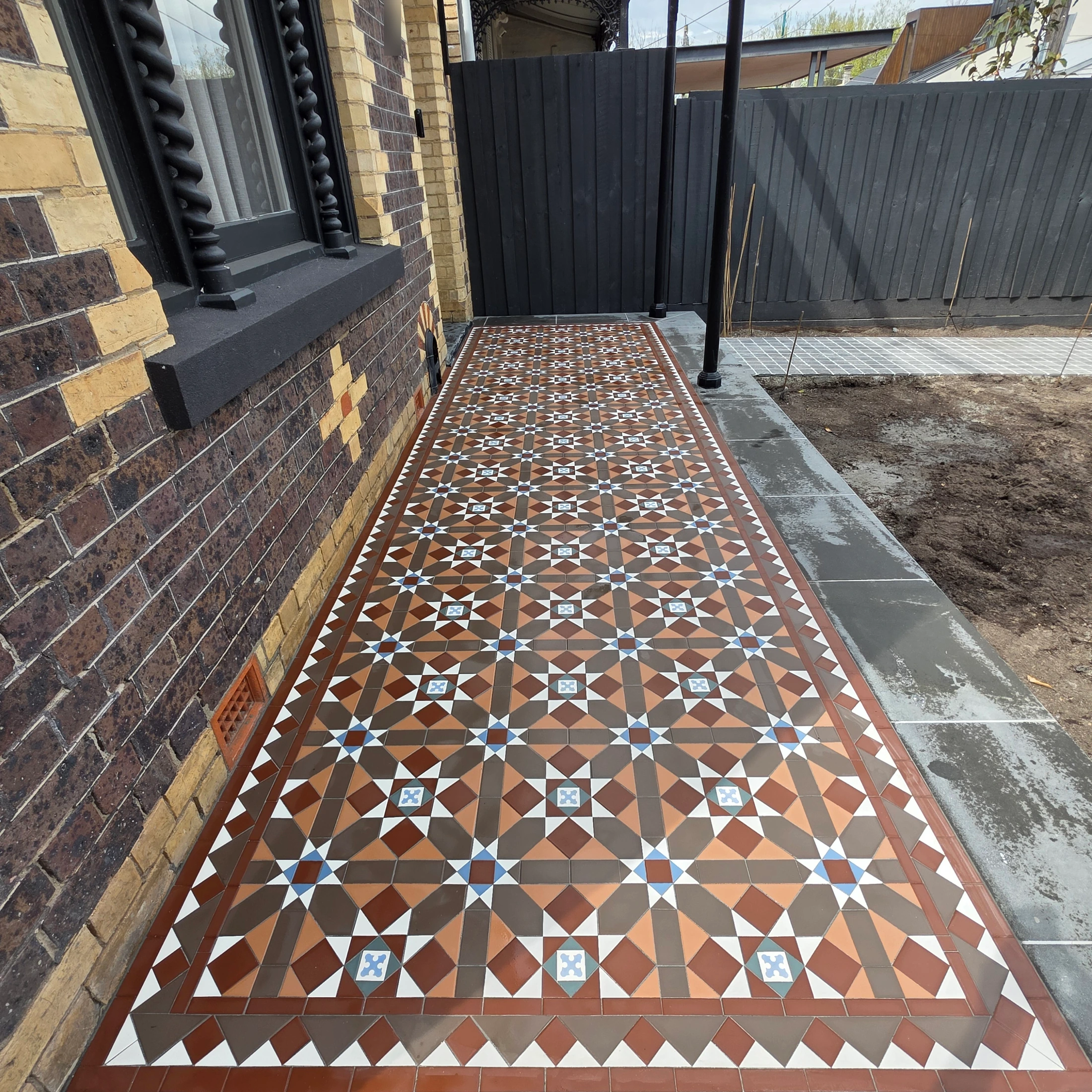
A varied Ballarat heritage setting
The Mount Pleasant/Golden Point heritage precinct is described as a heterogeneous collection of residential, commercial and institutional buildings developed through changing mining and settlement phases. That variety matters when considering a tiled surface: a substantial Victorian or Edwardian residence, a modest cottage and a later alteration may each call for a different balance of colour, border scale, threshold detail and repair strategy.
The area's irregular roads, changing setbacks and mixed building scales are part of its documented character. New tessellated work should therefore be designed around the existing entry sequence, façade lines and landscape rather than treated as a generic pattern applied across every property.
Designing for verandahs, paths and surviving fabric
On a Mount Pleasant verandah or pathway, useful early decisions include how the pattern meets steps and gates, whether a border should align with the building, and how the tiled surface transitions to garden or driveway areas. Exposed locations also need practical attention to falls, drainage, thresholds and everyday access.
Where older tiles remain, an assessment should separate sound original fabric from later repairs before any replacement is planned. Matching colour, format and layout may be more appropriate than removing a serviceable floor. Where a new surface is needed, a considered tessellated design can acknowledge the property's scale and setting without suggesting that every element is protected or that approval is automatic.
Check the property, not only the suburb name
A suburb-wide heritage reputation does not decide the controls applying to an individual address. The City of Ballarat explains that its planning scheme and incorporated documents should be considered when preparing a planning permit application. Before changing a frontage, path or verandah, check the property's current planning information and obtain project-specific advice where a heritage overlay or other control may apply.
The recent restoration of Mount Pleasant's Hill Street Bridge illustrates the value of understanding existing fabric before intervention: the City reported that most of the historic balustrade was retained. A similar retain-and-repair mindset can inform decisions about an older tiled surface, while the actual scope remains specific to the property and its condition.
Tessellated tile services for Mount Pleasant
For Mount Pleasant projects, AHTC's service can cover early layout and material discussions, tile supply, installation, restoration and coordination of stone bullnose or edging details. The useful starting point is the existing Ballarat regional service connection, followed by a property-led conversation about the surface, access, pattern and intended use.
Share photographs and dimensions when seeking advice so the design discussion can distinguish a restoration from a new installation and identify details that need closer inspection.
Your Heritage Tiling Questions
Does every Mount Pleasant property have heritage protection?
No. The Mount Pleasant/Golden Point precinct has documented local heritage significance, but controls are property- and overlay-specific. Check the current Ballarat planning information for the address before assuming that a permit is or is not needed.
Can tessellated tiles suit a Mount Pleasant verandah or entry path?
They can, provided the layout is designed for the particular building and site. Border proportions, step transitions, drainage, exposure and the relationship to the frontage should be considered together rather than selected from a generic pattern.
Should old tiles be removed before a new design is installed?
Not automatically. First identify what remains, assess its condition and consider whether repair or selective replacement can retain useful original fabric. A new installation may be appropriate where the existing surface is unsuitable, but that decision depends on the property and proposed work.
What should I provide for an initial Mount Pleasant tile consultation?
Photographs of the approach, verandah or floor, approximate dimensions, views of steps and thresholds, and any available information about earlier repairs are useful. These details help distinguish restoration, matching and new-work options before a site-specific recommendation is made.
Discuss Your Heritage Tiling Project
Share your location, project details and photographs using our enquiry form, or call 0433 932 711.