
Tessellated tiles in Cheltenham, VIC
Cheltenham brings together established residential streets, a station-centred activity area and ongoing precinct change across Bayside and Kingston. Authentic Heritage Tiling Co. can help you plan tessellated tile design, supply, installation or restoration around the proportions, access, existing fabric and intended use of your property.
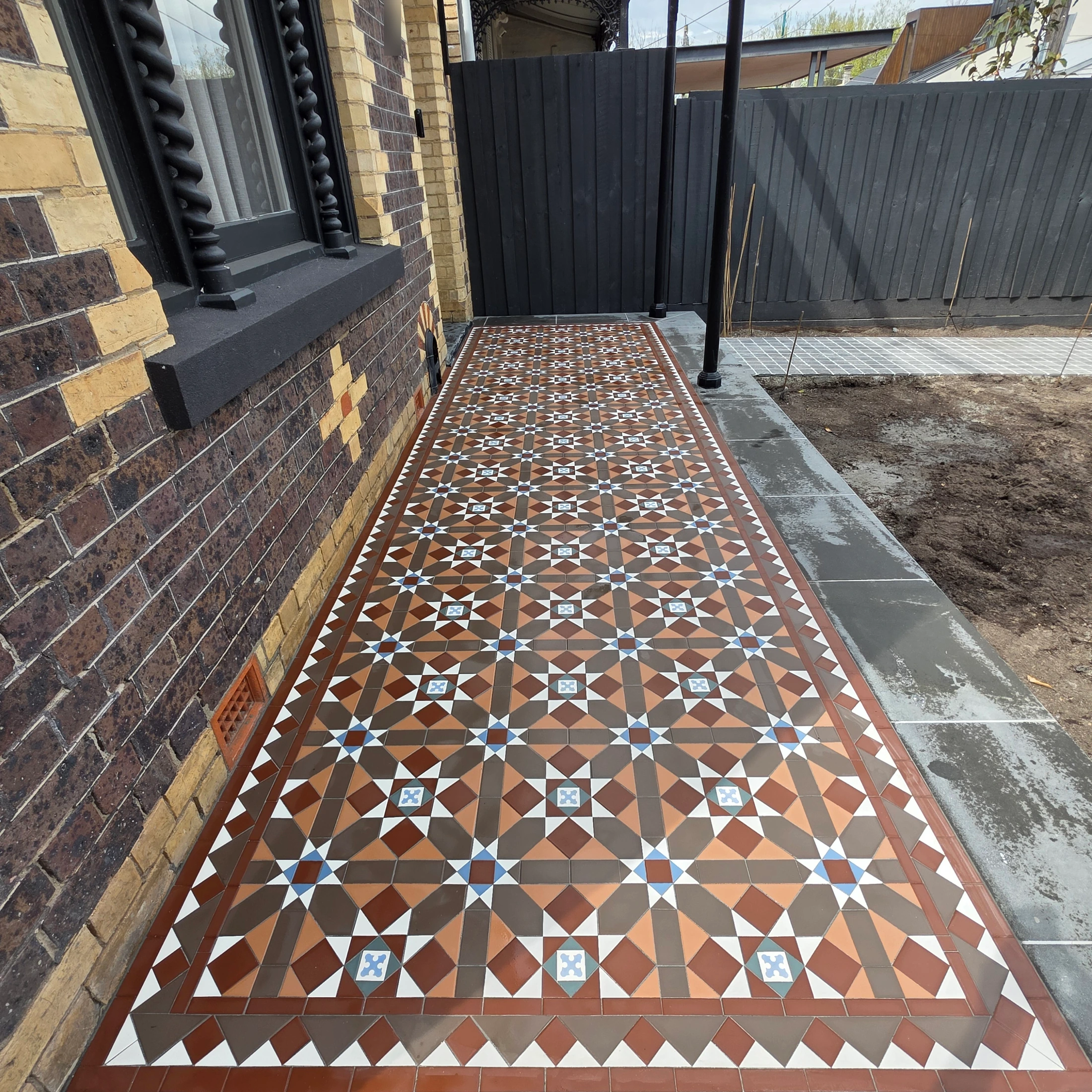
A local setting with more than one architectural conversation
Cheltenham's activity-centre evidence points to Charman Road's traditional strip shopping, office and cafe activity near Station and Park Roads, a heritage station setting and intact single dwellings on larger parcels close to the centre. That combination makes the relationship between a tiled surface and its building frontage especially important: a verandah, entry path or threshold should be considered with the scale, rhythm and approach to the property rather than selected as an isolated pattern.
In the Bayside part of Cheltenham, Pennydale is recognised as a neighbourhood while addresses remain Cheltenham. For a project near that area or near the Kingston activity centre, the practical design brief can differ even when the suburb name is the same. A measured site review helps separate original fabric worth retaining from later work and new areas that can be designed to sit comfortably beside it.
Planning a heritage-sensitive tiled surface
Cheltenham has individually recorded places, including the Charman Road railway station crossing and a former chemist dispensary site. Those records are evidence of specific local history, not a claim that every Cheltenham home is heritage listed. If your property is covered by a Heritage Overlay, the relevant council guidance says controls can affect restoration, conservation, demolition, additions and other works, and a planning permit may be needed. Check the property-specific position with the responsible council before altering significant fabric.
For a period verandah, porch or path, useful early questions include whether any original tiles remain, how the edge meets steps or garden beds, whether the route needs a new fall or drainage solution, and how a replacement pattern will relate to the facade. New tessellation can be sympathetic without pretending to be original; restoration should begin with condition and evidence.
Design, supply and installation for changing streetscapes
The Kingston structure plan calls for contemporary architecture that builds on Cheltenham's character while making a clear distinction between old and new. That principle can guide tile decisions on renovations and additions: use proportion, border treatment, colour balance and transitions to connect the new work to the property, while allowing the contemporary element to remain legible.
A design consultation can then move into tessellated tile supply, installation or restoration planning. Pathways and verandahs need attention to thresholds, levels, exposure and everyday movement; existing tiled floors need a careful assessment before any decision about lifting, matching, repairing or extending. Stone bullnose or edging coordination can be considered where steps and borders require a durable, visually resolved finish.
Check the right local planning context
Because Cheltenham crosses Bayside and Kingston, start with the property location rather than the service-group label. Council heritage and planning information, the Victorian Heritage Database and any applicable Heritage Overlay are useful checks for the specific site. These checks do not replace project advice, but they help clarify whether the brief is conservation-led, repair-led or primarily new design.
About Bayside - Bayside City CouncilHeritage and planning — City of Kingston
Your Heritage Tiling Questions
Is every Cheltenham home heritage protected?
No. Cheltenham has individually recorded heritage places and heritage controls can apply to particular properties or precincts, but a heritage record for one place does not establish protection for the whole suburb. Check the property-specific council planning information before changing significant fabric.
Which council should I check for a Cheltenham tiling project?
Cheltenham crosses the City of Bayside and the City of Kingston. Use the actual property location to identify the relevant planning and heritage information rather than relying on a suburb service label.
Can new tessellated tiles suit a Cheltenham period home?
They can be designed to relate to the building without presenting new work as original. Consider the facade, entry sequence, scale, border and transitions, then assess any surviving tiles before choosing a supply and installation approach.
What should be checked before restoring a tiled verandah or path?
Begin with the condition of the existing surface, any original fabric, levels and drainage, edges and steps, access, and the intended use of the route. If a Heritage Overlay may apply, confirm the planning position with the responsible council before work begins.
Discuss Your Heritage Tiling Project
Share your location, project details and photographs using our enquiry form, or call 0433 932 711.