
Tessellated Tiles in Highett
Highett brings together established detached homes, garden-set residential streets and newer townhouse and apartment development on both sides of the Frankston railway line. For a Highett property, tessellated tiling is best planned around the building's proportions, existing surfaces, access and the way a verandah or pathway meets the garden. We can help with design consultation, tessellated tile supply, installation, restoration and stone bullnose or edging coordination.
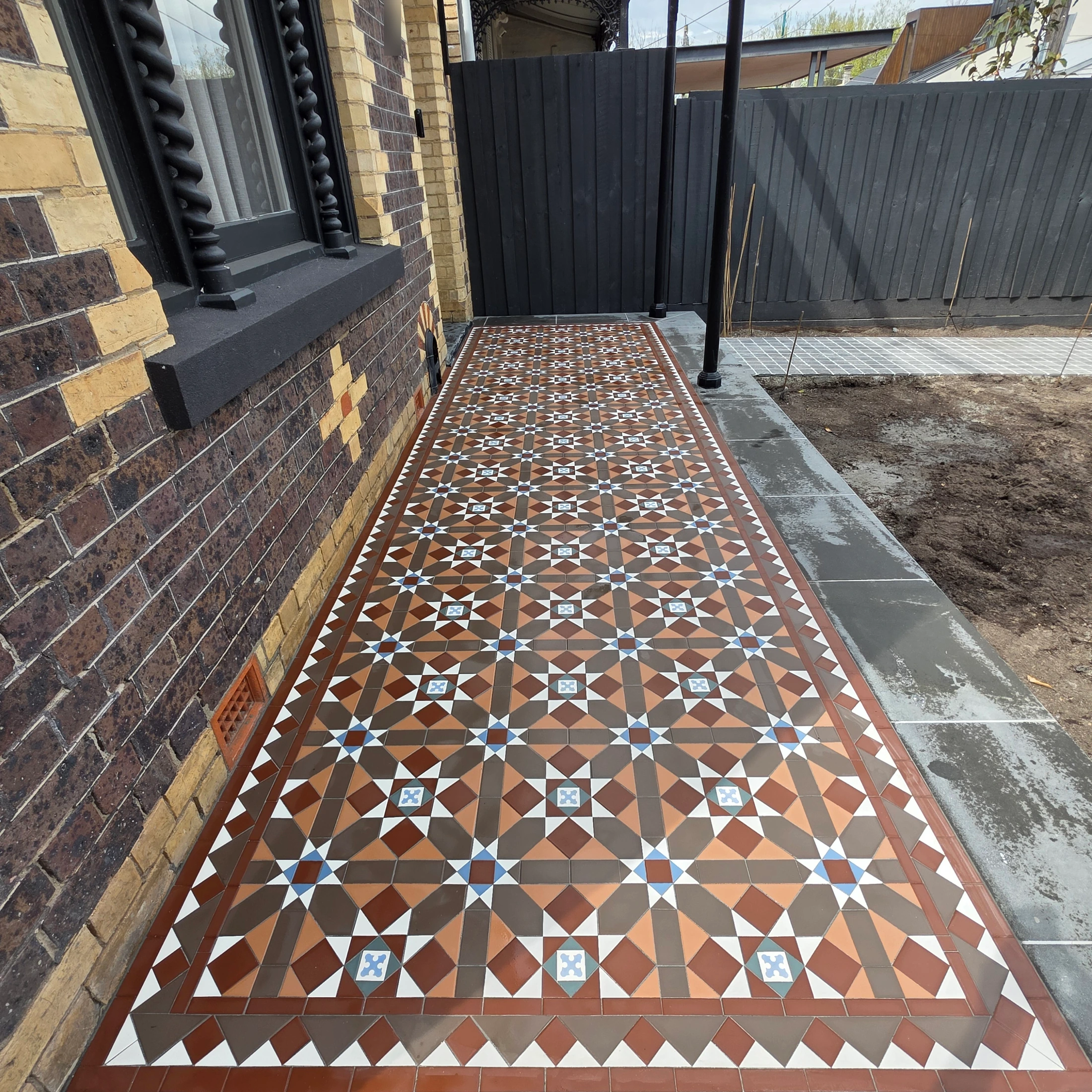
A considered approach for Highett homes
The Highett Structure Plan describes an established residential character of articulated buildings in garden settings, with regular front and side setbacks that provide separation and room for vegetation. Those relationships matter when a tiled verandah, porch or front path is being renewed: the layout should sit comfortably with the house frontage and preserve practical thresholds, drainage and planting areas rather than treating the tile pattern in isolation.
Highett is also changing, with townhouse and apartment development alongside predominantly single-storey detached dwellings. A design consultation can therefore start with the particular property and brief, whether the aim is to repair surviving tessellated work, introduce a new geometric floor or coordinate a durable pathway and edge detail. A heritage overlay or other planning control is property-specific, so checks with the relevant council should be made where applicable; tile work itself is not an indication of council or heritage endorsement.
One suburb, two municipal planning contexts
The Frankston railway line forms the municipal boundary between Bayside to the west and Kingston to the east. Both existing Highett service paths are retained so the locality remains easy to find in its established area directories. The appropriate planning and heritage contact can depend on the property's side of the line, so a site-specific discussion should identify the actual address and relevant controls before work is specified.
For restoration, the first question is what can be retained: existing borders, steps, thresholds and sound tiles may influence the new work more than a generic period label. For new installation, proportions, transitions and edging can be developed to suit the building and its landscape setting. Stone bullnose or edging coordination can be considered where the design and site require it.
Design, restoration and installation decisions
A Highett enquiry may involve matching an existing tessellated floor, planning a new verandah or pathway, or coordinating supply with installation. Useful early information includes photographs of the current surface, approximate dimensions, the intended use and any known access or level constraints. This helps distinguish careful restoration from a new installation and keeps pattern, border, falls and adjoining finishes in the same conversation.
Where a property has planning or heritage considerations, obtain property-specific advice from the relevant authority before committing to work. A local setting can inform a sensitive design, but it does not by itself prove that a house is individually heritage listed or that approval is required.
Your Heritage Tiling Questions
Does Highett have one council for the whole suburb?
No. The Frankston railway line forms the municipal boundary between Bayside to the west and Kingston to the east. The relevant planning or heritage contact depends on the property's location, so confirm the site before relying on a council requirement.
Can tessellated tiles suit a Highett garden-fronted home?
They can, when the layout is designed for the property's proportions and transitions. Highett planning material describes garden settings and regular setbacks in established residential areas, so verandah, porch and path work should be coordinated with access, planting and adjoining surfaces rather than copied from a generic pattern.
Can an existing tessellated floor be restored rather than replaced?
Often the right starting point is an assessment of the surviving tiles, borders, thresholds and substrate. Photographs and dimensions can help determine whether restoration, selective replacement or a new installation is the more suitable direction for the property.
Do I need to check heritage or planning controls before tiling in Highett?
Check the actual property and its applicable controls with the relevant council before work is confirmed. Highett spans Bayside and Kingston, and a suburb-wide description cannot determine whether a particular property is affected or whether approval is needed.
Can you coordinate stone bullnose or edging with a Highett tile design?
Yes. Stone bullnose or edging coordination can be considered alongside the tile pattern, steps, thresholds and pathway or verandah transitions when the site and design call for it.
Discuss Your Heritage Tiling Project
Share your location, project details and photographs using our enquiry form, or call 0433 932 711.