
Tessellated Tiles in Sandringham
Sandringham homes sit within a coastal setting where a verandah, entry path or interior floor needs to work with the property's proportions and the surrounding streetscape. Authentic Heritage Tiling Co can help with tessellated tile design, supply, installation and restoration, whether you are planning new work or assessing an older tiled surface. The right approach depends on the property, the existing fabric and the intended use of the space.
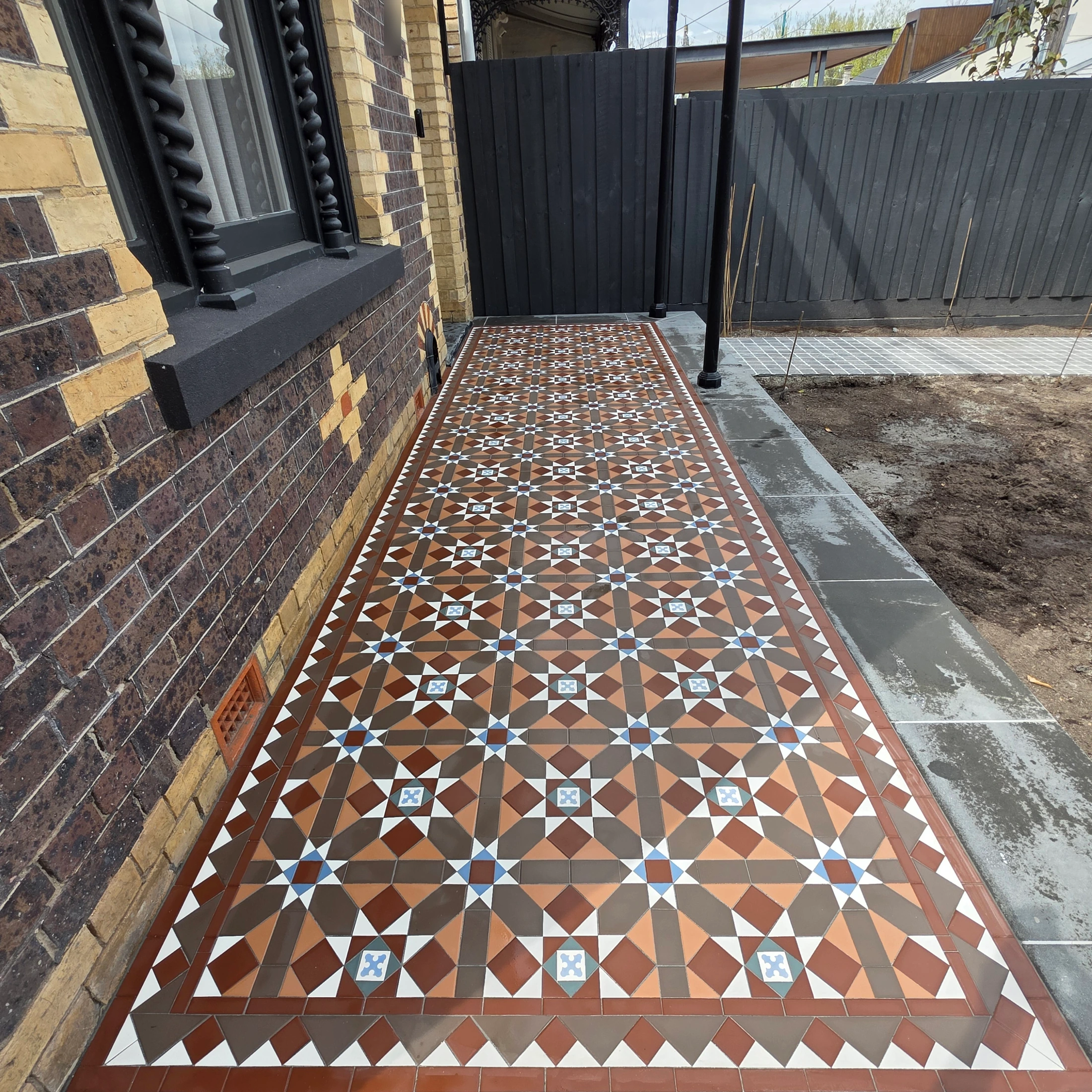
Tiling choices for Sandringham's coastal and village setting
Planning Victoria describes Sandringham's activity-centre vision in terms of seaside charm and village feel, and notes the area's direct relationship with the foreshore. For a tiled entry, verandah or pathway, that context is a useful design cue: proportions, border treatment, thresholds and the relationship between hard surfaces and planting can matter as much as the pattern itself.
A new tessellated layout can be designed to sit comfortably with an existing façade without pretending to reproduce a historical scheme that has not been documented. For an older property, begin by recording what survives, including loose or cracked tiles, edge conditions, previous alterations and transitions to other floor finishes. A measured design review can then separate repairable original work from areas where new tile is more appropriate.
A property-led approach to heritage tiling
Bayside Council makes a Sandringham-specific heritage and conservation study available, covering historic, architectural and environmental elements. That is useful background when considering a period home, but it is not a finding that every Sandringham property is protected or that every tiling project needs heritage approval.
For a property with an identified heritage control or a sensitive surviving floor, check the applicable planning information before work begins. Tile selection, pattern matching, gentle cleaning, selective lifting and edge or bullnose detailing should be considered against the actual condition of the surface. Where new work is intended, clear visual separation or a carefully matched intervention can be discussed as part of the design rather than assumed in advance.
Planning a tiled verandah, path or interior floor
For a verandah or pathway, review the width, direction of travel, drainage interfaces, step transitions and the way the pattern meets walls or garden edges. For an interior floor, consider sightlines from the entry, the scale of the repeat and how the chosen colours relate to timber, joinery and stone. Coastal exposure and site conditions should be assessed at the property rather than answered with a universal installation recipe.
The service can include design consultation, tessellated tile supply, installation, restoration and coordination of stone bullnose or edging details. A clear brief and photographs can help identify whether the next step is a new layout, a condition assessment or a conversation about retaining existing fabric.
Your Heritage Tiling Questions
Can tessellated tiles suit a Sandringham period home?
Yes, when the pattern, scale, colour balance and edge details are selected for the particular building. A period-sensitive design should respond to the property's existing proportions and finishes rather than assume that one historical pattern suits every home.
Does every Sandringham property need heritage approval for tiling?
No general assumption should be made. Bayside's Sandringham study identifies and assesses historic, architectural and environmental elements, but the heritage or planning status of an individual property must be checked through the applicable current controls before work starts.
What should be considered for an outdoor tiled path or verandah?
Consider the site's exposure, falls and drainage interfaces, thresholds, step edges, pathway proportions, planting relationships and how the pattern terminates at walls or boundaries. These details should be assessed for the property rather than selected from a universal recipe.
Can an older tessellated floor be restored instead of replaced?
Often the first step is a condition assessment. Existing tiles, bedding, joints, edges and previous repairs can be documented so that repair, careful cleaning, selective replacement or a new adjoining section can be considered separately. The suitable option depends on what remains and how the floor is performing.
Discuss Your Heritage Tiling Project
Share your location, project details and photographs using our enquiry form, or call 0433 932 711.