
Tessellated tiles in Dolls Point
Dolls Point sits beside Botany Bay within metropolitan Sydney, where homes and outdoor spaces meet a strongly defined foreshore setting. For a Dolls Point tiling project, the right starting point is the property itself: the building's proportions, the existing fabric, the relationship to the street or garden, and the way an exposed verandah, entry or pathway will meet a coastal public realm. AHTC can help with tessellated tile design, supply, installation and restoration, with options considered against the character and practical demands of the site.
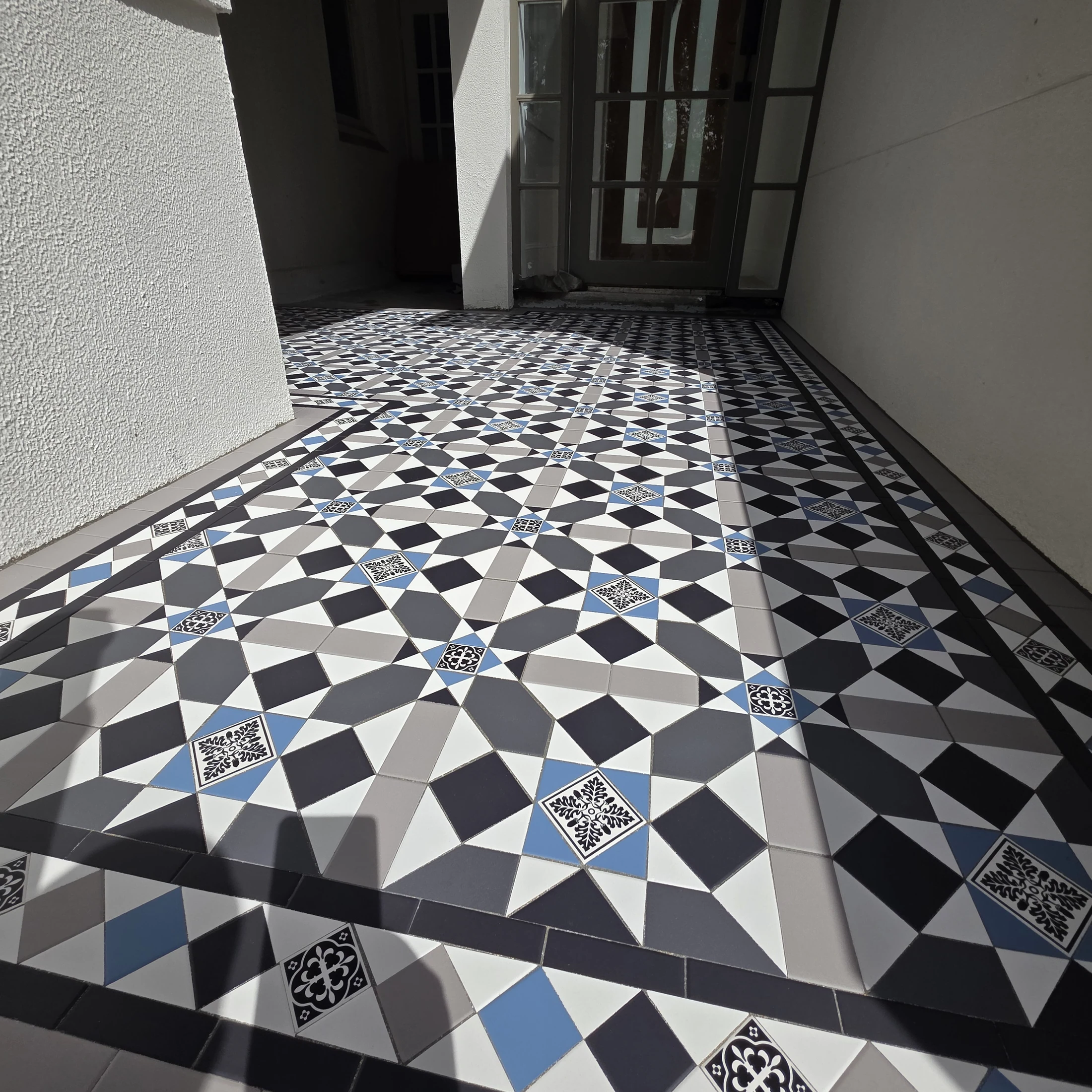
A foreshore setting that rewards careful transitions
Bayside's Lady Robinsons Foreshore Management Plan identifies Dolls Point in separate foreshore precincts. It records sandy beach and promenade areas as well as hard seawall and groyne shorelines, with paths, viewing areas and possible future public-realm upgrades. That mix makes the edge of a property important: an entry, verandah or pathway should be considered as a transition between the home's architecture, landscape and the exposed foreshore environment.
For external tiling, design decisions should be made from the actual site conditions rather than from a generic coastal look. Access, falls, thresholds, drainage interfaces, maintenance and the junction between tilework and adjoining surfaces all deserve attention during the design conversation. These are project considerations, not a claim that every Dolls Point property has the same construction or approval requirements.
Lady Robinsons Foreshore Management PlanRockdale Development Control Plan 2011
Let the property lead the pattern and proportion
The Rockdale Development Control Plan describes streetscape as the relationship between buildings, the public domain, footpaths, landscape and vegetation. It asks development to respond to site context and predominant qualities such as building form, front setbacks, scale, materials and colour. For a Dolls Point tile scheme, this supports a measured approach: begin with the lines already present in the house and its setting, then develop borders, fields and thresholds that sit comfortably with those proportions.
Where original tilework survives, documenting its pattern, border, colour relationships and condition can help separate retention from carefully matched new work. Where there is no existing tessellated floor, a new design can still be restrained and site-specific without pretending that the suburb has one uniform architectural style. Design consultation, tile supply, installation and restoration should each follow the evidence visible at the property.
Check the property's heritage position before work begins
Bayside Council provides guidance for heritage-listed properties, Heritage Conservation Areas, approvals, exemptions, grants and heritage studies. The available 2019 Bayside Heritage Study reviewed potential conservation areas elsewhere in the local government area and did not identify Dolls Point among the areas assessed in that report. That does not determine the status of an individual property, so the relevant listing and planning controls should be checked for the site before changes to established fabric are designed.
Bayside's local-history collection includes books, archival records, newspapers, photographs and historical footage. Those resources can help with background research where a property's earlier appearance or local setting matters. AHTC can discuss a tile brief and restoration approach, but does not provide heritage approvals or speak for the council.
Heritage ConservationLocal history | Bayside CouncilLady Robinsons Foreshore Management Plan
Tessellated tile services for Dolls Point properties
AHTC's Dolls Point service route is for property-led help with tessellated tile design, supply, installation and restoration. That may include developing a verandah or pathway layout, coordinating tile supply with installation, or assessing existing floors where retention and selective repair are important. The suitable scope depends on the property's dimensions, existing substrate and tile condition, access, adjoining finishes and the intended use of the space.
For a useful first discussion, photographs and approximate dimensions can help explain the existing floor, the areas to be tiled and any visible movement, wear or water-related concerns. The design can then be considered alongside the home's setting rather than treating a coastal locality as a substitute for a site inspection.
Lady Robinsons Foreshore Management PlanRockdale Development Control Plan 2011
Your Heritage Tiling Questions
Does every Dolls Point property have heritage protection?
No conclusion about every property can be made from the suburb name or the Bayside service grouping. Bayside Council publishes separate information about heritage-listed properties, conservation areas and approvals. Check the particular property's current planning and heritage position before altering established fabric.
What should be considered for an exposed verandah or pathway in Dolls Point?
Start with the actual site: thresholds, falls, drainage interfaces, access, adjoining surfaces, maintenance and the relationship between the building, landscape and foreshore setting. The official foreshore plan records both sandy beach and hard seawall environments around Dolls Point, so a single generic detail should not be assumed for every property.
Can an existing tessellated floor be restored rather than replaced?
That is a property-specific assessment. Existing pattern, colour, loose or damaged tiles, surrounding finishes and the condition of the underlying floor should be documented before deciding between retention, selective repair and new work. AHTC can discuss restoration and matching options without assuming that every floor has the same cause of damage or construction.
Where can I research Dolls Point's local history or heritage guidance?
Bayside Council's local-history service provides access to books, archival records, newspapers, photographs and historical footage through its libraries and museum. Its heritage-conservation service also links to information about listings, conservation areas, studies and approval guidance.
Discuss Your Heritage Tiling Project
Share your location, project details and photographs using our enquiry form, or call 0433 932 711.