
Tessellated Tiles in Prospect, NSW
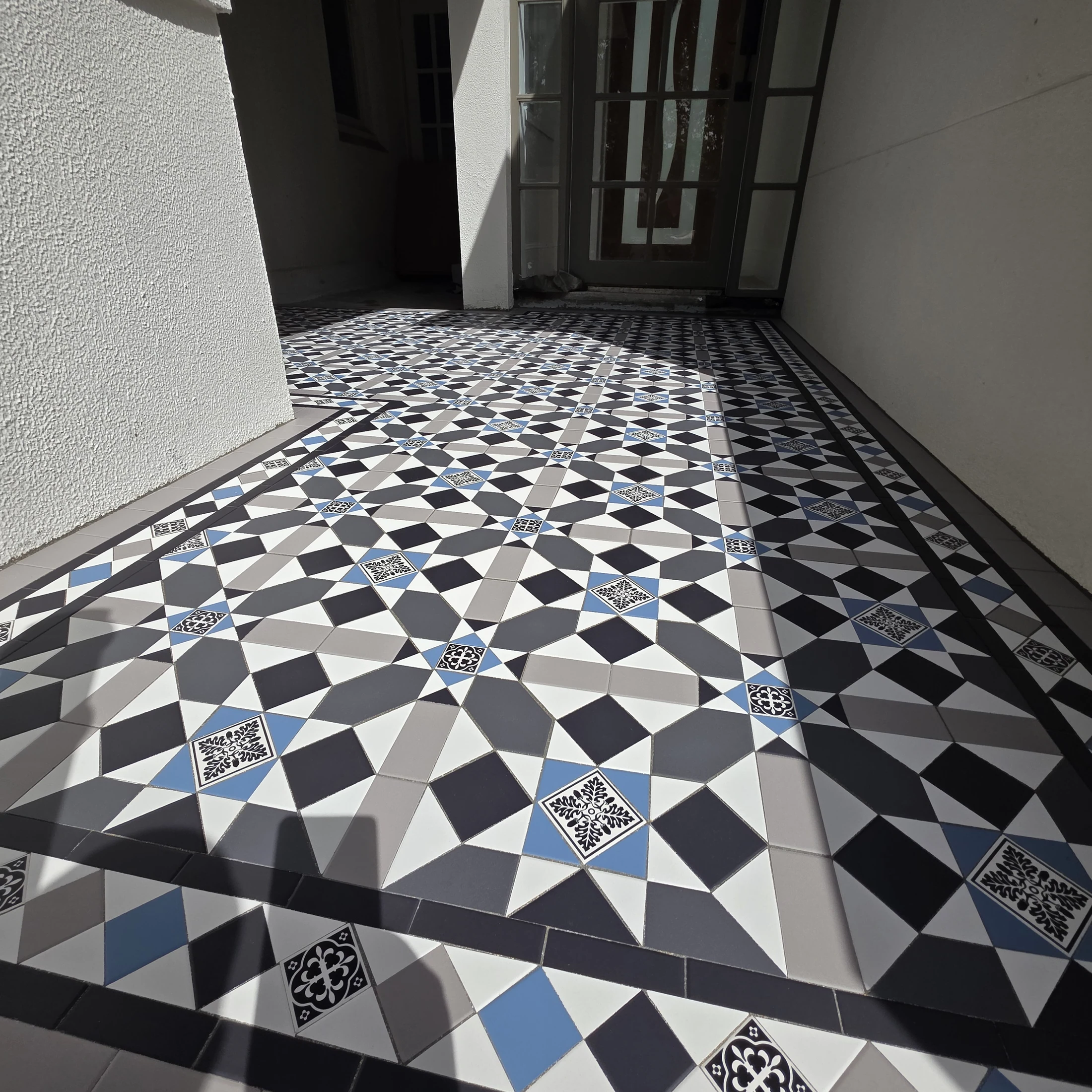
Prospect brings together established residential areas, changing employment landscapes and a documented rural and transport history. For a new verandah, pathway or interior floor, tessellated tiles can be planned around the proportions and character of the property rather than applied as a generic pattern. AHTC can help with design consultation, tile supply, installation, restoration and stone bullnose or edging coordination across Prospect and surrounding Western Sydney.
A layered Western Sydney setting
Blacktown City Council's local history records connect Prospect's name with Prospect Hill, while current planning material describes parts of the suburb's wider setting as having moved from grazing and dairy activity towards industrial and urban uses. That combination makes the immediate property more useful than a broad suburb label when choosing a tile layout.
The Prospect South studies identify the former Western Highway alignment and the former dairy homestead known as Bridestowe as heritage items in the study area. The NSW State Heritage Inventory also records the Site of Veteran Hall in Prospect. These records concern particular places, not every house in the suburb, so any heritage-sensitive tile decision should begin with the property's own history, condition and applicable planning controls.
For homes near busy roads, open edges or sloping ground, practical design matters alongside period reference. We can consider thresholds, falls, drainage, movement between indoor and outdoor areas and a border that remains legible at the actual path or verandah width.
Plan the pattern around the property
A Prospect tile scheme may suit a restrained geometric field, a framed verandah or a more decorative pathway, depending on the building lines and the surfaces that need to meet it. The design consultation can address scale, border rhythm, transitions and how a pattern will read from the garden, entry or internal room.
Where existing tiles survive, matching is not assumed from age alone. We can look at the retained pieces, dimensions, colour relationships, laying direction and condition before discussing selective restoration or a complementary new area. For new work, supply and installation can be coordinated with the chosen layout rather than treated as unrelated steps.
Stone bullnose or edging may be useful where a tiled edge needs a durable, visually resolved finish. The appropriate detail depends on the site, exposure and adjoining surfaces, so the edge should be designed with the whole threshold or pathway in view.
Heritage-sensitive work needs a property check
A heritage reference can guide a careful design without dictating that every room or pathway must reproduce a historical pattern. If a property is individually listed, near a listed place or affected by a local planning control, confirm the relevant requirements with the appropriate authority before work begins. A tile specialist can help document the existing surface and shape a practical scope, but does not provide heritage-approval authority.
The council's local-history collection includes maps, photographs, reports and architectural and conservation material. Those resources can help owners investigate a property's story, while the NSW Heritage Inventory and local planning information remain important checks for a particular site.
Tessellated tile services for Prospect
AHTC's service scope includes design consultation, tessellated tile supply, installation and restoration, with stone bullnose or edging coordination where appropriate. The right sequence depends on whether the project is a new verandah or pathway, an interior floor, a repair to retained fabric or a coordinated supply-and-installation job.
Bring photographs, approximate dimensions and any available property or planning information to the initial discussion. That gives the design and technical conversation a useful starting point without assuming a pattern, substrate or approval pathway before the site and existing work are understood.
Your Heritage Tiling Questions
Can tessellated tiles suit a Prospect verandah or pathway?
Yes. The layout can be developed around the verandah or path width, entry transitions, border proportions and the character of the property. Outdoor detailing should also account for falls, drainage, exposure and adjoining surfaces.
Does a heritage place in Prospect mean my home needs heritage approval?
Not automatically. Heritage listings and planning controls apply to particular places and circumstances, so check the individual property and the relevant authority before work. AHTC can help document existing tiles and develop a heritage-sensitive design, but does not grant approvals.
Can existing tessellated tiles be restored instead of replaced?
Often the first step is an assessment of what remains: tile size, colour, pattern, condition, movement and the adjoining surface. That assessment can indicate whether selective restoration, careful matching or a new complementary section is the more appropriate direction.
What should I provide when asking about a Prospect tile project?
Photographs, rough dimensions, the intended area and any information about the property's age or planning status are useful starting points. Include close views of existing tiles and edges if restoration or matching is being considered.
Discuss Your Heritage Tiling Project
Share your location, project details and photographs using our enquiry form, or call 0433 932 711.