
Tessellated Tiles Currans Hill
Currans Hill's low-density residential setting includes homes, open space and outdoor connections that can benefit from carefully considered tiled details. Authentic Heritage Tiling Co can help with tessellated tile design consultation, supply, installation and restoration for floors, verandahs, paths and other suitable areas. Where a property sits near a recorded heritage or archaeological context, the right approach starts with checking the individual site and its existing fabric rather than assuming a suburb-wide restriction.
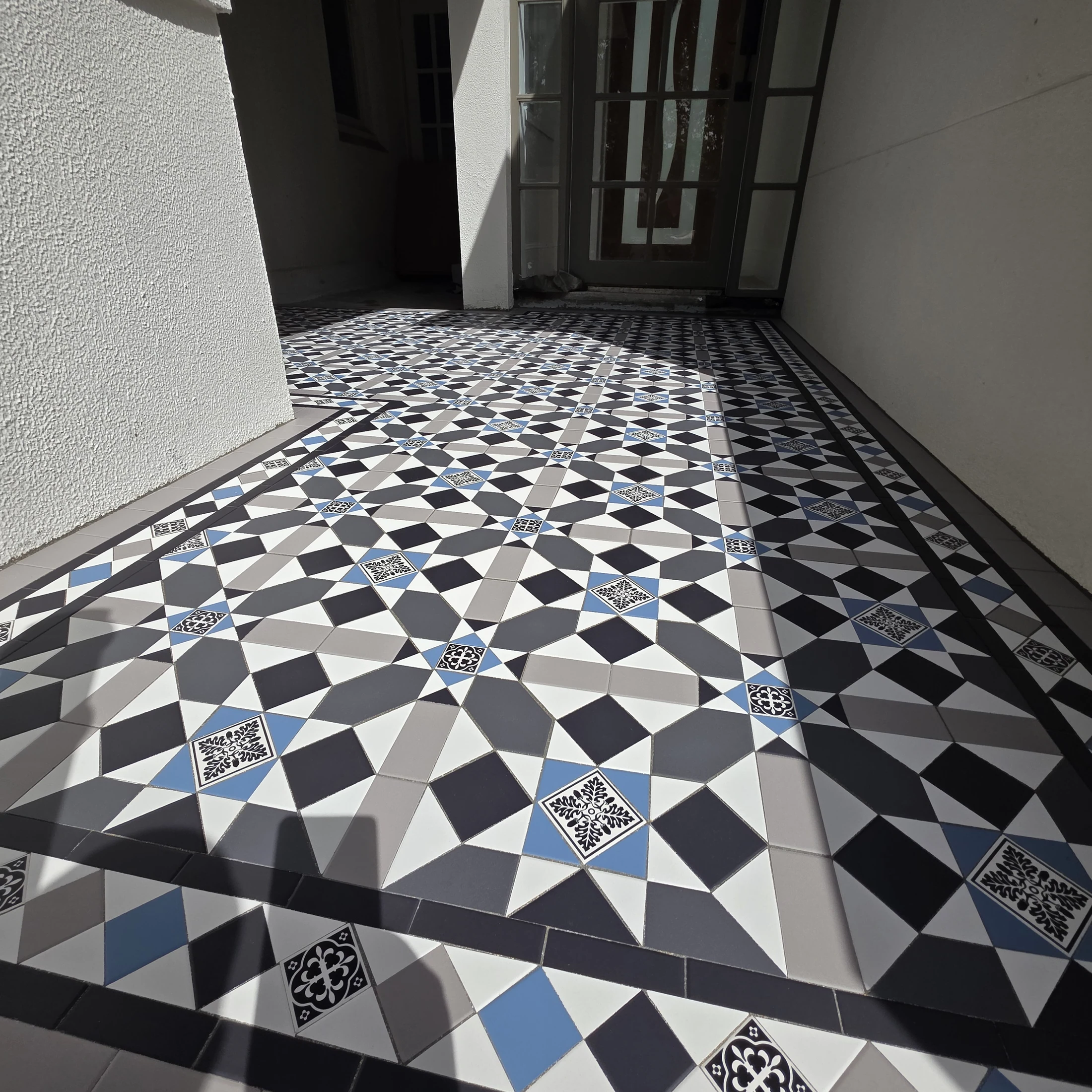
A considered approach for Currans Hill homes
Planning material describes Currans Hill as predominantly low-density residential at its eastern edge, with environmental land uses and open land nearby. That mix makes proportion, drainage, access and the relationship between internal floors and outdoor areas important parts of a tiling brief. A design consultation can consider the home's existing lines, the intended use of the space and how a new pattern will meet thresholds, walls and garden edges.
Currans Hill also has established community open space, including Jack Nash Reserve. That does not define private residential architecture, but it reinforces the value of practical transitions between home, verandah, path and garden. Tessellated layouts can be developed with attention to scale, border treatment and the way the finished surface will be approached and used.
Heritage context is property-specific
Camden Council's DCP records archaeological tramway-station remnants in an area spanning Currans Hill, Narellan, Elderslie and Camden. This shared-area reference is useful context, but it does not mean every Currans Hill property is heritage-listed or that every tiling project requires approval. Before altering older fabric or a site near a mapped heritage or archaeological place, the owner should check the relevant property controls and obtain independent advice from the appropriate authority where needed.
For an existing tiled floor, restoration planning can begin with a close look at what remains: pattern, colour relationships, edge details, movement, cracking, loose tiles and previous repairs. New work should be designed as new work unless a genuine match and a suitable connection to the existing fabric can be established.
Design, supply, installation and restoration
A Currans Hill project may involve a new tessellated floor, a verandah or pathway layout, restoration of an existing tiled surface, or coordination of stone bullnose and edging details. The useful first step is to define the area, the desired pattern and the relationship with adjoining materials before selecting a tile arrangement.
For restoration, the assessment should distinguish sound original material from later additions and identify where selective repair is preferable to wholesale replacement. For new installation, the design and site conditions should guide detailing at edges, entries and transitions. A project enquiry can include photographs and dimensions so the work can be considered in context.
Your Heritage Tiling Questions
Does every Currans Hill property have heritage restrictions?
No. A suburb reference or a shared archaeological record does not make every home heritage-listed. Heritage status and any approval requirements are property-specific, so check the relevant Camden and NSW planning information before altering significant existing fabric.
Can tessellated tiles suit a Currans Hill verandah or pathway?
They can, when the pattern, scale, edge treatment and site conditions suit the space. A design consultation can consider how the tiled area meets entries, garden edges and adjoining surfaces rather than treating the layout as an isolated rectangle.
Can an existing tiled floor in Currans Hill be restored?
Often the first step is an assessment of the surviving tiles, pattern, movement, cracking and earlier repairs. The appropriate outcome may be selective restoration, careful matching or a new design that is clearly distinguished from the original fabric.
What should I include in a tile project enquiry?
Include the locality, the type of space, approximate dimensions, access information and clear photographs of the existing surface or proposed area. If the property has a known heritage or archaeological context, include that information so the design discussion can remain appropriately cautious.
Discuss Your Heritage Tiling Project
Share your location, project details and photographs using our enquiry form, or call 0433 932 711.