
Tessellated Tiles in Elderslie
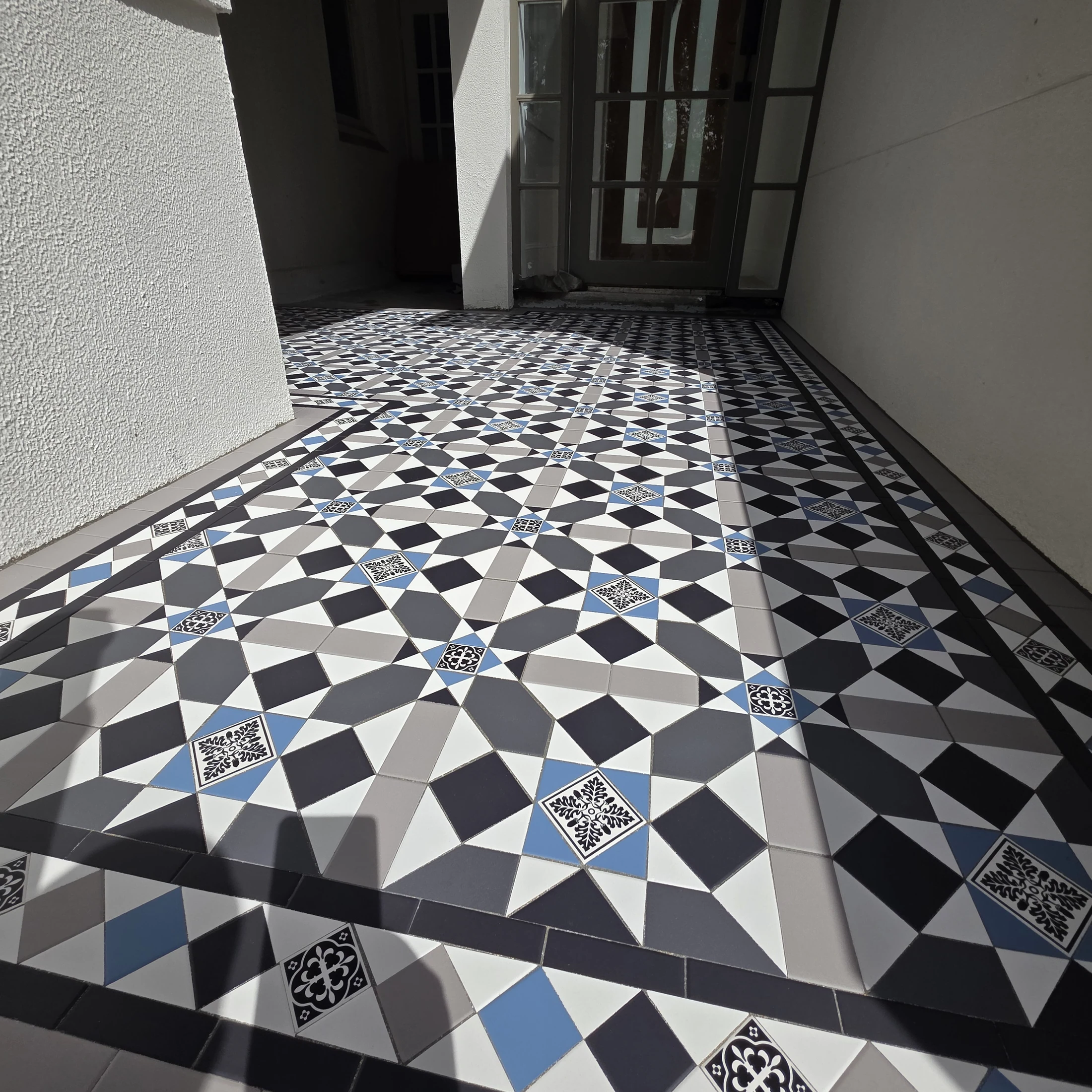
Elderslie combines newer urban-village development with older roads, established landscapes and places identified in Camden's heritage and cultural-landscape guidance. For a verandah, entry, pathway or interior floor, tessellated tile work can be developed around the property's proportions, existing fabric, sightlines and practical access rather than treated as a one-pattern solution. AHTC can help with design consultation, tile supply, installation and restoration, including coordination of stone bullnose or edging where appropriate.
A local setting with both new and historic layers
Camden Council's Elderslie planning material describes an urban village connected to existing Elderslie and Narellan, with varied housing forms, landscaped and natural settings and a neighbourhood centre. It also recognises Hilder Street and Lodges Road as evidence of earlier development. That combination makes the immediate setting important when selecting tile scale, border treatment and the relationship between a new tiled surface and the rest of the property.
Rheinberger's Hill is treated in the council's planning guidance as a significant visual element and potential heritage item. The council also records Elderslie heritage items and culturally significant landscapes. These references do not mean every property is heritage-listed, but they are a useful reminder to check the property's own planning and heritage position before altering older fabric or a significant setting.
Designing a durable tiled surface for the property
Start by considering where the tiles will be seen from: an approach path, verandah, front entry, garden edge or internal threshold. A restrained field with a defined border can suit a compact entry, while a longer pathway may need proportioned bands and carefully planned transitions. Existing steps, drainage, door clearances and the change between old and new surfaces should be assessed before a pattern is finalised.
Where original tiles remain, retainable areas can guide colour and format matching without assuming that every replacement should look completely new. For a new installation, the pattern, edge detail and laying direction can be selected to sit comfortably with the home's architecture and landscape. AHTC's design consultation can coordinate tessellated tile supply and installation, with restoration considered where existing tiles are worth repairing.
Check the property before changing older fabric
Camden Council's culturally significant places guidance says a Heritage Impact Statement is required for development identified as a culturally significant place, built environment, cultural landscape or archaeological site. That is a property- and proposal-specific planning matter, not a blanket requirement for every Elderslie home. If a property is near a listed place, a recognised landscape or older surviving fabric, confirm the relevant controls with Camden Council or an appropriately qualified heritage professional before work begins.
A tile assessment can then focus on the actual surface: what is original, what is later work, which areas are loose or damaged, and whether a repair, selective replacement or new complementary section is the most appropriate outcome.
Your Heritage Tiling Questions
Can tessellated tiles suit a newer Elderslie home?
Yes. The pattern and border can be scaled to the entry, verandah or pathway, then coordinated with the home's materials and garden setting. A design consultation can help keep the result deliberate rather than making a newer surface imitate an older building without reason.
Should I check heritage requirements before tiling in Elderslie?
If the property is a listed place, culturally significant place, archaeological site or part of a recognised landscape, check the applicable Camden Council controls before changing older fabric. Council guidance notes that some identified development requires a Heritage Impact Statement. The answer depends on the property and proposal, so it should not be assumed either way.
Can existing Elderslie tiles be restored rather than replaced?
Often the first step is an assessment of the surviving tiles, substrate, edges and areas of movement or loss. Where the original surface is repairable, selective restoration and careful matching may retain more of its character than wholesale replacement. The suitable approach depends on the condition found on site.
What should be considered for an Elderslie tiled pathway or verandah?
Consider the pathway or verandah's proportions, falls and drainage, step and threshold transitions, edge protection, door clearances and how the pattern reads from the approach. Camden's local guidance also makes views and landscape setting relevant to some places, so the broader relationship should be considered where it applies.
Discuss Your Heritage Tiling Project
Share your location, project details and photographs using our enquiry form, or call 0433 932 711.