
Tessellated Tiles in Spring Farm
Spring Farm is a planned Camden-area community shaped by urban villages, bush corridors, river views and a changing residential landscape. For a new verandah, entry, pathway or interior floor, tessellated tiles can bring clear geometry and durable colour to the design. Where a property retains earlier tilework or sits near a historically significant landscape, the right approach starts with inspecting what is there and matching the proposal to the property rather than assuming a standard heritage treatment.
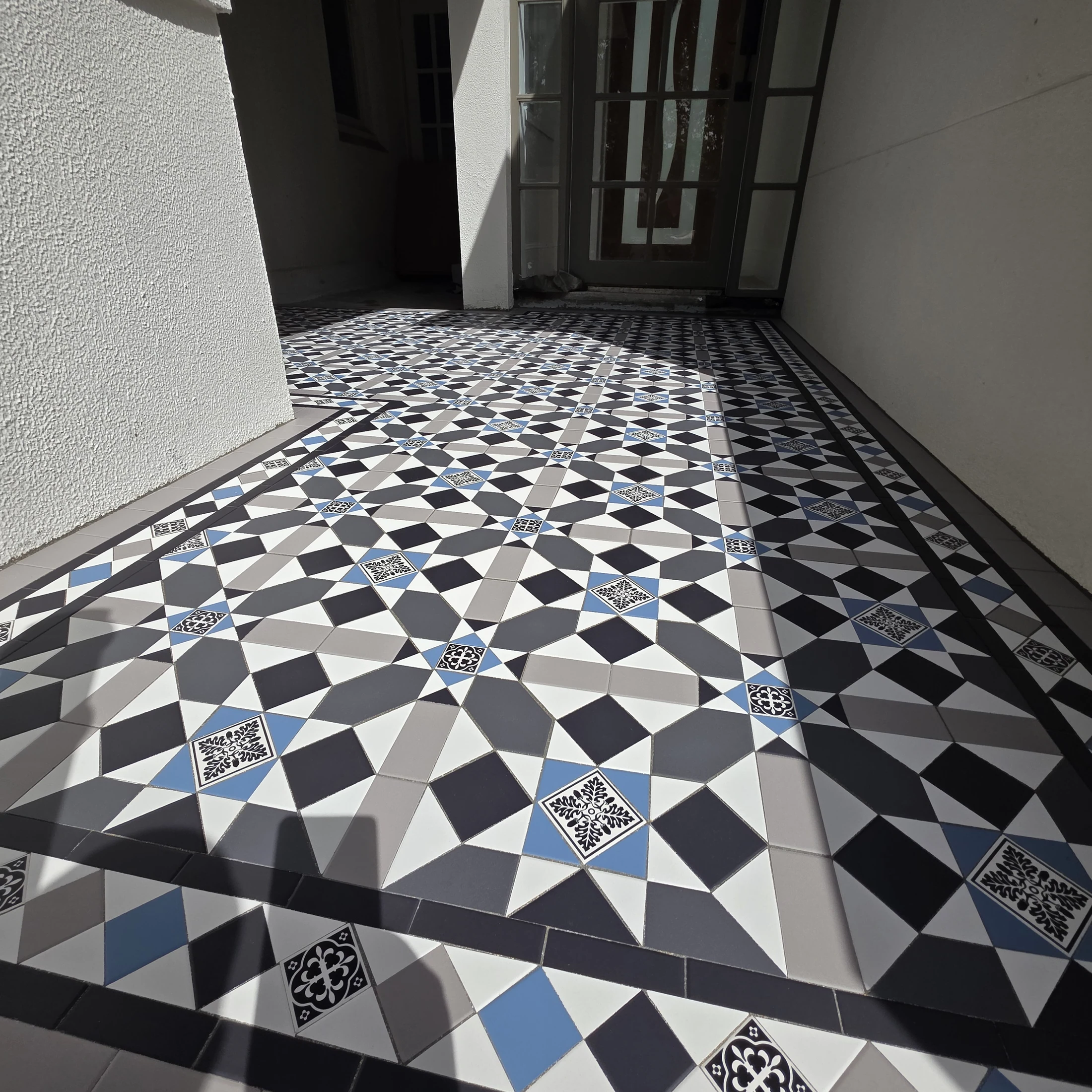
Designing for Spring Farm's changing landscape
Camden Council's Spring Farm planning material describes a sequence of urban villages connected by bush corridors and related to the Nepean River. That setting makes the transition between house, verandah, garden and path especially important. A tile layout can be planned as part of that threshold, with border proportions, step details and drainage considered together rather than chosen as isolated finishes.
The same planning material identifies Springs, Richardson and Macarthur Roads as evidence of earlier development while acknowledging ongoing change. This is useful context, not a claim that every Spring Farm property is historic. If an existing dwelling or landscape element has retained older tilework, photographs and an on-site inspection can help determine whether to conserve, repair, extend or replace it.
Tessellated tile ideas for homes, verandahs and pathways
For a new Spring Farm home, the design may focus on a measured entry, a covered verandah or a garden path that works with the home's proportions. A restrained field pattern can keep a small threshold calm, while a border or carefully set transition can define a longer approach without making it feel disconnected from the surrounding planting.
Installation planning should account for exposure, falls, movement, thresholds and the relationship between tile levels and doors. On an existing surface, the condition of the substrate and any surviving border or step tiles should be assessed before a replacement layout is selected. Stone bullnose or edging coordination can help resolve exposed edges where the design needs a deliberate, durable finish.
A property-led approach to tile supply and restoration
AHTC can help coordinate design consultation, tessellated tile supply, installation, restoration and stone bullnose or edging details for Spring Farm projects. The suitable path depends on whether the work is new, a sympathetic extension of existing tiles, or repair of an established surface.
Spring Farm's roads, landscape corridors and river setting provide useful design context, but they do not replace property-specific checks. If a dwelling or site is subject to a heritage listing, local planning control or another approval requirement, confirm the relevant advice with the responsible authority before work begins.
Your Heritage Tiling Questions
Are all Spring Farm homes heritage properties?
No. Spring Farm is a planned release area with substantial ongoing residential development. Camden's planning material does identify historic road alignments and cultural landscape considerations, but heritage status is property-specific and should be checked for the particular site.
Can tessellated tiles work on a new Spring Farm verandah or path?
Yes. A new verandah or pathway can be designed around the home's proportions, access, exposure and drainage. Border width, step transitions and edging should be resolved with the layout rather than treated as afterthoughts.
What should be checked before restoring older tiles in Spring Farm?
Begin with the condition of the existing tiles, substrate, edges, thresholds and any surviving pattern. Then check whether the property has a heritage listing or other site-specific planning requirement before deciding between retention, selective repair and replacement.
Does Spring Farm's landscape context affect tile design?
It can. Camden's planning principles refer to bush corridors, riparian areas, river views, street trees and cultural landscapes. These are useful cues for choosing proportions, transitions and finishes that sit comfortably between the house and its garden, without prescribing one pattern for every property.
Discuss Your Heritage Tiling Project
Share your location, project details and photographs using our enquiry form, or call 0433 932 711.