
Tessellated Tiles in Paradise, SA
Paradise sits in Adelaide's inner east within the City of Campbelltown. For a new verandah, pathway or interior floor, the right tile layout depends on the home's proportions, the transition to adjoining surfaces and the way new work meets the existing building. Design consultation, tessellated tile supply, installation, restoration and stone bullnose or edging coordination can be considered as one project, with the property and its surviving details guiding the next step.
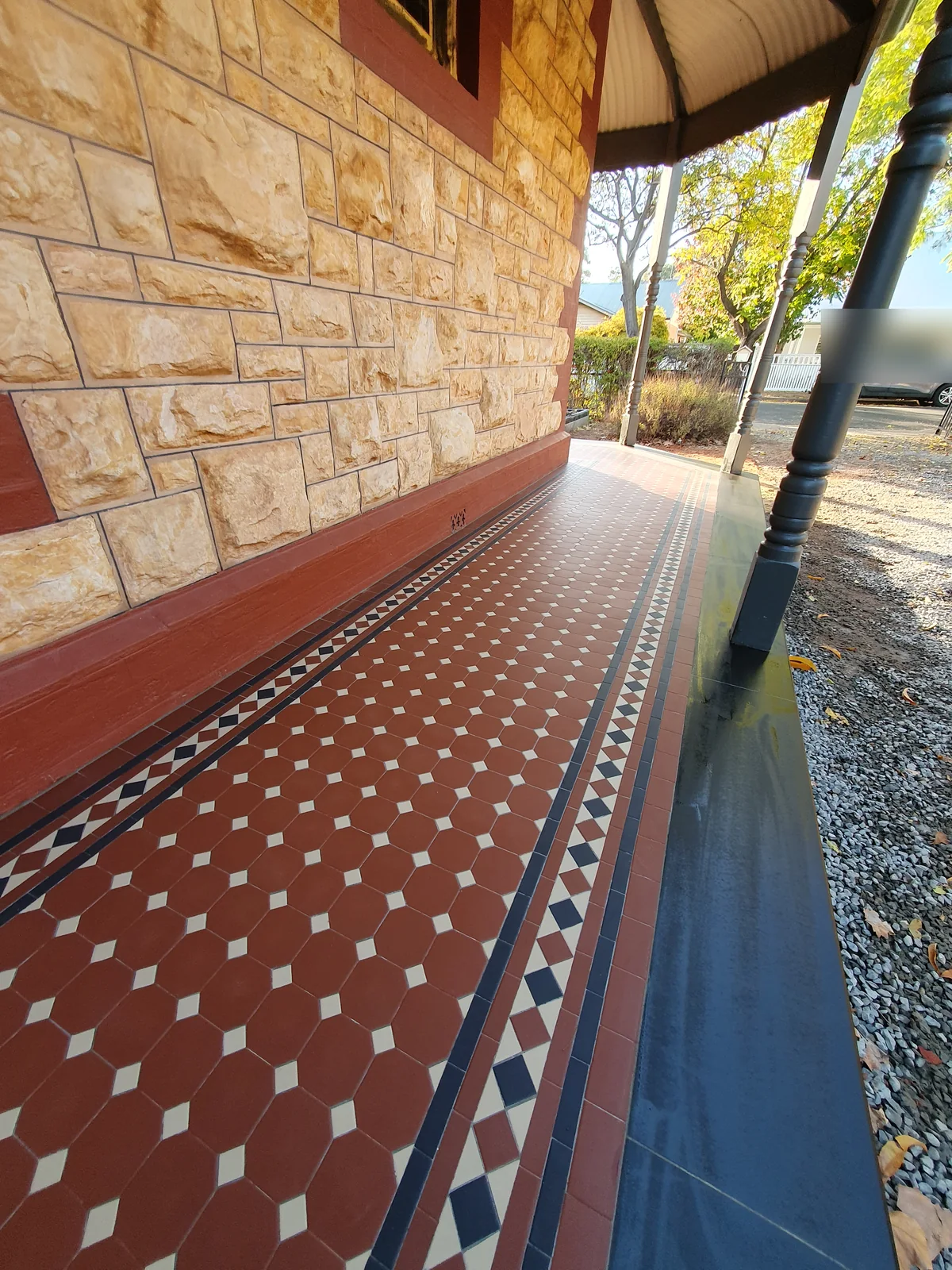
A Paradise context shaped by the Torrens and early settlement
Campbelltown Council places Paradise in Adelaide's inner eastern suburbs and includes it within the City of Campbelltown. Council's local-history material connects the area with the River Torrens, early farming and the Paradise Bridge Hotel. That history is useful context when selecting a restrained tile palette, but it does not mean every Paradise property is historic or heritage-listed.
For a property with older fabric, assess the whole composition rather than choosing a pattern in isolation. Consider the relationship between the entry, verandah, path, thresholds, garden edges and the building's existing colours. A new tessellated surface can be designed to read as part of the property without copying a historic detail that is not actually present.
A documented local example of decorative tilework
Campbelltown Council's account of Lyndhurst records a cottage in Paradise that began around 1860 and was later enlarged. The account describes leadlight, marble fireplace surrounds, decorative metalwork and tessellated-tile chimneys. It is a specific local example rather than evidence that all homes in the suburb share the same period or detailing.
Where a home has surviving decorative work, photographs and an on-site review can help separate original fabric from later alterations. Matching does not always mean reproducing every feature; it may mean choosing compatible scale, border treatment, tonal contrast and junction details for the part of the property being renewed.
Plan the surface around the property
For Paradise verandahs and pathways, layout decisions should account for the approach from the street, door thresholds, changes in level, drainage and the meeting points with stone, paving or garden edges. Border widths and pattern scale can change how a narrow path or broad terrace feels, so a measured design is preferable to selecting a pattern from a catalogue alone.
For restoration or partial replacement, the condition of the existing surface matters. Record loose, cracked, worn or missing tiles and consider whether the aim is selective repair, a carefully bounded new section or a wider renewal. Stone bullnose and edging coordination can help resolve exposed edges and transitions where the existing construction allows it.
Check the property before heritage-sensitive work
A local story or an older-looking house is not, by itself, proof of statutory heritage protection. Before altering a property with notable fabric, check the applicable South Australian planning information and ask the relevant authority or a suitably qualified professional whether a property-specific approval or other constraint applies. Tile advice can support design decisions, but it is not heritage approval.
A clear brief should identify what is to remain, what is to be repaired and what is new. This gives the design and installation team a practical basis for discussing samples, pattern proportions, thresholds and the sequence of work without assuming that one method suits every Paradise property.
Your Heritage Tiling Questions
Can a tessellated tile design suit a newer Paradise home?
Yes. The design can be proportioned to the entry, verandah, path or room rather than being treated as a period replica. The key questions are scale, colour, edge treatment, levels and how the new surface meets the existing building.
Does an older-looking Paradise property automatically need heritage approval for tiling?
No automatic conclusion should be made from appearance or age alone. Check the property's applicable planning and heritage status before altering significant fabric, and obtain property-specific advice where needed.
What should be considered when tiling a Paradise verandah or pathway?
Consider the approach, pattern scale, border proportions, door thresholds, changes in level, drainage, adjoining paving and the treatment of exposed edges. A measured site review helps resolve these details before installation.
Can existing tessellated tiles in Paradise be restored rather than replaced?
Often the first step is to assess the condition and extent of the existing surface. Depending on what is found, the project may focus on selective repairs, matching a missing area or renewing a defined section while retaining sound fabric.
Discuss Your Heritage Tiling Project
Share your location, project details and photographs using our enquiry form, or call 0433 932 711.