
Tessellated Tile Services in Glen Alpine
Glen Alpine combines a planned housing-estate setting around the Campbelltown Golf Course with a deeper local history linked to the Glen Alpine homestead. For a new verandah, pathway or internal floor, tessellated tile choices can be developed around the property's proportions, access and outdoor transitions. Where older fabric or a locally listed place is involved, the first step is to understand what is original, what has changed and what the work needs to achieve before selecting a pattern or repair approach.
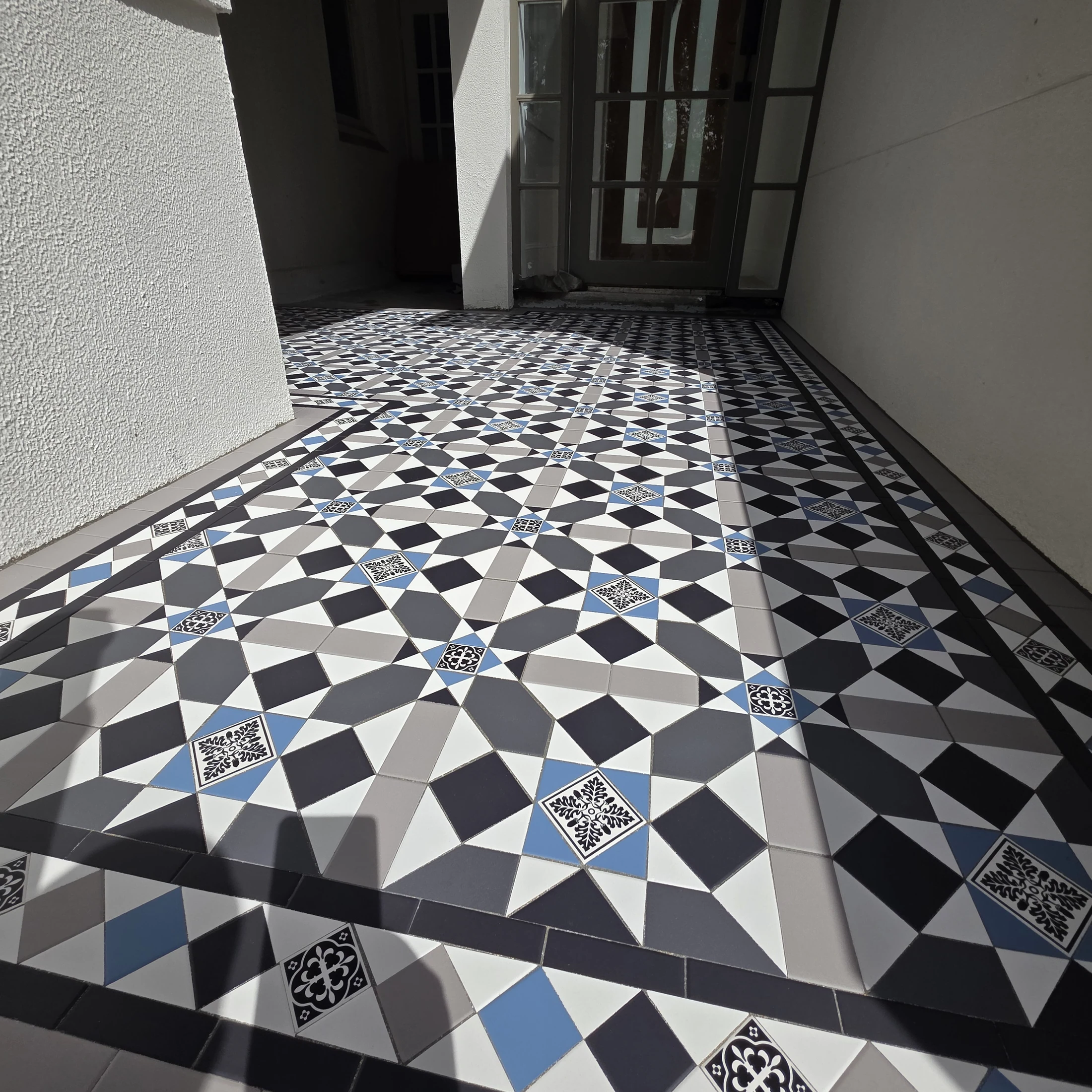
A Glen Alpine setting with more than one architectural layer
Campbelltown City Council records Glen Alpine as a housing estate launched in 1986 around the golf course, with parks, large blocks, gently curving streets and private cul-de-sacs. That setting can favour generous outdoor thresholds, long paths and entertaining areas, but each property still needs its own measurements and circulation plan.
The suburb also takes its name from an older homestead story. Council heritage material identifies the original house site and a second house of the same name as local heritage items. These references are important context for nearby design decisions, but they do not mean every Glen Alpine home is heritage listed or shares one period style.
Heritage Items in Campbelltown — Campbelltown City CouncilCampbelltown Local Government Area Heritage Review — Campbelltown City Council
Plan the pattern around the property
For Glen Alpine entries, verandahs and garden paths, layout decisions should respond to the width of the approach, the relationship between the door and the drive, and the way borders meet steps or lawn. A restrained field with a defined border can clarify a broad approach, while a more detailed arrangement may suit a contained porch or internal floor. Drawings and a site discussion help test those choices before supply or installation.
Where an existing floor or path is being retained, assess its condition and levels before deciding whether selective repair, a sympathetic replacement or new work is appropriate. Stone bullnose or edging coordination can help resolve exposed edges and changes in level, subject to the actual site conditions.
When heritage context matters
The local register and heritage study identify specific Glen Alpine places rather than a suburb-wide heritage character control. If a project affects a listed property, an adjacent property or fabric that may have heritage value, check the relevant planning information and obtain property-specific advice before work begins. Heritage-sensitive tiling is about retaining useful original material where practicable, matching proportion and colour carefully, and distinguishing new work from old without making unsupported assumptions about the property's status.
For homes outside those identified places, the same careful process can still produce a coherent result: record the existing thresholds and surfaces, consider drainage and movement at external transitions, and choose a pattern that belongs to the building rather than treating a historic reference as a template.
Heritage Items in Campbelltown — Campbelltown City CouncilCampbelltown Local Government Area Heritage Review — Campbelltown City Council
Design, supply, installation and restoration in Glen Alpine
AHTC can help Glen Alpine property owners work through tessellated tile design, tile supply, installation planning and restoration options. The useful starting point is the surface itself: its dimensions, condition, exposure, access and relationship to adjoining materials. That assessment helps keep a new pattern, replacement area or restoration scope proportionate to the property.
For an initial discussion, bring the suburb, the area being considered and clear photographs of the existing surface or proposed location. The retained enquiry form can then be used to discuss the next step.
Your Heritage Tiling Questions
Is every Glen Alpine home heritage listed?
No. Campbelltown Council's heritage material identifies specific Glen Alpine items, including the original-house site and the second house known as Mt Huon. Those listings should not be treated as evidence that every home in the suburb is heritage listed. Check the relevant property and planning information for a site-specific answer.
Can tessellated tiles suit a Glen Alpine pathway or verandah?
They can, provided the pattern, border, levels, drainage and transitions are designed for the actual site. Glen Alpine's estate setting includes broad blocks, curved streets and outdoor spaces, so the right proportion depends on the approach and building rather than on a standard suburb-wide layout.
How should I approach tiling near a locally listed Glen Alpine place?
Begin with a property-specific check of the listing and applicable planning requirements. Document existing tile or masonry fabric, avoid assuming that a replacement is automatically acceptable, and obtain suitable advice before removing or altering significant material. A design discussion can then consider retention, repair, matching and clearly legible new work.
What information is useful for a Glen Alpine tessellated-tile enquiry?
Useful starting information includes the suburb, whether the work is new installation or restoration, approximate dimensions, photographs taken from several angles, and any known heritage or planning information for the property. Those details help frame a site-sensitive conversation without assuming a pattern or construction method in advance.
Discuss Your Heritage Tiling Project
Share your location, project details and photographs using our enquiry form, or call 0433 932 711.