
Tessellated Tiles in Macquarie Fields
Macquarie Fields combines early local history with neighbourhoods shaped by successive waves of residential development. For a verandah, entry, pathway or interior floor, tessellated tiling works best when the pattern, scale and edging respond to the individual home rather than assuming one suburb-wide style. AHTC can help with design consultation, tessellated tile supply, installation, restoration and stone bullnose or edging coordination.
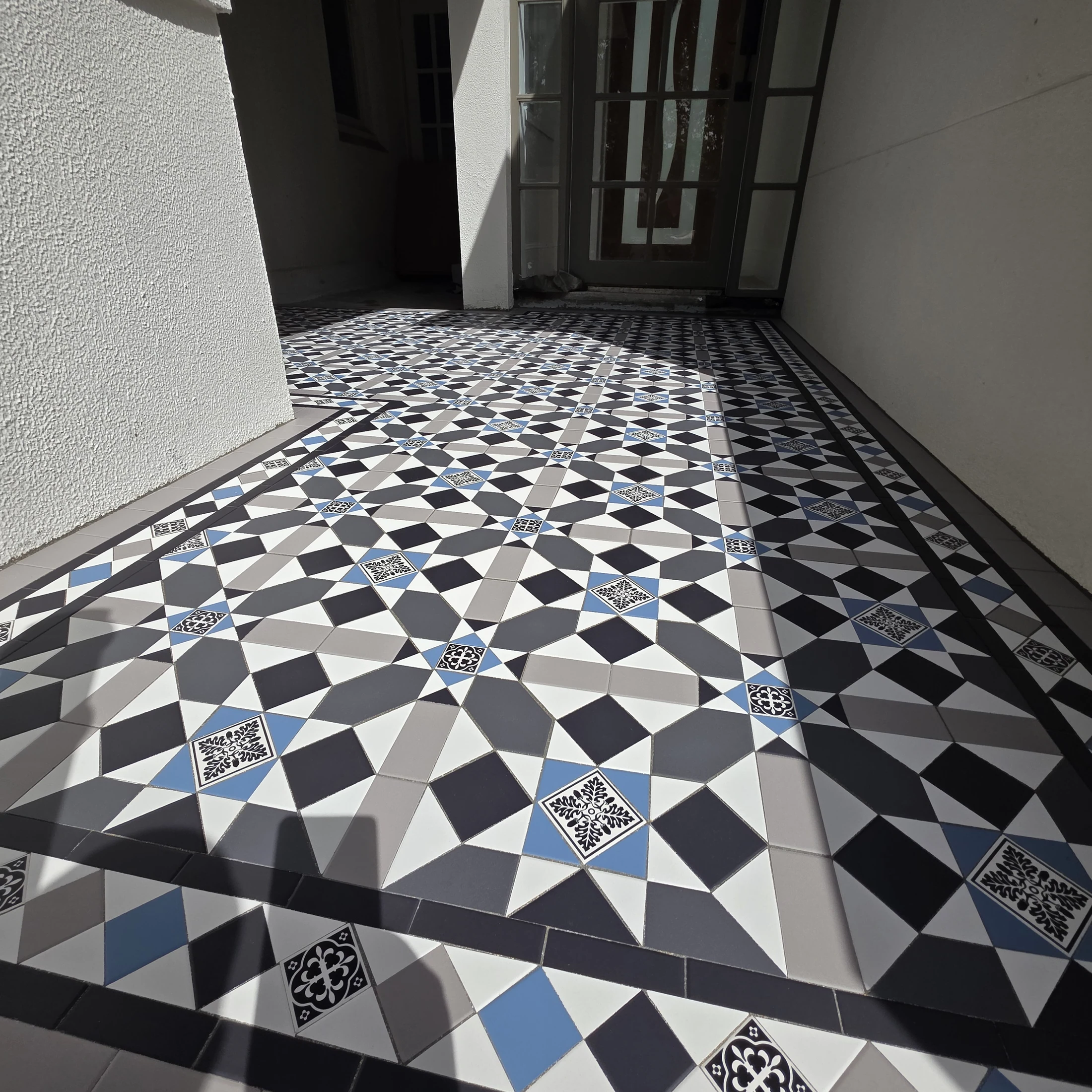
A varied Macquarie Fields setting calls for a measured design approach
NSW Planning describes the Macquarie Fields precinct as predominantly low-rise residential, with detached homes alongside semi-detached, terrace and townhouse forms. That variety matters when choosing a tessellated layout: an open front verandah, a compact porch and a later entry sequence each need different proportions, transitions and visual weight.
The area also includes creek corridors, open space and transport-related constraints. On a sloping, exposed or frequently used approach, tile selection and detailing should be considered with the actual levels, drainage, thresholds and pedestrian route in view. A site assessment can help separate a decorative opportunity from a practical access or weathering issue.
Heritage context without assuming heritage protection
Macquarie Fields has a documented historic layer. Campbelltown Council's local register includes Macquarie Fields House, whose heritage record describes a colonial Regency-style mansion with a returning stone-flagged verandah, Doric columns, stuccoed walls and French windows. Those details can be useful design references when a property genuinely relates to an older architectural setting.
That listing does not mean every home in Macquarie Fields is heritage-listed. If a project affects a listed property or land next to one, the owner should check the applicable council and NSW heritage requirements before finalising work. For other properties, the design can still be sympathetic to the home's proportions and surviving fabric without presenting the work as conservation-authorised.
Plan the pattern around the property
For a Macquarie Fields verandah or pathway, begin with the geometry of the space, door clearances, stair or ramp transitions and the relationship between borders and the main field. A restrained border can clarify a narrow approach, while a more prominent layout may suit a broad, formal frontage. The right choice depends on the building and the route, not simply on a period label.
Where existing tessellated tiles remain, restoration should start with a condition review and careful matching of the surviving pattern and colour relationships. Selective repair, new work or a coordinated stone bullnose edge may each be appropriate in different areas. The aim is to make a considered decision about what can be retained and what needs to be renewed.
Your Heritage Tiling Questions
Are all homes in Macquarie Fields heritage-listed?
No. Campbelltown Council's register identifies particular heritage items, including Macquarie Fields House, rather than treating the whole suburb as heritage-listed. Check the property and its surroundings with the relevant authority before work if heritage status may apply.
Can tessellated tiles suit a newer Macquarie Fields home?
Yes. A tessellated layout can be designed for a newer home when its scale, border, colour balance and transitions suit the entry or outdoor space. The design should respond to the actual architecture rather than imitate an unrelated historic style.
What should be considered for a Macquarie Fields pathway or verandah?
Consider the width and geometry of the route, levels, drainage, thresholds, exposure and how the border meets stairs, walls or garden edges. These practical details help determine the appropriate layout and edging before installation begins.
Can existing tessellated tiles be restored rather than replaced?
Often the first step is a condition and pattern assessment. If the original tiles and substrate can be retained, selective restoration or carefully matched repairs may be considered; areas that are unstable or substantially altered may need a different treatment.
Discuss Your Heritage Tiling Project
Share your location, project details and photographs using our enquiry form, or call 0433 932 711.