
Tessellated Tiles in Ruse, NSW
Ruse has a distinct local story: an area once associated with farms and eucalypt bushland that became a planned residential suburb from the late 1960s. For homes, entries, verandahs and garden paths in Ruse, tessellated tile choices work best when the pattern, scale and edge details are considered alongside the property's existing materials and the way it meets the garden or street. AHTC can assist with design consultation, tessellated tile supply, installation, restoration and stone bullnose or edging coordination.
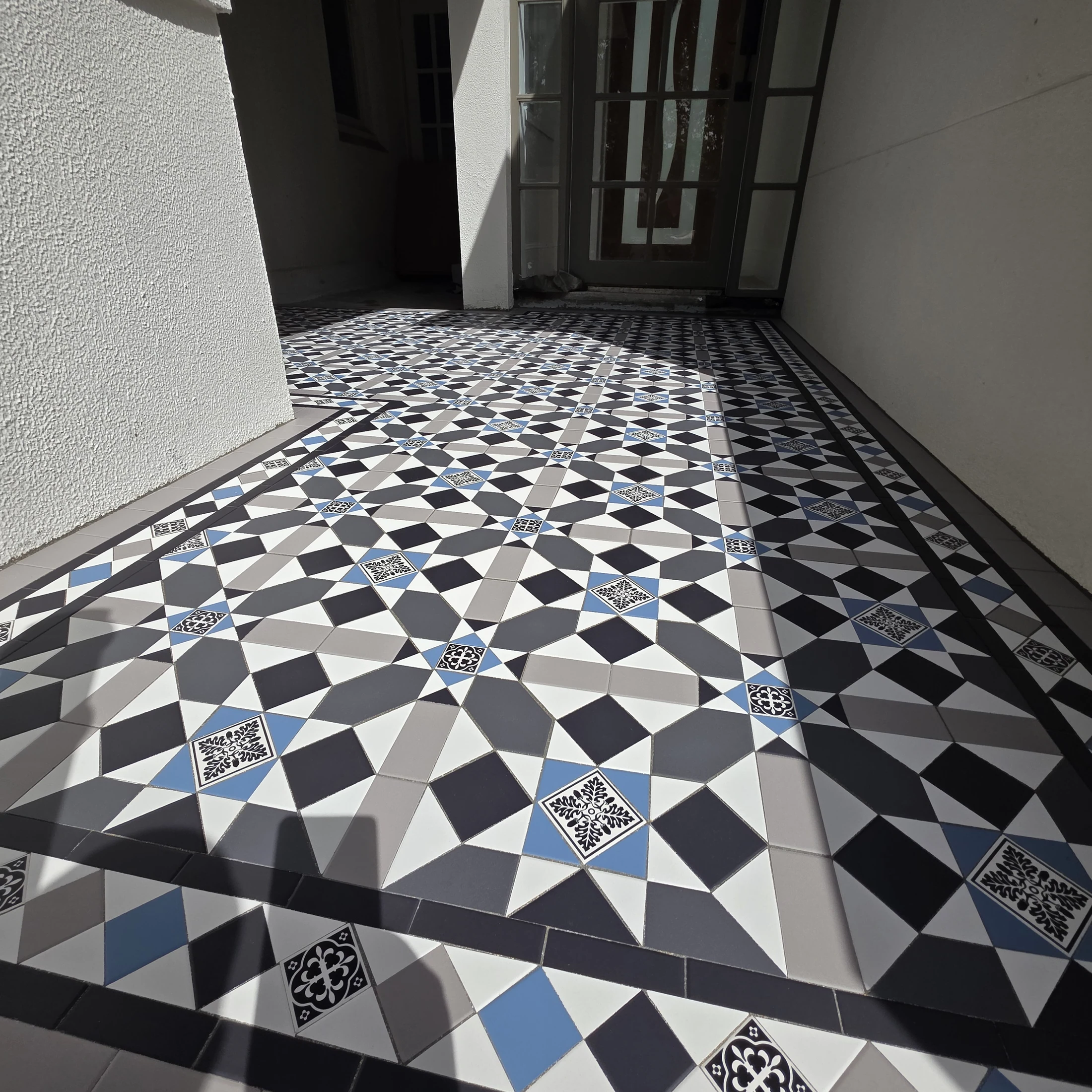
Designing tessellated tile work for Ruse properties
Council's local history records Ruse's change from bushland farms and orchards to housing estates, followed by a family-oriented suburban setting with parkland and bushland still prominent. That mix makes the immediate property more useful than a broad period label when planning a tiled entry, porch or path.
Start by looking at the home's roof form, brick or rendered walls, existing paving and the proportions of the approach. A restrained geometric field can sit comfortably beside established planting, while a border, threshold or bullnose edge can give a small area a deliberate finish. The right pattern is a design decision for the individual property, not a claim that all Ruse homes share one architectural style.
Entries, verandahs and pathways
Ruse's named streets include mountain, waterway, colonial and explorer themes, a local detail that can inform a light-touch design conversation without turning street naming into an architectural rule. For a front path or verandah, consider how the layout reads from the footpath, where water is directed, how the pattern meets steps and whether the edge needs a durable stone bullnose or another coordinated finish.
For an existing tiled area, retain sound original material where practical and document movement, cracking, drummy areas, staining and failed edges before selecting replacement tiles. New work should be designed around the actual substrate, levels and transitions rather than applying one universal installation recipe.
Heritage checks before altering an older property
Ruse's housing expansion is largely associated with the late 1960s and 1970s, but age or a local story alone does not establish heritage listing. Campbelltown Council explains that local items are identified on its Local Heritage Register and that certain changes to listed places can require approval.
Before removing established tiles or changing a significant entry, check the property's current planning and heritage position with the relevant authority. A tile consultation can then focus on matching, selective repair, compatible new work and clear transitions while leaving approval decisions to council or other responsible authorities.
A measured approach to local tile work
Whether the brief is a new tessellated pathway, a verandah pattern or restoration of an older tiled surface, useful planning begins with photographs, dimensions, access details and the condition of the existing work. Design consultation can then cover pattern proportion, colour relationships, tile supply, installation sequencing and the treatment of stairs, thresholds and exposed edges.
Your Heritage Tiling Questions
Are all Ruse homes heritage-listed?
No. Ruse's documented development from the late 1960s does not by itself establish heritage listing. Campbelltown Council says local heritage items are identified on its Local Heritage Register, so check the specific property before assuming heritage controls apply.
Can tessellated tiles suit a Ruse verandah or front path?
They can, provided the pattern, scale, drainage, steps and edge details suit the individual property. A site-led design is more reliable than assigning one architectural style to the whole suburb.
What should I check before replacing older tiles in Ruse?
Record the existing pattern and condition, check the substrate and levels, and confirm whether the property or place has heritage controls. Council guidance distinguishes routine maintenance from work that may affect a listed item, so obtain property-specific advice before significant alteration.
Can an existing tessellated pattern be restored rather than replaced?
Often the first step is an inspection to identify sound tiles, movement, cracking, staining, failed edges and missing sections. The resulting design can then consider selective repair, careful matching or compatible new work rather than assuming full removal is necessary.
Discuss Your Heritage Tiling Project
Share your location, project details and photographs using our enquiry form, or call 0433 932 711.