
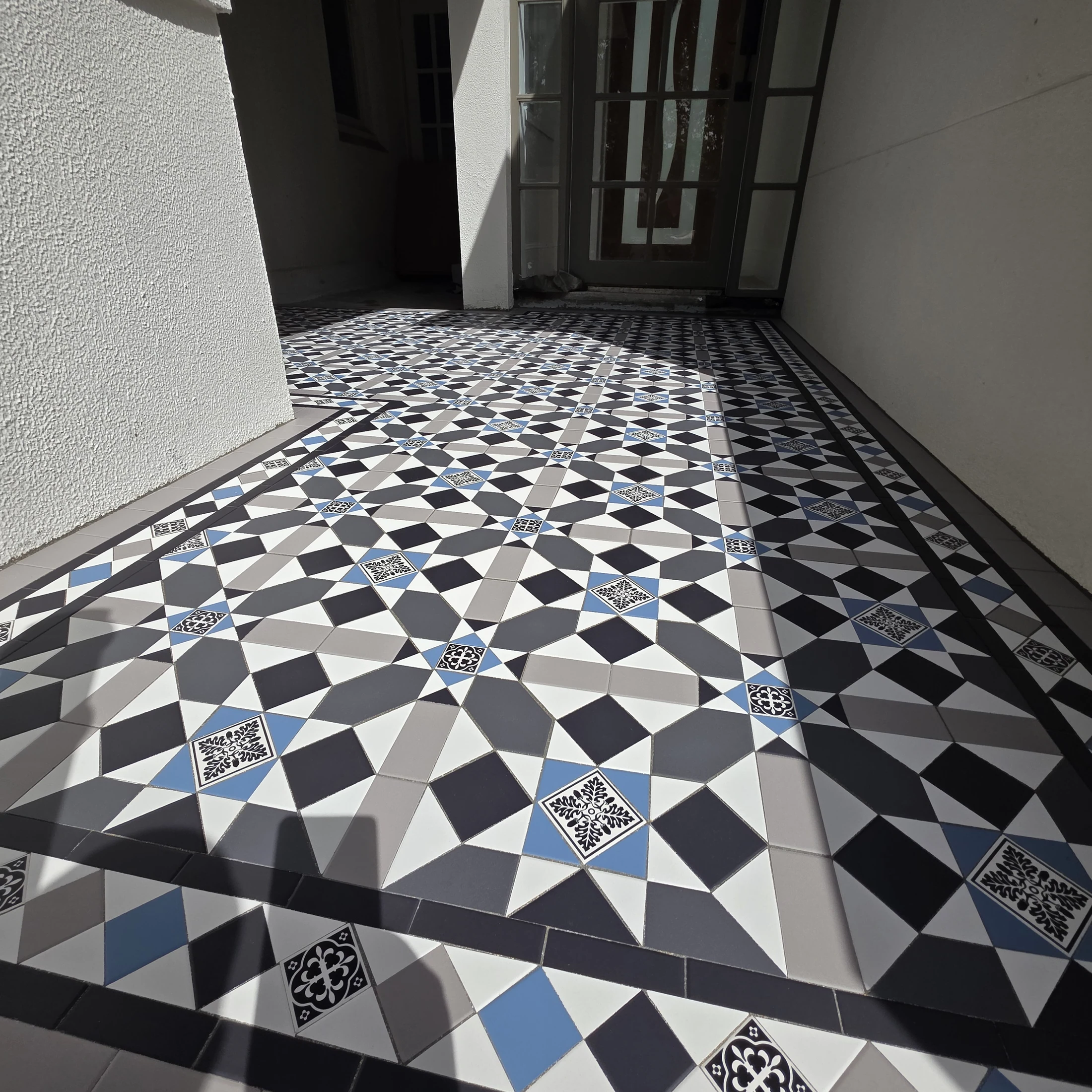
Tessellated tiles in Cabarita, NSW
Cabarita's riverfront setting gives local paving and entry projects a practical context. City of Canada Bay's Cabarita Park plan describes exposed foreshore areas, sandy soils, sandstone features, established pathways and drainage across the park. For a home project, those conditions are useful prompts for a site-specific conversation about layout, transitions, surface condition and how new work meets existing fabric. AHTC can discuss tessellated tile design, supply, installation and restoration for properties in Cabarita.
A riverfront setting to consider in the design
Cabarita Park sits beside the Parramatta River and includes foreshore areas, sandstone shelves and benches, vegetated spaces and pathways. The council plan also records thin sandy soils and drainage divided by a central ridge. These are public-park observations rather than a description of every private property, but they are sensible prompts when planning an exposed verandah, entry or pathway: review falls, edges, transitions and water movement on the actual site rather than assuming a standard detail.
A considered tessellated layout can relate a new path or verandah to the proportions of the home and its approach. Pattern scale, border treatment and junctions with steps or other paving should be selected after measuring the space and checking what can be retained.
Work carefully where older fabric remains
The Cabarita Park plan records both Aboriginal and non-Indigenous heritage values, including the park landscape, a rotunda, the swimming centre and a former ferry wharf. That public-place history does not make a private home heritage listed, and it does not imply that AHTC has heritage approval authority. It does support a careful approach to older-looking paving: document what is present, distinguish sound original material from later repairs, and decide whether matching, selective repair or new installation best suits the property.
The NSW State Heritage Inventory provides the official starting point for checking listed places and objects. Listing status is property-specific, so owners should confirm current requirements with the relevant council or agency before work that may affect a listed item or a heritage control area.
Cabarita Park Plan of ManagementState Heritage Inventory — NSW Government
Design, craftsmanship and practical coordination
For a Cabarita project, useful early decisions include the intended path or verandah geometry, the relationship between borders and field pattern, thresholds, edge details and the condition of any existing tiles. Supply and installation can then be coordinated with the selected design, while restoration work can focus on retaining and repairing suitable existing fabric where that is practical.
A site review should also consider access, exposure and the relationship between the proposed work and surrounding landscape. The aim is a durable, legible finish that belongs to the property rather than an unexamined pattern applied without regard to its setting.
Your Heritage Tiling Questions
Is every home in Cabarita heritage listed because Cabarita Park has heritage significance?
No. The Cabarita Park plan discusses the significance of that public park and selected park elements. Heritage status is not automatically suburb-wide. Check the specific property and current controls through the NSW State Heritage Inventory and the relevant council or agency.
What site issues are worth discussing for a Cabarita pathway or verandah?
Discuss the actual site's exposure, drainage, falls, thresholds, edges and access. The council's Cabarita Park plan records exposed foreshore areas, sandy soils, sandstone features and drainage across the park; those observations are useful prompts, not a universal specification for private properties.
Can existing tessellated tiles be restored rather than replaced?
That depends on the condition, extent and significance of the existing fabric. A condition-led assessment can help distinguish areas suitable for retention or selective repair from areas that require a new installation, while keeping the design and transitions coherent.
Where can I check whether a Cabarita property has a heritage listing?
Start with the NSW State Heritage Inventory's property, map and statutory-list search tools, then confirm current information with the relevant local council or agency. The Inventory notes that records are updated and that current confirmation should be obtained from the relevant authority.
Discuss Your Heritage Tiling Project
Share your location, project details and photographs using our enquiry form, or call 0433 932 711.