
Tessellated tiles in Concord West
Concord West is a Sydney inner-west suburb within the City of Canada Bay area. For a local tessellated-tile project, the useful starting point is the property itself: the home's proportions, surviving finishes, access conditions and the relationship between new work and the existing streetscape. We can help with design consultation, tessellated tile supply, installation, restoration and stone bullnose or edging coordination, with the final approach shaped around the site.
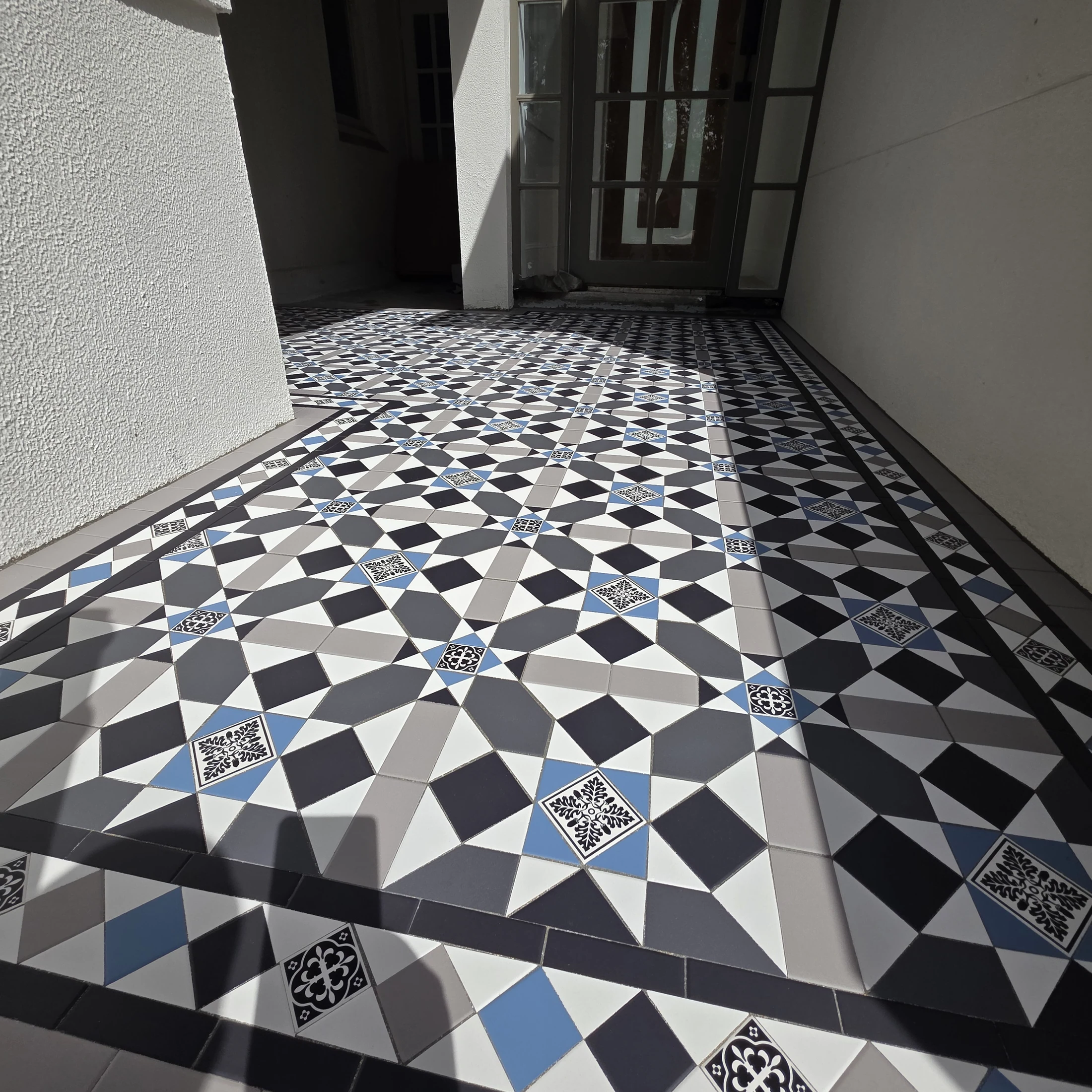
A property-led approach for Concord West homes
The City of Canada Bay's local-history resources cover the area's settlement, built environment and property-history research. That makes a measured review more useful than assuming a single architectural character across all of Concord West. Look first at what remains: an original path, verandah floor, border, step or threshold may provide the strongest design reference for replacement or extension work.
The wider Concord West setting also includes documented heritage places and landscape context. A planning document for one Concord West site records nearby listings including Concord West Railway Station, Concord West Railway Station Park and Powell's Creek Reserve, while noting that the particular site discussed was not heritage-listed or in a conservation area. Those facts do not determine the status of another property, so address-level checking remains important.
Local history — City of Canada Bay CouncilPlanning proposal document for 176–184 George Street, Concord West | NSW Planning Portal
Design considerations for paths, verandahs and thresholds
For a Concord West entrance or verandah, proportions and transitions should be resolved before a pattern is selected. Existing step heights, door clearances, drainage falls and the junction with masonry or stone edging can affect the finished layout. Where original tiles survive, their colour balance, border geometry and wear can guide a compatible new section without pretending that every nearby home shares the same pattern.
A pathway is read from the street as well as from the front door. A restrained border, clear edge treatment and a layout that responds to the path width can help new work sit comfortably with the property. The appropriate tile selection and installation sequence depend on the measured site and the condition of the base; there is no universal substrate recipe for every Concord West property.
Check the property's heritage context first
Council distinguishes an individual heritage item from a conservation area, and also notes that properties near a listed place can be affected to a lesser extent. Before changing an older path, verandah or visible frontage, check the address in Schedule 5 of the Canada Bay Local Environmental Plan, the council mapping service and the NSW Planning Portal. If the work may affect heritage values, seek the relevant independent heritage advice before finalising the scope.
This page is practical tiling guidance, not heritage approval or planning advice. A listing does not mean that every part of a property is original, and an unlisted property should not be assumed to have no design constraints. Recording existing fabric and photographing junctions, borders and thresholds can give the design and installation discussion a more reliable starting point.
Heritage listings | City of Canada Bay CouncilPlanning proposal document for 176–184 George Street, Concord West | NSW Planning Portal
Useful local history and service navigation
The City of Canada Bay Local Studies collection is a useful starting point for researching the area's history and a property's past. It includes historical maps, photographs and other reference material, and council provides further directions for property-history research. Use those resources alongside the council's heritage and planning maps when a project depends on understanding earlier work.
Concord West remains on the existing Canada Bay service-group route so that local guidance, broader tessellated-tile services and the council-level heritage resources can be reached without creating a duplicate specialist page.
Local history — City of Canada Bay CouncilHeritage listings | City of Canada Bay CouncilAbout Council | City of Canada Bay
Your Heritage Tiling Questions
Is every Concord West home heritage-listed?
No. Heritage status is property-specific. City of Canada Bay Council distinguishes individual heritage items from conservation areas and directs owners to Schedule 5 of the Canada Bay Local Environmental Plan, council mapping and the NSW Planning Portal to check an address.
Can existing tessellated tiles in a Concord West verandah be retained?
That depends on their condition, extent and relationship to the proposed work. A site review can document surviving tiles and identify whether cleaning, selective restoration, careful matching or a new adjoining layout is the more suitable path. If the property is heritage-affected, obtain the relevant independent heritage advice before changing significant fabric.
What should be checked before installing a tessellated pathway?
Check the path dimensions, levels, drainage, steps, thresholds, edges and the condition of the base. Also check the property's heritage status and any nearby heritage context through the council and NSW planning resources. These checks help determine a suitable layout and installation sequence without assuming one method fits every site.
Does a nearby listed place automatically make my Concord West property heritage-listed?
No. The effect of a nearby heritage item or conservation area depends on the specific property and proposal. Council notes that properties in the vicinity may be affected to a lesser extent, so the address and proposed work should be checked rather than inferred from the suburb or a nearby listing.
Discuss Your Heritage Tiling Project
Share your location, project details and photographs using our enquiry form, or call 0433 932 711.