
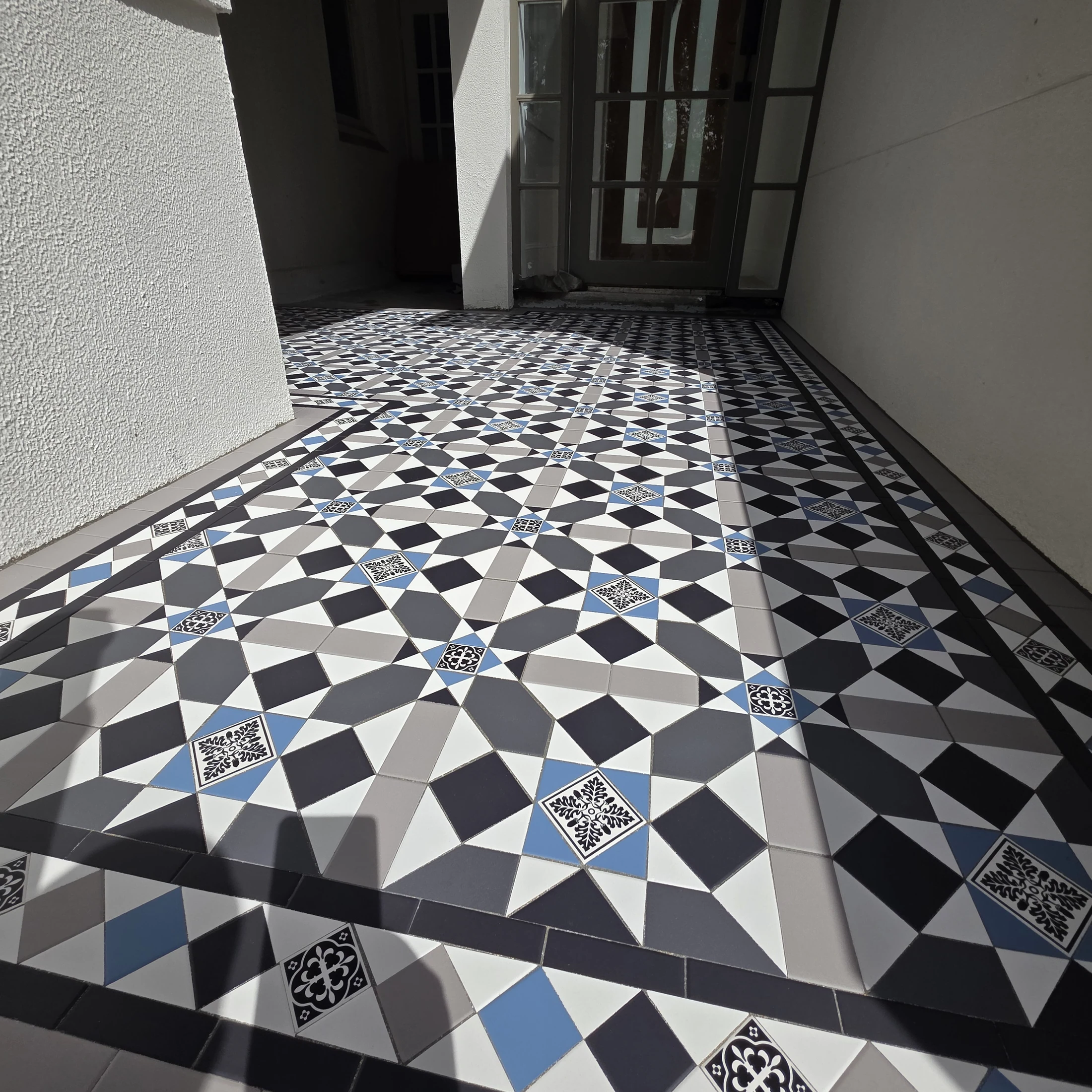
Tessellated tiles in Rodd Point
Rodd Point's waterfront setting brings a clear sense of place to decisions about tiled entrances, verandahs, paths and interior floors. The City of Canada Bay's local-character work describes a predominantly residential neighbourhood where post-war homes sit alongside smaller pockets of Federation and Californian Bungalows, with consistent setbacks, fence lines and views towards the water. For a Rodd Point project, the right tessellated tile approach starts with the existing home, its street interface and the way new work will meet the garden, footpath or waterfront-facing setting.
A varied residential character
Rodd Point is not defined by one uniform house style. The local-character statement records common post-war development as well as smaller intact pockets of Federation and Californian Bungalows, including along Duke Avenue. It also notes consistent setbacks and fence lines that give otherwise varied homes a sense of streetscape cohesion.
That mix makes proportion, edge detail and the relationship between old and new especially important. Tessellated flooring can be selected to complement the lines and material character of an existing home without implying that every property is heritage-listed or that one pattern suits the whole suburb.
Design considerations for homes and outdoor spaces
For a Federation or Californian Bungalow, a restrained border, a carefully scaled field and a considered threshold can support the home's proportions. For a post-war or more recent dwelling, a simpler geometric layout may provide a clean transition between the entry, living areas and garden. The design should be developed from the property's existing lines rather than from a generic period label.
Rodd Point's local-character material highlights wide verges, consistent street interfaces, waterfront views and connections to parks and paths. On external work, the layout, levels, drainage interfaces, edge treatment and transition to existing paving should therefore be resolved together. A site assessment is needed before specifying installation or restoration work, particularly where an existing floor or path is being retained.
Craftsmanship that responds to the setting
Rodd Point's documented history is closely tied to the water. The area was formerly known as Vault Point, while Barnstaple Manor and nearby Rodd Island remain part of the City of Canada Bay's recorded local story. That history can inform a thoughtful sense of arrival, but it should not be turned into a claim that a present-day property shares the fabric or status of those places.
Good tessellated work depends on an agreed layout, clean transitions and careful attention to the existing building. Design consultation, tile supply, installation and restoration can be considered as separate or coordinated stages, with the final approach based on the condition and purpose of the particular floor, verandah or pathway.
Your Heritage Tiling Questions
Does every Rodd Point home have heritage protection?
No. Rodd Point's local-character material describes a varied residential area and identifies some bungalow pockets and streetscape qualities, but it does not establish that every home is heritage-listed or in a heritage conservation area. Any property-specific planning or heritage question should be checked with the relevant authority before work begins.
What tile approach can suit a Rodd Point bungalow?
A bungalow brief can consider the home's proportions, entry sequence, verandah or path geometry, existing materials and street interface. A restrained border and carefully scaled field may be appropriate in some homes, while another property may call for a simpler layout. The design should respond to the individual dwelling rather than assume one suburb-wide pattern.
Can existing tessellated tiles in Rodd Point be restored?
Potentially, subject to their condition, extent, substrate and the feasibility of retaining them. An assessment should identify what can be preserved and where replacement or complementary new work is needed. The appropriate method cannot be confirmed from suburb context alone.
What should be considered for a Rodd Point pathway or verandah?
Consider the existing levels, drainage interfaces, exposure, thresholds, edge treatment and the way the new work meets garden, paving and the street. This is particularly relevant in a suburb where council material highlights waterfront paths, verges, pedestrian connections and public-realm conditions. A site assessment should guide the final installation detail.
Discuss Your Heritage Tiling Project
Share your location, project details and photographs using our enquiry form, or call 0433 932 711.