
Tessellated tiles in Kidman Park
Kidman Park's local story includes the subdivision of land from the former Fulham Park Stud in 1954, while the western Adelaide setting has continued to change through residential, commercial and infrastructure development. For a home or project here, the right tessellated tile approach depends on the building, the area being tiled and whether existing work is being retained, repaired or replaced. AHTC can discuss design, tessellated tile supply, installation, restoration and stone bullnose or edging coordination for the property in front of you.
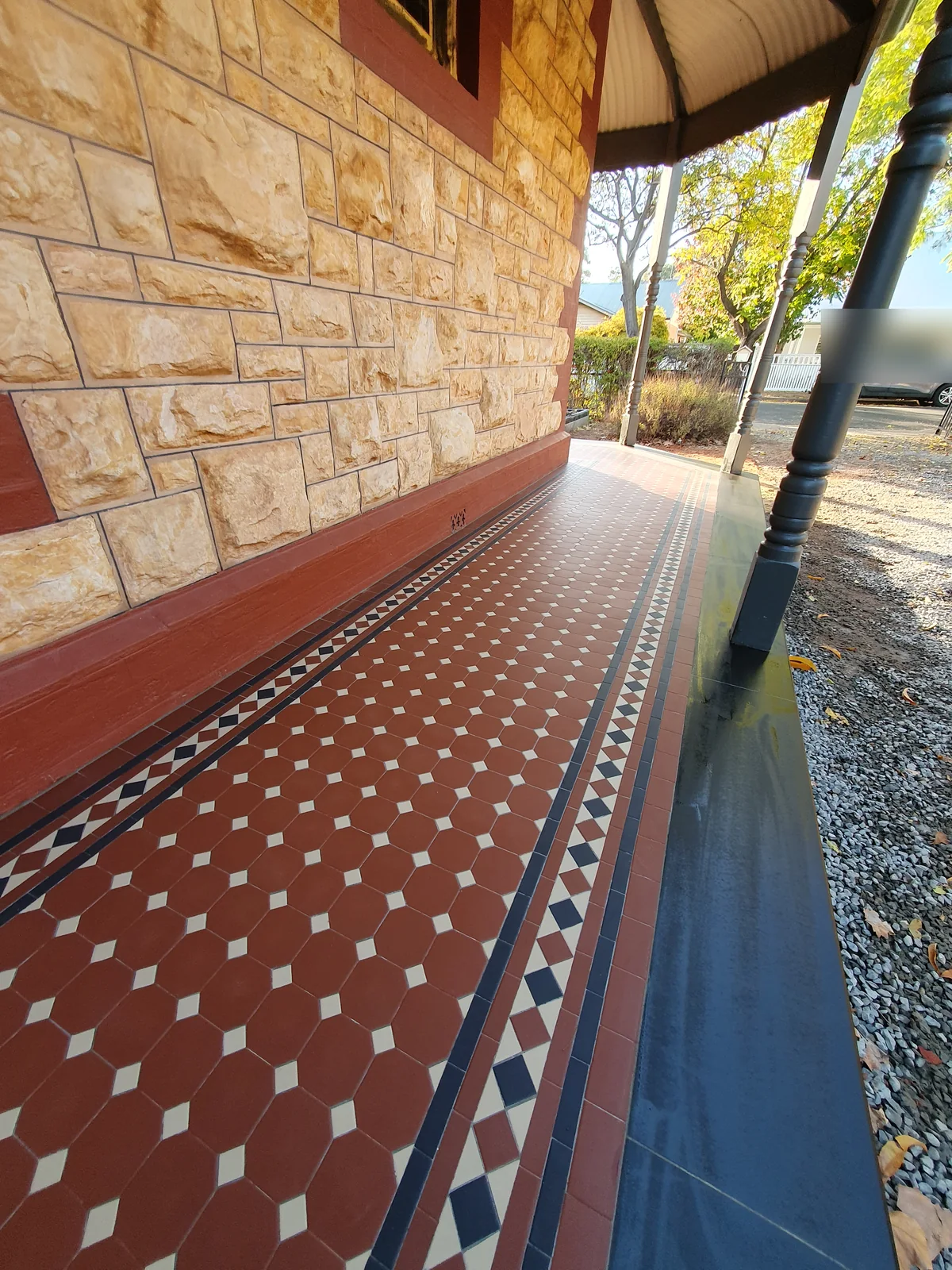
A local context for tile decisions
The City of Charles Sturt records that part of the former Fulham Park Stud was sold to the Housing Trust and subdivided as Kidman Park in 1954. That fact gives the suburb a clear development story, but it does not make every house the same age or give every property heritage protection. Tile choices should be based on the actual dwelling, its surviving details and the brief for the work.
The wider western Adelaide heritage study describes a metropolitan region shaped by post-war expansion and changing land uses. In Kidman Park, that broader setting can mean a mix of original, altered and newer work. A measured design review is more useful than assuming a period pattern from the suburb name alone.
Where a project sits within a changing area or near a defined redevelopment precinct, confirm the property's current planning and heritage position with the relevant authority before treating an existing pattern, verandah or pathway as protected. A tile consultation can inform design and condition decisions, but it is not a heritage approval.
Designing tessellated work for the property
For a front verandah or entrance, begin with the proportions of the space, thresholds and sightlines to the façade. A restrained border, a central field or a more decorative layout can each be appropriate when the geometry responds to the building rather than being selected as a generic suburb style.
Paths need their own review. Width, turning points, changes in level, drainage exposure and the relationship between the path and garden or boundary edges all affect the practical layout. Stone bullnose or other edging coordination may be useful where the finish needs a defined transition, but the edge detail should be selected with the site and adjoining materials in mind.
If existing tiles remain, record their pattern, colour relationships, edges and condition before disturbing them. Restoration may involve selective repair and careful matching; new installation may call for a different design and preparation discussion. The appropriate scope depends on what is found at the property, not on a universal substrate or installation recipe.
Check the property before work begins
The City of Charles Sturt's Kidman Park planning material describes a specific area bounded by Findon Road, Valetta Road, the River Torrens (Karrawirra Parri) and housing to the west that was considered through a Code Amendment process. That planning history is useful context for the area, but it is not a blanket rule for every property in Kidman Park.
Before changing an older verandah, pathway or other fabric, check the relevant planning and heritage information for the particular property. If an approval or referral is needed, that question belongs with the responsible authority and the property owner. A tile specialist can then work within the confirmed brief and document the design or repair choices clearly.
Discuss the right service scope
AHTC's local service discussion can cover design consultation, tessellated tile supply, installation, restoration and coordination of stone bullnose or edging details. The useful starting information is the location of the work, photographs or drawings where available, whether tiles are existing or new, and what the finished area needs to do day to day.
For an existing tiled area, describe visible movement, loose or damaged pieces, staining, edge wear and any previous alterations. For a new verandah or path, describe the footprint, access, adjoining surfaces and the visual relationship you want with the building. This keeps the advice property-led without assuming a particular age, pattern or construction method.
Your Heritage Tiling Questions
Does Kidman Park have a single heritage architectural style?
No single suburb-wide style should be assumed. Official local history records the 1954 subdivision of part of the former Fulham Park Stud, while the broader western Adelaide study describes substantial post-war growth and changing land uses. Individual properties may differ, so tile design should follow the building and surviving details in front of you.
Can existing tessellated tiles in Kidman Park be restored rather than replaced?
Possibly. The first step is to assess the existing pattern, matching relationships, edges and condition. Selective repair, careful matching or a new installation may each be appropriate depending on what remains and what the area needs to do.
Are all Kidman Park properties affected by the local redevelopment planning history?
No. The City of Charles Sturt planning material describes a defined area for the Kidman Park Code Amendment, bounded by Findon Road, Valetta Road, the River Torrens (Karrawirra Parri) and housing to the west. Check the particular property and current planning information rather than applying that history to the whole suburb.
What should I send when asking about a Kidman Park verandah or pathway?
Share the property's suburb, the approximate area and purpose, a few clear photographs or drawings where available, and whether the work is new, a repair or a restoration. Notes about access, thresholds, existing edges and any visible movement or damage help frame the design discussion.
Discuss Your Heritage Tiling Project
Share your location, project details and photographs using our enquiry form, or call 0433 932 711.