
Tessellated tiles in Lockleys
Lockleys has a distinctive western Adelaide residential setting, with broad frontages, established gardens and homes associated with 1920s to 1950s character patterns. For a verandah, pathway, entry or interior floor, tessellated tile choices can be planned around the proportions and surviving details of the property rather than applied as a generic pattern. AHTC provides design consultation, tessellated tile supply, installation and restoration, with stone bullnose or edging coordination where it suits the project.
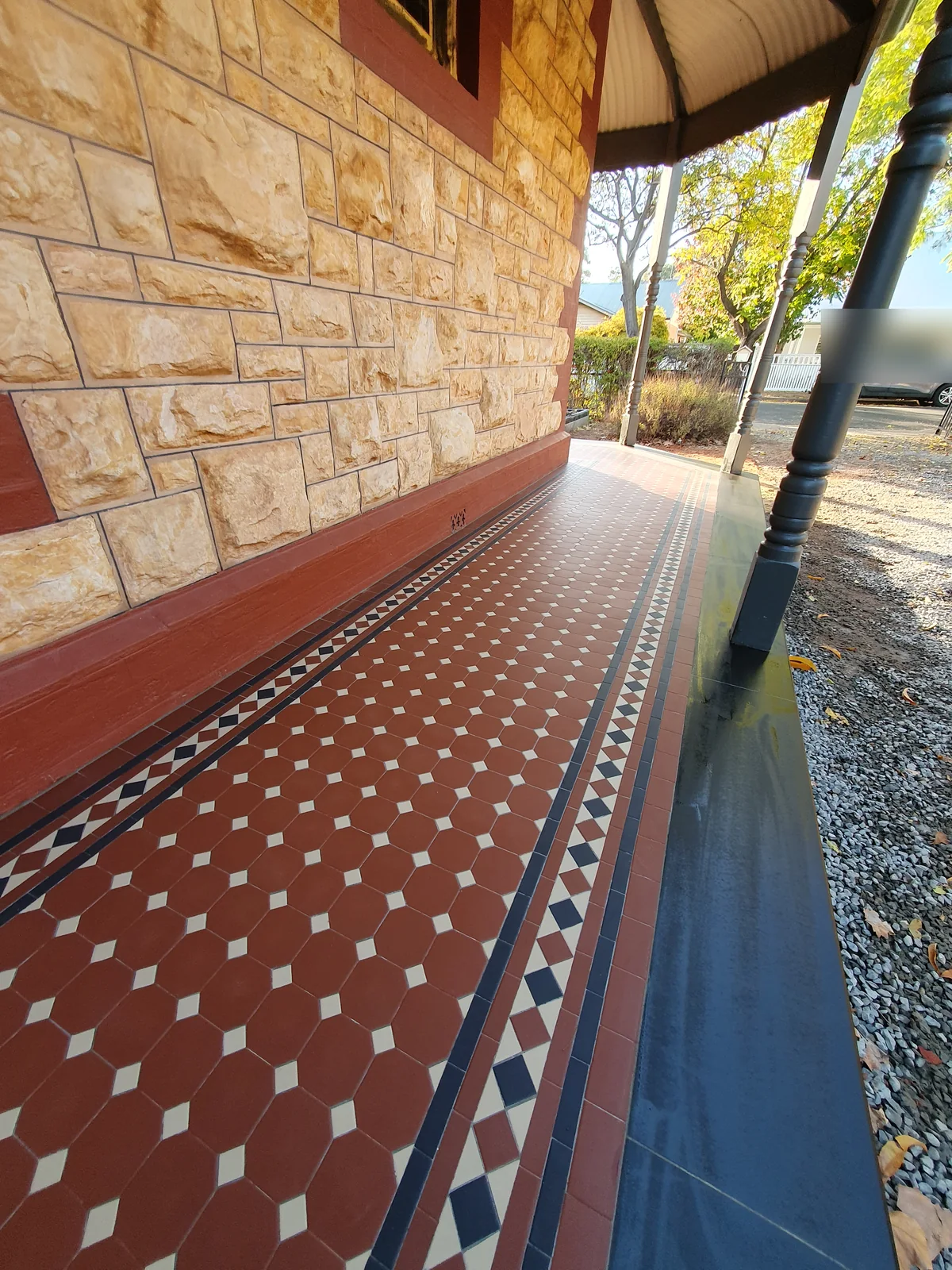
Designing for Lockleys character homes
South Australian planning material describes a Lockleys character area with bungalow, Tudor, Dutch Colonial and Art Deco influences, alongside examples of Spanish Mission and Arts and Crafts design. Pitched roofs, verandahs and porticos are part of that documented streetscape context. A tile layout for a front path or verandah can therefore benefit from careful attention to the existing entry width, roofline, brickwork and garden setting.
The same statement describes substantial allotments, generous side and rear setbacks, low site coverage and established gardens. These conditions can make border proportions, thresholds, drainage transitions and the relationship between paving and planting as important as the tile pattern itself. Existing fabric should be assessed before deciding whether to match, repair, extend or introduce new work.
Tessellated tiles for verandahs, paths and entries
For a Lockleys verandah or pathway, the design process can consider border scale, repeat, direction changes and the point where tiled work meets steps, garden edges or other paving. A restrained geometric field may sit comfortably with a bungalow or inter-war façade, while a more decorative border can be considered where the building already has strong period detailing.
Supply and installation planning should follow the actual site condition. Where an older tiled surface survives, restoration may involve documenting the pattern, locating compatible replacements and deciding which sound areas can remain. Where the work is new, layout, levels, access and edge details should be resolved before installation rather than inferred from the suburb name alone.
A property-led approach to older Lockleys homes
Lockleys' local history includes the Lockleys Estate, market-gardening land and later suburban subdivision. That history helps explain why properties can differ in age, scale and alteration history. It does not mean every home is heritage listed or that every tiling project needs the same treatment.
If a property sits within a mapped character or heritage area, or if its original fabric is important to the owner, check the current planning position for that particular site before work begins. AHTC can help document the existing tilework and develop a practical design, supply, restoration or installation brief around the property.
Your Heritage Tiling Questions
What tile approach suits a Lockleys bungalow or inter-war home?
Start with the home's existing proportions and details. A measured border, a balanced repeat and colours that relate to the brickwork, render, joinery and garden can support the building without making the new work look detached from it.
Can tessellated tiles be used on a Lockleys verandah or front path?
Yes, subject to the actual site. The layout should account for the verandah or path width, thresholds, steps, edge conditions, levels and exposure. Design consultation can resolve those details before supply and installation.
Does a Lockleys character area mean my home is heritage listed?
No. A character-area description records valued patterns and attributes across an area; it is not a statement that every property is individually listed. Check the current planning and heritage information for the specific property before altering significant fabric.
Can an older Lockleys tiled floor be restored instead of replaced?
Often the first step is an inspection and record of the surviving pattern, condition, edges and substrate. That assessment can help determine whether selective repair, compatible replacement or a carefully matched new section is the most appropriate option.
Discuss Your Heritage Tiling Project
Share your location, project details and photographs using our enquiry form, or call 0433 932 711.