
Tessellated Tiles in West Croydon
West Croydon sits within the City of Charles Sturt in Adelaide's western suburbs. For homes with a period frontage, verandah or established garden setting, tessellated tiles can be planned as part of the property's proportions and existing materials rather than treated as an isolated surface finish. Design consultation, tessellated tile supply, installation and restoration can be considered together, with the right approach depending on the condition and significance of the individual property.
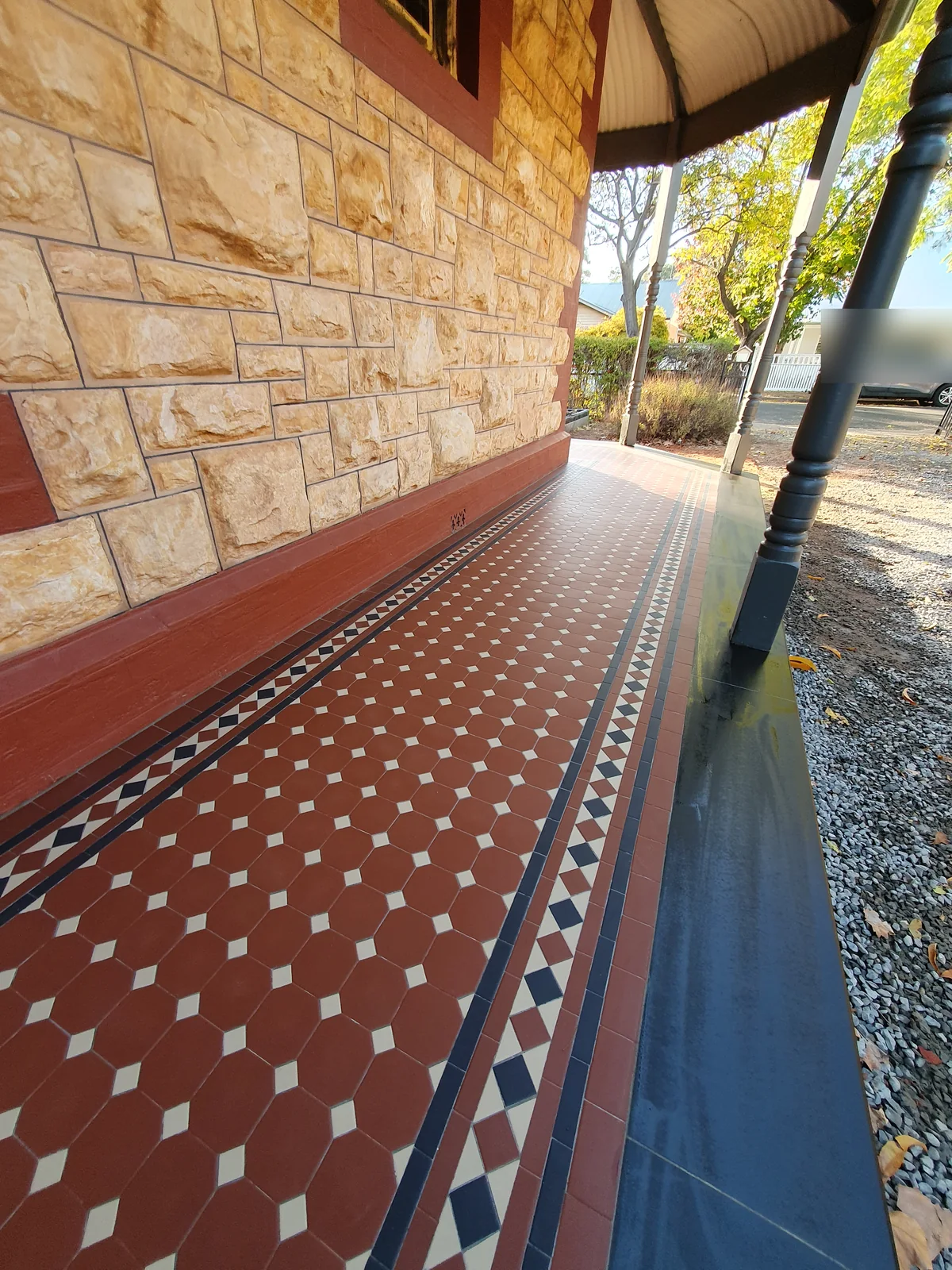
Reading West Croydon's period character
South Australian planning material identifies Croydon/West Croydon historic-area contexts on both sides of the railway line. The documented character includes Edwardian to early Federation buildings, later bungalow, Queen Anne, Tudor and Art Deco examples in one area, and villas, symmetrical cottages and some earlier workers' cottages in the other. Bluestone, sandstone and redbrick, separate verandahs, hipped or gable roofs and modest front setbacks are recurring considerations in the statements, but these descriptions do not mean that every home is protected or covered by an overlay.
The City of Charles Sturt also records formalised avenues of large exotic deciduous trees as typical in the historic-character suburbs of Croydon and West Croydon. A new verandah edge, path or entry should therefore be considered with the garden, frontage rhythm and access conditions in view.
Historic Area Statements and Character Area Statements — City of Charles Sturt, PlanSA
Designing a tile layout for the property
For a West Croydon verandah or front path, begin with the building line, step locations, door thresholds and the direction of approach. A border can help clarify the edge of a rectangular path, while a simpler field may sit more comfortably beside an already detailed facade. Existing masonry, painted finishes, ironwork and garden planting can guide the balance between pattern and restraint.
Where the work connects to an older verandah, careful set-out matters at corners, steps and transitions. The finished level, drainage fall, edge treatment and the relationship to adjoining paving should be assessed on site rather than assumed from a standard plan. Stone bullnose or edging coordination may be appropriate where the design needs a durable, visually controlled boundary.
Historic Area Statements and Character Area Statements — City of Charles Sturt, PlanSA
Restoring existing tiles with care
If original tessellated tiles remain, document their pattern, colours, borders and areas of loss before deciding whether to lift, repair or supplement them. Cleaning, isolated replacement and broader renewal are different interventions. Matching should consider the visible layout and the surrounding architecture, not only a single tile colour.
The planning statements note that a Heritage Impact Statement can help identify additional attributes within a historic area. That is a property-specific planning matter, so owners should check the applicable planning and heritage controls before altering significant fabric. A tiling assessment can support that conversation, but it is not an approval or a substitute for council or state advice.
Historic Area Statements and Character Area Statements — City of Charles Sturt, PlanSA
Planning the next step
A useful first discussion should cover the property's age and style, the existing surface, the intended use, access, thresholds and the desired relationship between new work and surviving fabric. Bring clear photographs of the whole frontage, close views of damaged areas and any available plans so the design and installation sequence can be considered together.
The existing West Croydon service route is the appropriate place to begin for local tessellated tile design, supply, installation or restoration guidance. Related city and regional service pages can provide broader technical context where a project needs more detailed advice about pathways, verandahs, restoration or stone edging.
Historic Area Statements and Character Area Statements — City of Charles Sturt, PlanSA
Your Heritage Tiling Questions
Are all West Croydon homes covered by a heritage overlay?
No. State planning material identifies Croydon/West Croydon historic-area contexts, including areas on each side of the railway line, but that does not establish that every property is covered or protected. Check the property's current planning information and obtain property-specific advice before changing significant fabric.
What should be considered when choosing tessellated tiles for a West Croydon verandah?
Consider the frontage proportions, existing masonry or render, verandah posts and steps, garden setting, threshold levels and the amount of pattern already present. A measured layout with suitable borders and transitions can support the architecture without making an unsupported claim about the property's heritage status.
Can existing West Croydon tessellated tiles be restored instead of replaced?
Often the first step is an assessment of the surviving pattern, condition, movement, missing areas and likely causes of damage. The appropriate response may be local repair, careful replacement or a broader renewal, depending on what is found on site and the value of the remaining fabric.
Does the local streetscape affect a new tiled path or verandah?
It can. The City of Charles Sturt identifies avenue plantings as typical in West Croydon's historic-character streetscapes, so access, tree roots, levels, drainage and the relationship between the path, garden and frontage should be assessed together. Site conditions should guide the final design.
Discuss Your Heritage Tiling Project
Share your location, project details and photographs using our enquiry form, or call 0433 932 711.