
Tessellated tiles in Woodville West
Woodville West has a planned urban-renewal context that brings together detached homes, medium-density housing, apartments, laneways and shared outdoor spaces. For a tiling project here, the right approach depends on the property and the surface: a retained verandah or entry may call for careful matching and repair, while a newer home may need a fresh layout that sits comfortably with its frontage, paving and planting. AHTC can help with design consultation, tessellated tile supply, installation, restoration and stone bullnose or edging coordination.
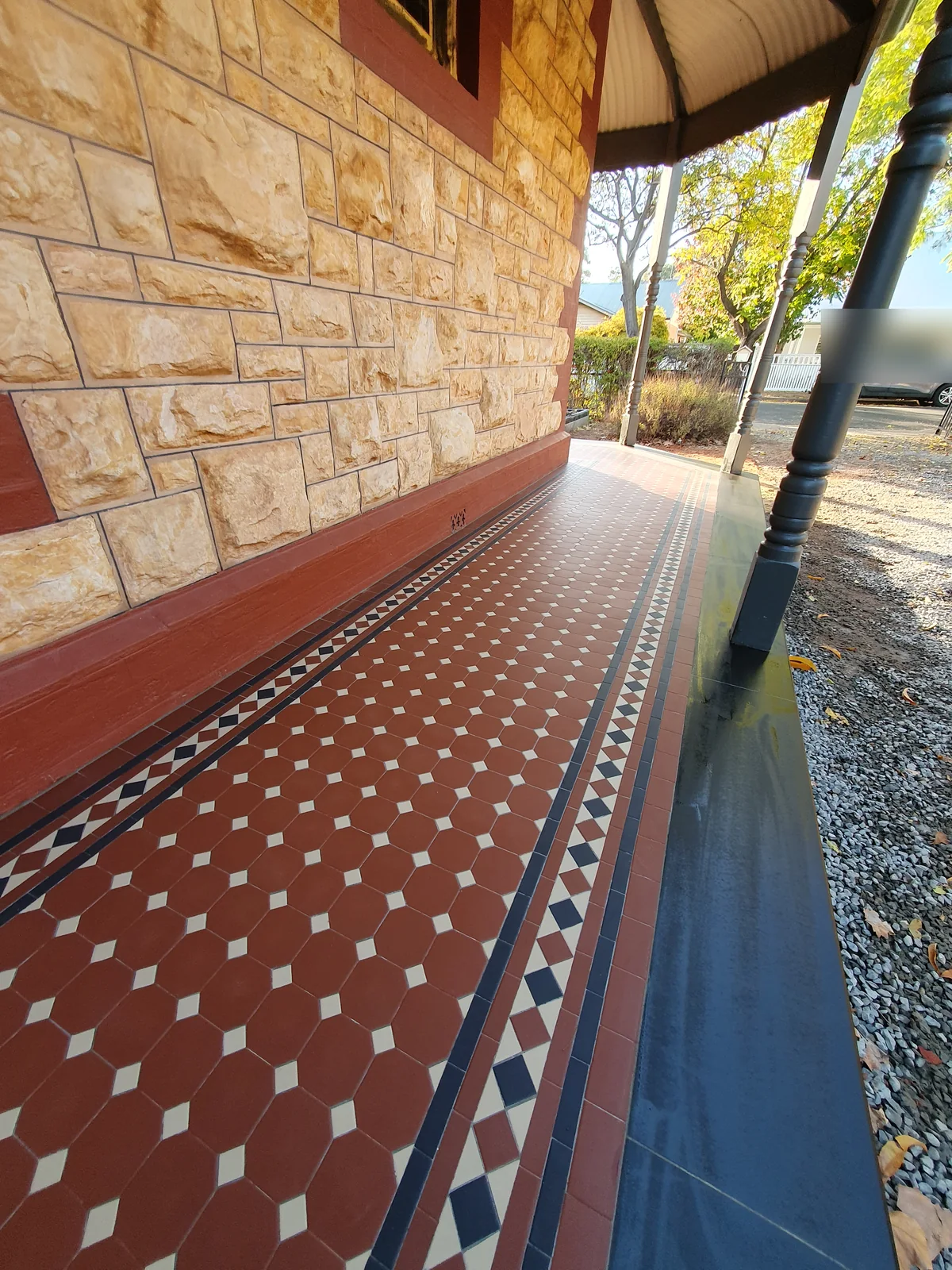
Designing for Woodville West homes and outdoor connections
Woodville West's renewal planning has included different housing forms, new streets and laneways, open-space areas and stronger pedestrian and cycling connections. That makes the relationship between a tiled threshold and the rest of the site especially important. Consider how a verandah, porch, path or entry transition meets garden edges, ramps, paving and drainage rather than choosing a pattern in isolation.
On a newer dwelling, a restrained tessellated layout can give an entry or covered outdoor room a clear edge without pretending that the house belongs to an earlier period. On an established property, the design conversation should begin with what remains: existing tiles, substrate, borders, steps, thresholds and adjoining stonework. The planning history of Woodville West describes an area undergoing change; it does not make every home heritage listed or require one universal style.
Plan the surface before selecting the pattern
For a Woodville West verandah or pathway, start with levels, falls, edge conditions, access and the intended use of the space. A measured layout can resolve borders, centre lines, steps and transitions before tiles are ordered. Where a project meets an existing floor or facade, colour and scale should be considered alongside the surrounding materials rather than treated as a standalone sample decision.
Restoration is different from replacement. Existing tiles may need assessment for soundness, compatible repairs and a practical boundary between retained and new work. Where the project is new, supply and installation can be coordinated around the agreed pattern, setting-out and edge treatment. Stone bullnose or edging may be useful at exposed steps and transitions, subject to the site's dimensions and finish requirements.
Check the property, not just the suburb name
A suburb-wide renewal or architectural context is not the same as heritage protection. If a particular Woodville West property is listed or sits within a relevant planning control, confirm the applicable requirements with the appropriate authority before work begins. South Australia's heritage database is a useful starting point for checking listed places; the result is property-specific, and an absence of a listing does not by itself settle every planning question.
For design advice, bring photographs, approximate dimensions and any information about existing tiles or previous alterations. That allows the layout, restoration scope, supply requirements and installation sequence to be discussed around the actual building rather than an assumed period or construction method.
Your Heritage Tiling Questions
Can tessellated tiles suit a newer Woodville West home?
Yes. The pattern and scale can be selected as a deliberate design feature for a porch, verandah, path or courtyard. The aim is to make the new work coherent with the home's proportions and surrounding materials, rather than implying an unsupported heritage story.
Do all Woodville West properties need heritage approval for tiling?
No blanket assumption should be made. Heritage and planning requirements depend on the specific property and proposed work. Check the relevant listing and planning information for the address with the appropriate authority before proceeding.
What should I consider for a Woodville West tiled pathway?
Consider the path's width, falls, thresholds, steps, drainage, accessibility and how the border meets paving or garden edges. A measured setting-out plan helps avoid awkward cuts and keeps the pattern legible through changes in direction.
Can existing tiles be restored instead of replaced?
Often that is worth assessing first. The condition of the tiles, bedding, substrate, edges and adjoining work will determine whether selective repair, careful retention or replacement is the more suitable path. A site-specific assessment is needed before a method is chosen.
Discuss Your Heritage Tiling Project
Share your location, project details and photographs using our enquiry form, or call 0433 932 711.