
Tessellated tiles in Beverly Hills, NSW
Beverly Hills has a documented local history that includes the former Dumbleton name, an early church building recorded by Georges River Council, and individual inter-war housing examples identified in NSW planning material. For a tile project here, the useful starting point is the property itself: inspect the existing pattern, edges, thresholds, moisture exposure and the way new work will meet the building. AHTC can help with design consultation, tessellated tile supply, installation, restoration and stone bullnose or edging coordination.
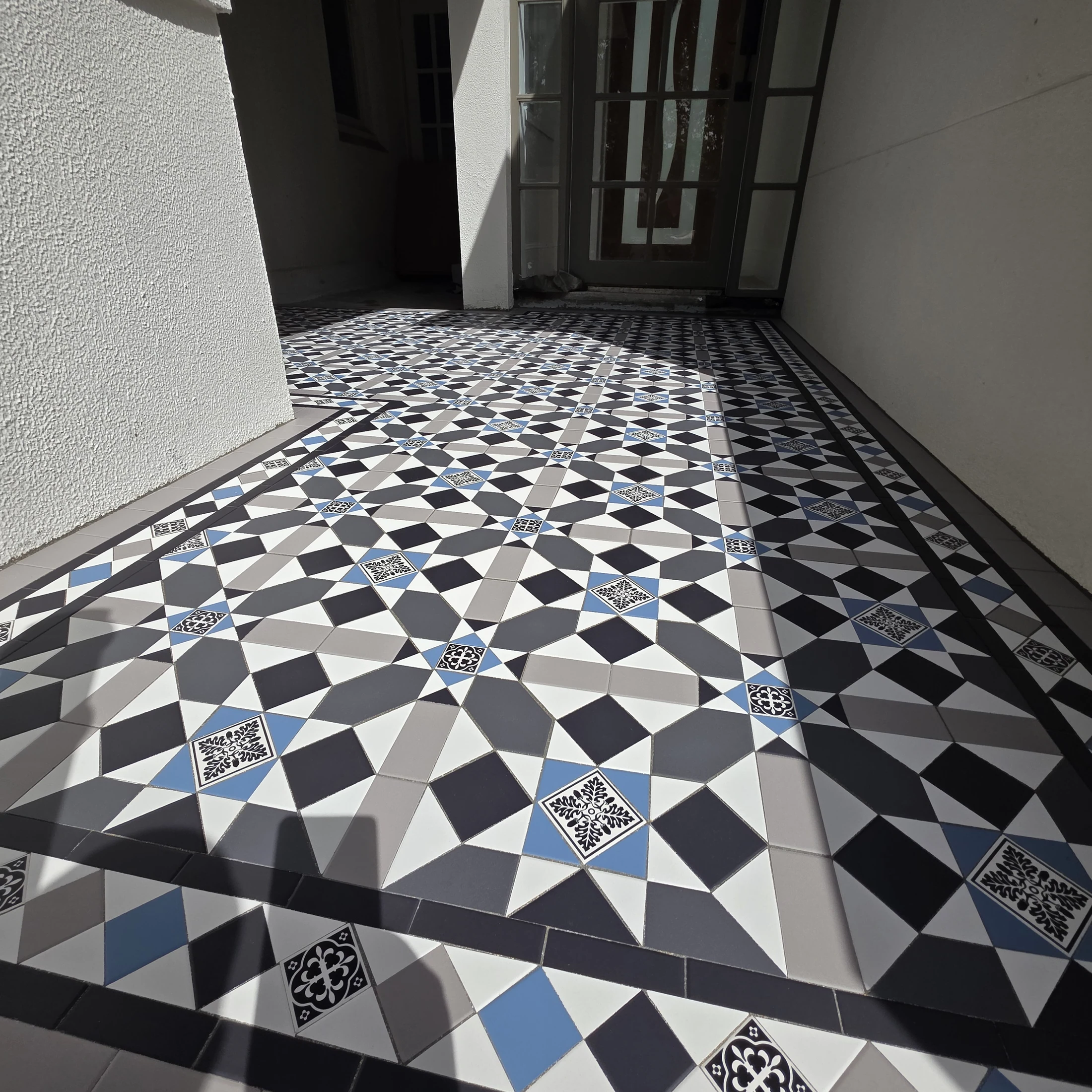
A local context for period-sensitive tile decisions
Georges River Council describes Beverly Hills Town Centre as one of seven local centres in the Georges River area. Its current planning material focuses on King Georges Road, connections to transport and services, public spaces and the way the centre may change over time. That town-centre setting sits alongside residential streets where the appropriate tile response depends on each property's fabric and setting, not on a suburb-wide assumption.
Council's historical-marker material records that the original church at Dumbleton, now Beverly Hills, was built in 1901 and moved to Penshurst in 1916. NSW Planning Portal records separately identify documented inter-war housing examples in Beverly Hills. Together, these sources provide useful local history, but they do not mean that every home is listed or that a tile design should reproduce a presumed period pattern without inspection.
Beverly Hills Master Plan now on Public Exhibition — Georges River CouncilHistorical Markers 2021 — Georges River CouncilHurstville Heritage Inventory — Woodville, Beverly Hills — NSW Planning PortalHurstville Heritage Inventory — Beverly Hills inter-war properties — NSW Planning Portal
Start with the property's surviving details
For an inter-war home or another older property, record the existing tile geometry, border, colour balance, stair and path proportions, door thresholds and junctions with masonry before selecting new work. A restrained match may be appropriate where original fabric survives; a clearly contemporary addition may be more honest where the new area is distinct. The decision should follow the building and the use of the space rather than a generic heritage label.
For a front path or verandah, consider how the pattern reads from the street, how borders resolve at corners and steps, and how water and changing levels affect the detail. For repairs, compare sound and failed areas before deciding whether selective restoration or replacement is suitable. AHTC's design consultation, supply, installation, restoration and bullnose or edging coordination can be considered as separate stages of the same property-led brief.
Hurstville Heritage Inventory — Woodville, Beverly Hills — NSW Planning PortalHurstville Heritage Inventory — Beverly Hills inter-war properties — NSW Planning Portal
Check the relevant heritage information before work
The NSW planning material includes both individual local heritage-inventory records and a separate heritage-impact discussion of Beverly Hills Railway Station. These are different kinds of evidence. An inventory entry for a documented property does not make every nearby home listed, and a station or transport-structure assessment should not be transferred automatically to private residential work.
Before changing fabric that may be identified in a statutory register, local environmental plan or property-specific planning record, confirm the current requirements with the relevant authority or a qualified heritage professional. AHTC can provide tile and design guidance, but this page does not grant approval, provide legal advice or imply Heritage Council endorsement.
Statement of Heritage Impact: Kingsgrove to Revesby Upgrade — NSW Planning PortalHurstville Heritage Inventory — Woodville, Beverly Hills — NSW Planning PortalHurstville Heritage Inventory — Beverly Hills inter-war properties — NSW Planning Portal
Plan the brief around access, edges and daily use
A Beverly Hills pathway or verandah brief should describe the route from the street to the entry, existing steps and thresholds, exposure to weather, and the finish required at edges and transitions. These practical details help separate a visual pattern decision from the installation sequence and make it easier to identify where existing tiles can be retained.
Where the work sits near a centre-facing property or a busy movement route, consider pedestrian access and staging early. The council's town-centre planning material highlights transport connections and movement through the centre; that is useful context for planning access, but it is not a site-specific construction constraint.
Beverly Hills Master Plan now on Public Exhibition — Georges River Council
Your Heritage Tiling Questions
Does every Beverly Hills home need heritage approval for tessellated tile work?
No general conclusion can be made from the suburb name alone. The reviewed records concern particular heritage-inventory examples and Beverly Hills Railway Station in a project-specific heritage-impact report. Check the current statutory and local planning position for the property and proposed work before changing potentially significant fabric.
What should be recorded before restoring an older tiled path or verandah?
Photograph the existing pattern, borders, edges, steps, thresholds and damaged areas, and note where the surface meets walls or drainage paths. This gives the design and restoration discussion a property-specific basis before deciding what can be retained, matched or renewed.
Can a new Beverly Hills tiled area be period-sensitive without copying an old pattern?
Yes. A design can respond to the proportions, edges, material relationships and setting of the property while remaining legible as new work. Whether matching or contrast is appropriate depends on the surviving fabric and the role of the new area, not simply on the suburb label.
Why is Beverly Hills connected to Georges River on this service page?
The grouping is used here for navigation and service context; it is not presented as a substitute for checking the responsible statutory authority for a particular property or application.
Discuss Your Heritage Tiling Project
Share your location, project details and photographs using our enquiry form, or call 0433 932 711.