
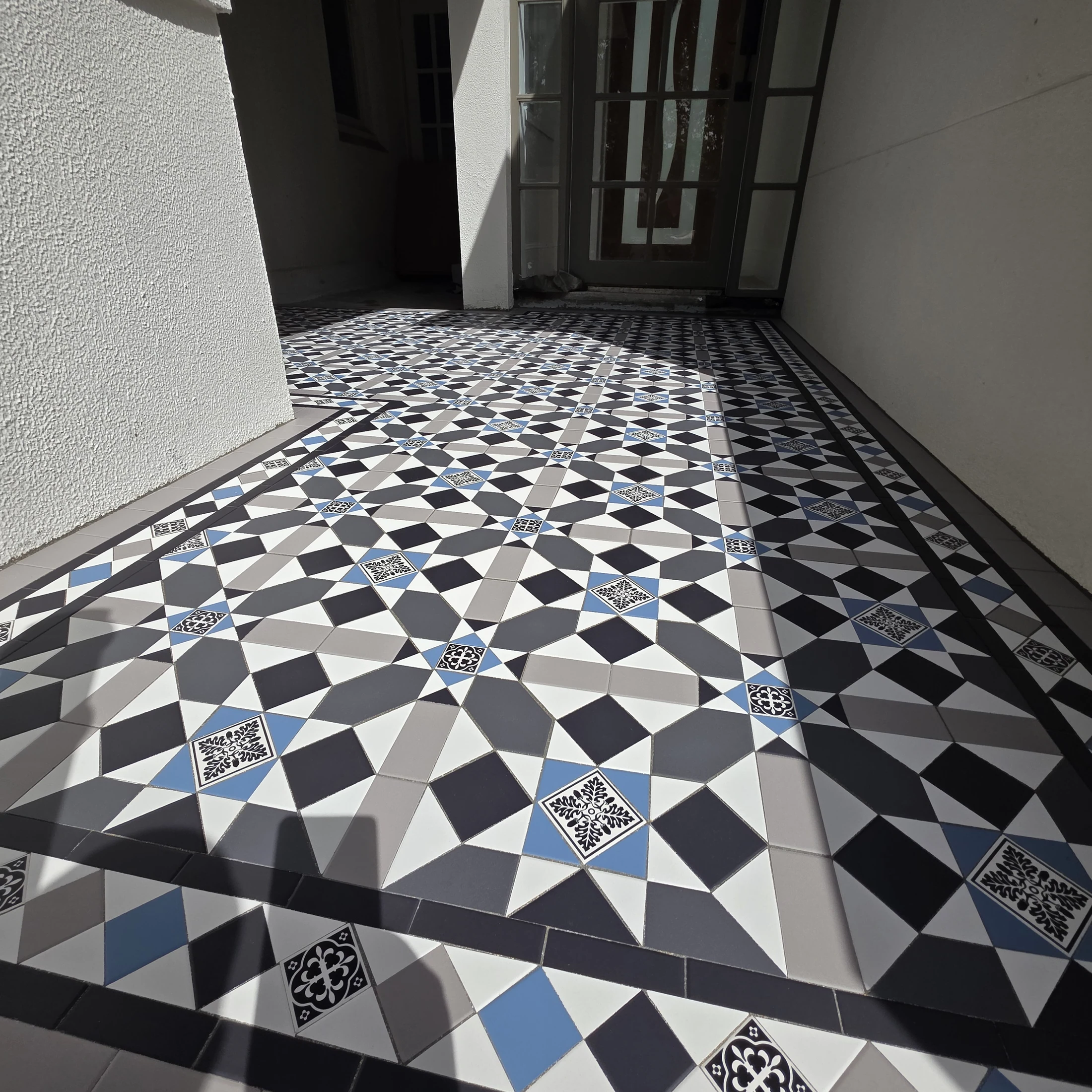
Tessellated tiles in Connells Point
Connells Point is a southern Sydney residential suburb projecting into the Georges River. Its documented local context includes listed houses and gardens, Connells Point Reserve and a foreshore landscape shaped by public access, habitat and stabilisation works. For a home in this setting, tile choices are best considered alongside the building's existing fabric, the proportions of the entry or verandah and the character of the surrounding landscape. [This page provides local context and a pathway to design, tessellated tile supply, installation and restoration services.]
A foreshore locality with recorded heritage context
Connells Point sits on a peninsula-like projection into the Georges River. The locality is now associated with Georges River Council, while its administrative history also reflects the 2016 merger of the former Kogarah and Hurstville councils. [1]
The draft Georges River LEP material records several local heritage items in Connells Point, including houses and gardens and Connells Point Reserve. That record is useful context for careful design, but it does not mean every property is heritage listed or that tile work automatically needs heritage approval. Confirm the status and controls for the individual property before changing significant fabric. [2]
Draft Georges River Local Environmental Plan 2020 — Appendix 1
Let the property lead the tile decision
For an older Connells Point home, begin by recording what survives: the entry sequence, verandah edges, stair landings, thresholds, skirtings and any original tile pattern. A restrained replacement or repair can be more appropriate than introducing a new pattern across an area that has not previously carried tessellated work.
Where a front path, verandah or floor meets garden, reserve or foreshore-facing landscape, consider the transition as part of the design. Border proportions, drainage falls, slip performance, movement joints, edge details and the visual relationship with steps should be resolved for the actual site rather than selected from a generic pattern. These are design considerations, not universal construction requirements.
Respect existing fabric and the wider landscape
Council's Significant Tree Register identifies public trees in Connells Point and at Connells Point Reserve, including Blackbutt and Bunya Pine specimens. This is a reminder to plan access, deliveries and any pathway changes with care around established landscape features and public interfaces. It is not evidence that a private property or its trees is listed. [3]
Donnelly Park's foreshore works address saltmarsh habitat, stabilisation, access, terracing, seating and planting. Those public works do not prescribe a private home's tile design, but they reinforce the value of durable transitions, considered edges and landscape-sensitive detailing in a foreshore locality. [4]
Significant Tree Register — Georges River CouncilConcept Design: Donnelly Park Foreshore Protection Works — Georges River Council
Plan the work around the existing building
A useful consultation should distinguish restoration of surviving tiles from a new installation. Matching colour, scale, border rhythm and pattern is only one part of the decision; the condition of the existing surface, edges and transitions also matters. Photographing the whole approach and close details before a site discussion can help establish what should be retained, repaired or redesigned.
AHTC's existing service pathway covers design consultation, tessellated tile supply, installation, restoration and coordination of stone bullnose or edging details. Use the existing Georges River route for that broader service conversation, and bring property-specific heritage or planning questions to the relevant authority where the site has a listed item, conservation control or other constraint.
Your Heritage Tiling Questions
Is every Connells Point house heritage listed?
No. The draft Georges River LEP material identifies particular local heritage items in Connells Point, including houses and gardens and Connells Point Reserve. A locality reference or service-group route is not evidence that every home is listed. Check the individual property and current planning controls before altering significant fabric.
Should I restore existing tiles or install a new pattern?
Start with an assessment of what remains and the condition of the surrounding entry, verandah, path or floor. Retaining and repairing surviving fabric may suit one property, while a new, clearly contemporary installation may suit another. The decision should follow the building and site rather than assume a period pattern.
Does a Connells Point foreshore setting determine my tile design?
No. The foreshore context is a useful design consideration, not a fixed private-house specification. Connells Point includes public foreshore and reserve assets, and Donnelly Park works address habitat, stabilisation, access and landscaping. For a private project, resolve edges, transitions, drainage and access for the actual property.
Could heritage or planning advice be needed before tile work?
Possibly, depending on the property's current listing, conservation controls and the proposed external changes. The draft LEP material describes heritage-conservation controls for heritage items and conservation areas, but it is not a substitute for checking current controls. Seek property-specific guidance before work where heritage significance may be involved.
Discuss Your Heritage Tiling Project
Share your location, project details and photographs using our enquiry form, or call 0433 932 711.