
Tessellated tiles in Chilwell
Chilwell's built setting carries the layered character of historic Geelong: established homes, older commercial traces and streets shaped by long-term movement, work and residence. AHTC can help with tessellated tile design, supply, installation and restoration, including stone bullnose or edging coordination where it suits the property. Start with the existing fabric, the intended use and the way a floor, verandah or path meets the rest of the building.
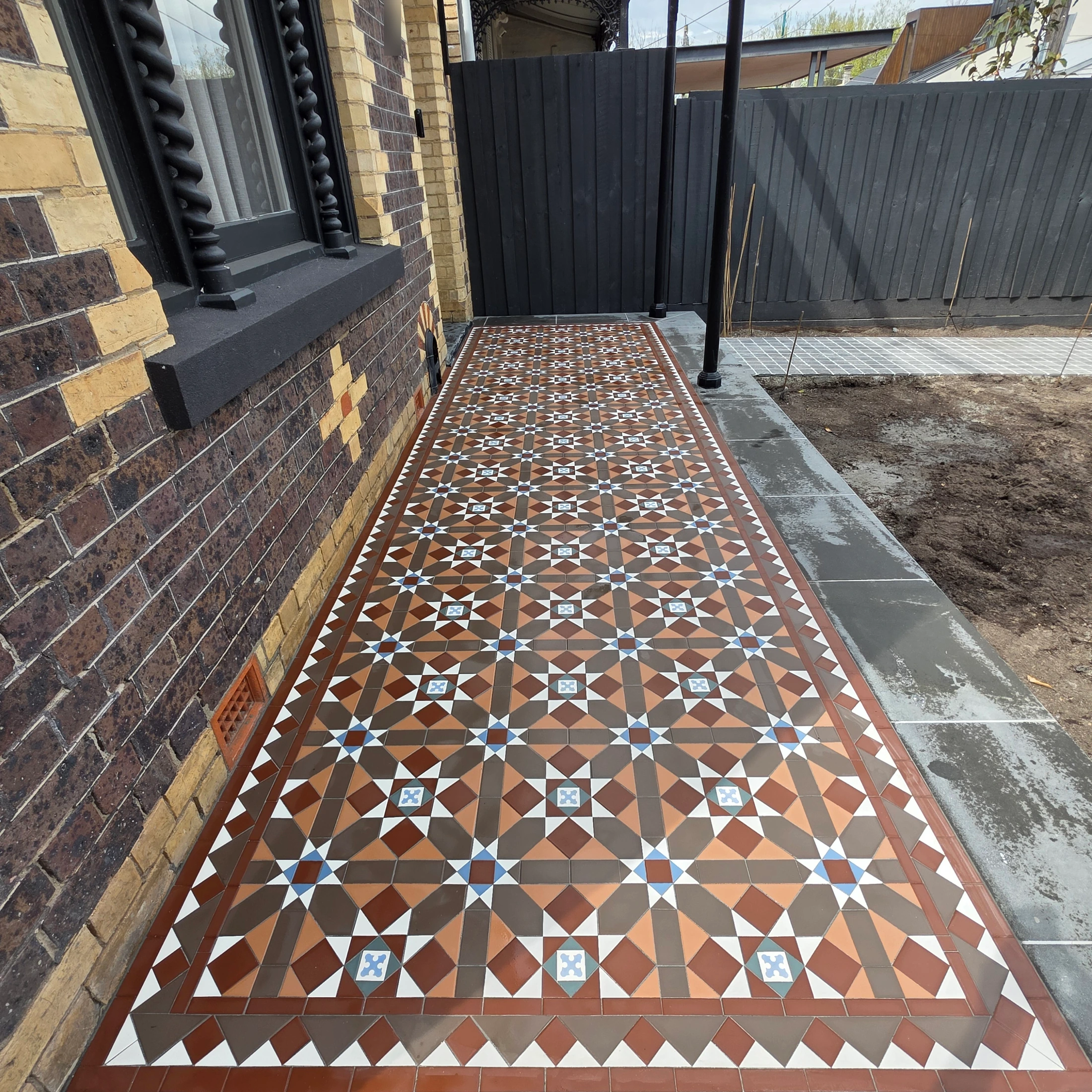
A property-led approach for Chilwell homes
Greater Geelong's thematic history discusses Newtown and Chilwell through their changing buildings, infrastructure and landscaping. Its account of early Chilwell describes a busy centre with shops, industrial activity, asphalt walks and kerbing, as well as substantial residences associated with the Barwon-side setting. That history gives useful context, but it does not mean every present-day property has the same age, style or heritage status.
For an established Chilwell home, begin by recording what is actually there. Existing tessellated floors, a return verandah, a front path, stair edges or a threshold may each call for a different response. Pattern scale, border turns, surface wear and the meeting point with brick, render or stone can be more important than choosing a period label on its own.
Design, restoration and installation decisions
Where original or older tiles remain, an assessment can separate sound areas for retention from loose, cracked or missing sections. A thoughtful restoration brief looks at colour, geometry, wear, borders and edge details together, rather than treating a single replacement tile as the whole answer. If a new layout is more appropriate, its proportions can be developed in relation to the room, verandah or path and the building around it.
For external work, consider the entry sequence, exposure, falls, drainage, cleaning access and transitions to adjoining materials. Installation planning should follow the actual site and substrate; there is no universal preparation recipe. Design consultation, tessellated tile supply, installation, restoration and stone bullnose or edging coordination can be brought together as one practical brief.
Check the property before external changes
The City of Greater Geelong explains that work in a heritage overlay is considered in the context of the surrounding streetscape and neighbourhood. Its guidance highlights setbacks, form, scale, materials, finishes, verandahs and other visible elements. Before building, demolition or construction changes, check the specific property and obtain current advice from the relevant authority.
A tile design consultation can help clarify layout, material relationships and the treatment of surviving fabric, but it is not a planning or heritage approval. Keep the design conversation specific to the property and separate it from any permit assessment that may apply.
Your Heritage Tiling Questions
Does every Chilwell property have heritage protection?
No. Chilwell's documented history provides architectural context, but heritage controls are property- and overlay-specific. Check the individual property and obtain current advice from the City of Greater Geelong or the relevant planning authority before external building or construction work.
Can older tessellated tiles in a Chilwell home be restored?
The first step is an assessment of the existing floor, including loose or missing tiles, borders, thresholds, wear and the setting beneath it. That helps distinguish retention and repair from carefully matched replacement. The appropriate approach depends on the actual condition and use of the floor.
What should I consider for a Chilwell verandah or path?
Consider the building's proportions and street presentation, the pattern scale, border and edge treatment, door thresholds, exposure, falls, drainage and the transition to brick, render or stone. A site-led layout is more reliable than applying one standard pattern to every verandah or path.
Do I need planning advice before changing tiles in Chilwell?
If the tile work forms part of building, demolition or construction changes, check the property and current planning requirements first. Greater Geelong's heritage guidance says heritage-overlay work is assessed in its streetscape and neighbourhood context; tile design or installation guidance does not replace the relevant authority's advice.
Discuss Your Heritage Tiling Project
Share your location, project details and photographs using our enquiry form, or call 0433 932 711.