
Tessellated Tiles in Corio
Corio is a broad and varied northern Geelong suburb, with residential areas extending towards Corio Bay and a changing mix of established and renewed housing. For a tessellated floor, verandah or pathway, the right approach starts with the individual property: its proportions, existing surfaces, exposure and the way new work will meet adjoining materials. AHTC can assist with design consultation, tessellated tile supply, installation, restoration and stone bullnose or edging coordination.
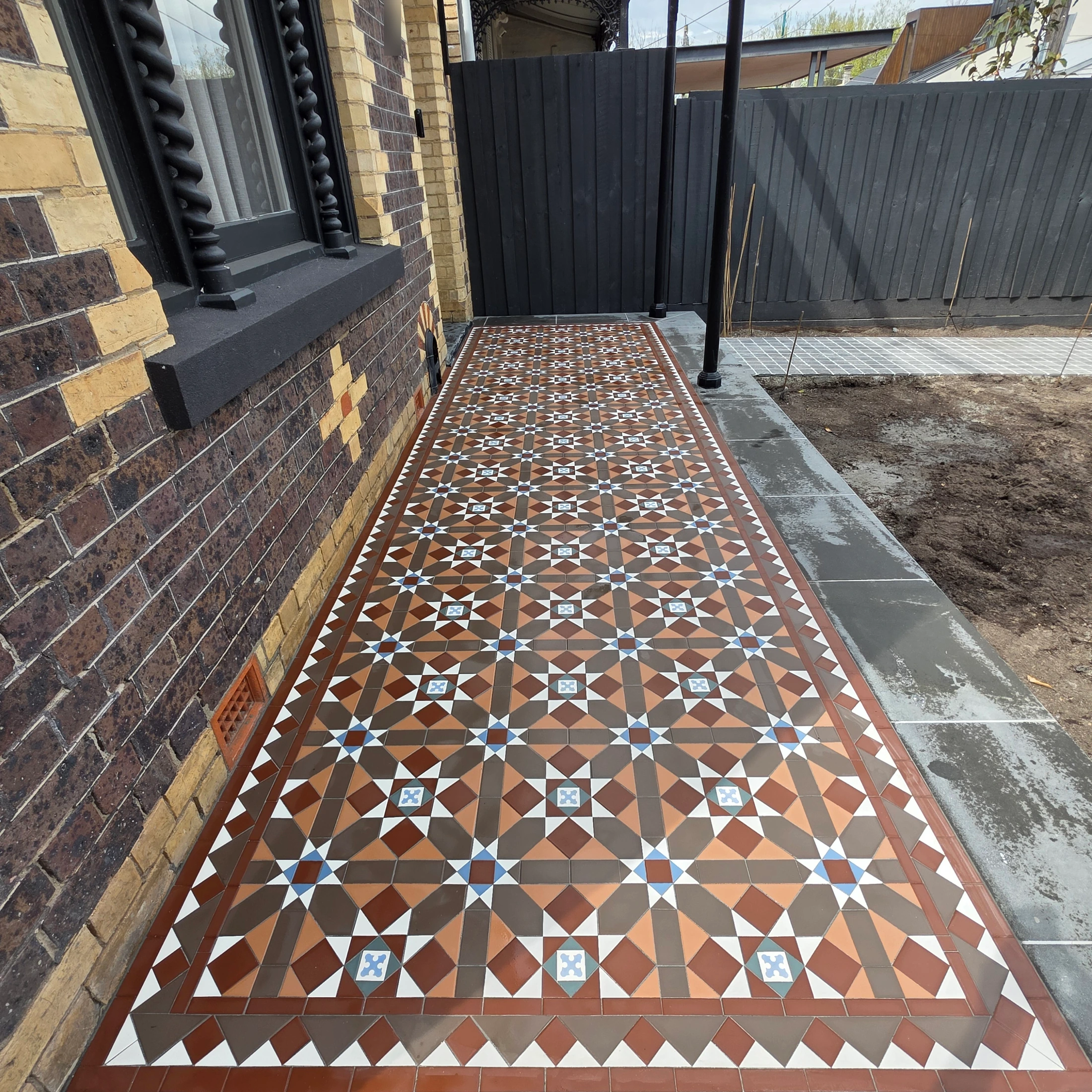
Tiling choices for Corio properties
Corio's council profile describes a large suburb running from an industrial edge into residential areas and north towards Corio Bay. That range of settings makes a site-led conversation more useful than assuming one tile pattern or finish suits every address. Consider how a front path, porch or verandah relates to the street, garden, entry steps and existing facade before settling on a layout.
For established homes, retaining sound original work or matching a surviving border may be important. For a newer alteration or renewal project, the priorities may instead be proportion, drainage, thresholds and a durable transition to adjoining paving. Tile selection and edging should follow the condition and use of the space rather than a generic period label.
Working with changing housing contexts
The Corio-Norlane Structure Plan records low housing densities, housing stock built from the 1950s onwards and planned diversification around activity centres and transport locations. In practice, that means a Corio project may involve an established dwelling, a renewed home or a more compact addition. The tile design should be coordinated with the actual building lines, access, levels and landscape rather than treating the whole suburb as one architectural type.
Where existing tiles remain, a condition assessment can help separate repairable areas from sections that need careful replacement. Where the work is new, a measured layout and considered border or bullnose detail can help the finished surface sit comfortably beside brick, concrete, stone or painted elements.
Heritage-sensitive work and local checks
A property's age or appearance does not, by itself, establish a heritage control. Before altering older tilework or other significant fabric, check the property's planning and heritage position with the relevant authority and confirm whether any permit or design requirements apply. Advice can then be tailored to retaining, repairing, matching or replacing the particular surface.
For homes without a heritage control, the same disciplined process can still produce a more coherent result: document what is there, resolve levels and water movement, and select new work that suits the building rather than imitating an unverified history.
Design, supply, installation and restoration
AHTC's local service page can help you move from an initial idea to a practical tile brief. That may include pattern and proportion advice, tessellated tile supply, installation planning, restoration of existing work, and coordination of stone bullnose or edging where the detail requires it.
Share clear photographs and the suburb with your enquiry, along with what you know about the surface, access and intended use. The next step is a property-specific discussion rather than an assumption about the whole Corio housing stock.
Your Heritage Tiling Questions
Can tessellated tiles suit a Corio home from the 1950s or a later renovation?
Yes, but the layout should respond to the actual home and the intended use. Corio includes established housing as well as renewed and changing residential areas, so proportions, thresholds, exposure and adjoining materials should be assessed before choosing a pattern or finish.
Can existing tessellated tiles be restored rather than replaced?
Often the first step is an inspection of the surviving surface, including loose or damaged areas, previous repairs, edges and transitions. If the original work is suitable for retention, restoration and carefully matched replacement may be considered; the appropriate approach depends on its condition.
Does a Corio property automatically need heritage approval for tile work?
No automatic conclusion should be made from the suburb name or the appearance of a house. Check the individual property's planning and heritage controls with the relevant authority before altering significant fabric or starting work that may require approval.
What should I include when asking about tessellated tiles in Corio?
Include the suburb, photographs of the existing surface and surrounding facade, approximate dimensions, access information and whether you are considering a new installation, restoration or a matching repair. This gives the design discussion a useful starting point without assuming a standard Corio house or site.
Discuss Your Heritage Tiling Project
Share your location, project details and photographs using our enquiry form, or call 0433 932 711.