
Tessellated Tiles Geelong
For Geelong homes and buildings, a tessellated tile scheme needs to work with the property's proportions, entry sequence and relationship to the street. We can help with design consultation, tessellated tile supply, installation, restoration and stone bullnose or edging coordination, with the approach shaped around the existing surface and the intended use of the space.
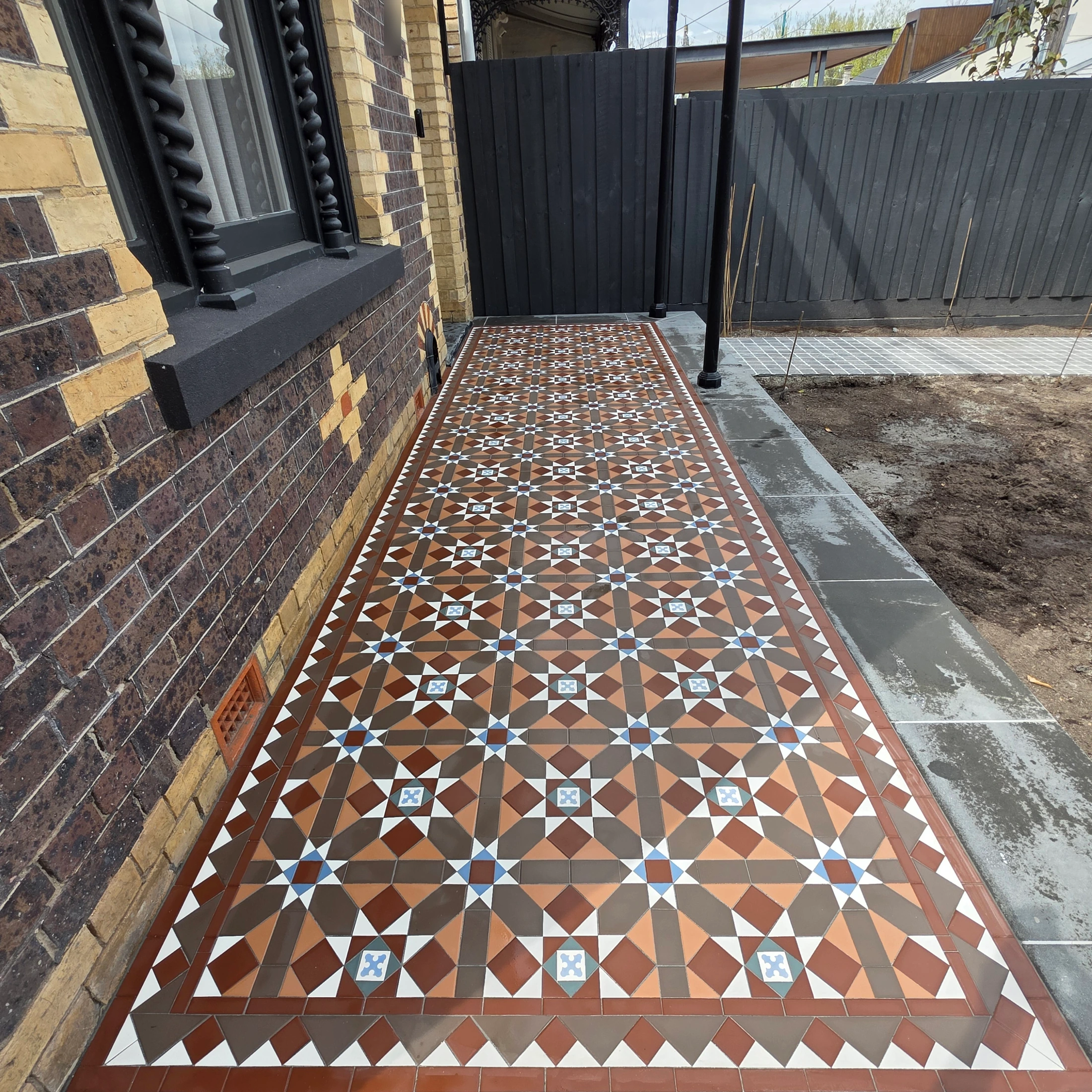
Tiling for Geelong's regional architectural context
Geelong is Victoria's largest regional city within the City of Greater Geelong. Its built setting sits within a broad municipality that includes suburban, coastal and country areas, so a useful tiling brief starts with the individual property rather than an assumed city-wide style.
Where an entry, verandah or pathway contributes to a period streetscape, layout, scale, border treatment and colour relationships deserve as much attention as the tile itself. The aim is a considered transition between the building, its garden setting and the public-facing approach, not a generic pattern applied without regard to the place.
Check the property before changing an existing tiled surface
The City of Greater Geelong's heritage information explains that significance may be architectural, historical, aesthetic, social or other recognised cultural value. A property may be individually significant, contributory to a precinct or not significant but still affected by the location of a heritage area.
Before removing, covering or substantially changing original or early tiles, first check the property's planning and heritage context. Photograph the existing pattern and transitions, note areas that are sound or failing, and ask the relevant authority whether the proposed external work needs approval. This is property-specific guidance, not a promise that a permit is or is not required.
A practical design and restoration conversation
A useful consultation considers the tile field, borders, thresholds, falls, drainage, access and the way the work will meet adjoining materials. For a new verandah or pathway, the pattern should be proportioned to the available width and the building's entry rather than selected in isolation.
For existing tessellated floors, restoration begins with condition and significance. Retain sound fabric where practical, document what is present, and separate repair decisions from new work. Supply and installation can then be coordinated with the chosen layout, while stone bullnose or edging details are considered as part of the overall transition.
Planning and heritage checks for Geelong properties
The City of Greater Geelong identifies the Victorian Heritage Database and the Greater Geelong Planning Scheme as starting points for checking heritage places and mapped overlays. A database result is guidance for investigation; it does not replace property-specific advice about the proposed work.
If the project changes the external appearance of a place in a Heritage Overlay, or affects an identified setting, obtain the relevant planning guidance before committing to removal or installation. We can keep the tiling discussion focused on the design, existing fabric and buildable brief while the owner obtains any approvals or advice required for the property.
Your Heritage Tiling Questions
Are all older Geelong homes covered by a Heritage Overlay?
No. Greater Geelong distinguishes between different levels of heritage significance, and some properties may be non-contributory or outside a mapped heritage area. Check the specific property in the Victorian Heritage Database and the Greater Geelong Planning Scheme before planning external changes.
Can original tessellated tiles be replaced with a new pattern?
That depends on the condition, significance and planning controls affecting the property. Begin by documenting the existing tiles and checking whether the work changes the external appearance or affects a significant element. Where original fabric contributes to a place, retaining and repairing it may be preferable to removing it.
What should be considered when planning a tiled Geelong verandah or pathway?
Consider the width and proportions of the space, the entry alignment, borders and thresholds, drainage and transitions to adjoining surfaces. The design should respond to the building and its setting, especially where the work faces a heritage streetscape, rather than rely on a pattern chosen without site context.
Does a Heritage Overlay always prevent changes to a Geelong property?
No. Heritage management is intended to conserve significant elements while allowing appropriate change. The overlay can introduce permit requirements for particular works, so the proposed alteration should be discussed with the City of Greater Geelong or the relevant planning authority before work begins.
Discuss Your Heritage Tiling Project
Share your location, project details and photographs using our enquiry form, or call 0433 932 711.