
Tessellated tiles in Glenelg North
Tessellated tiles can sit comfortably within Glenelg North's varied older streetscapes when the pattern, scale and edge treatment are considered alongside the home. For a cottage, villa, bungalow or later adaptation, we can discuss design, tessellated tile supply, installation, restoration and stone bullnose or edging coordination for the particular site.
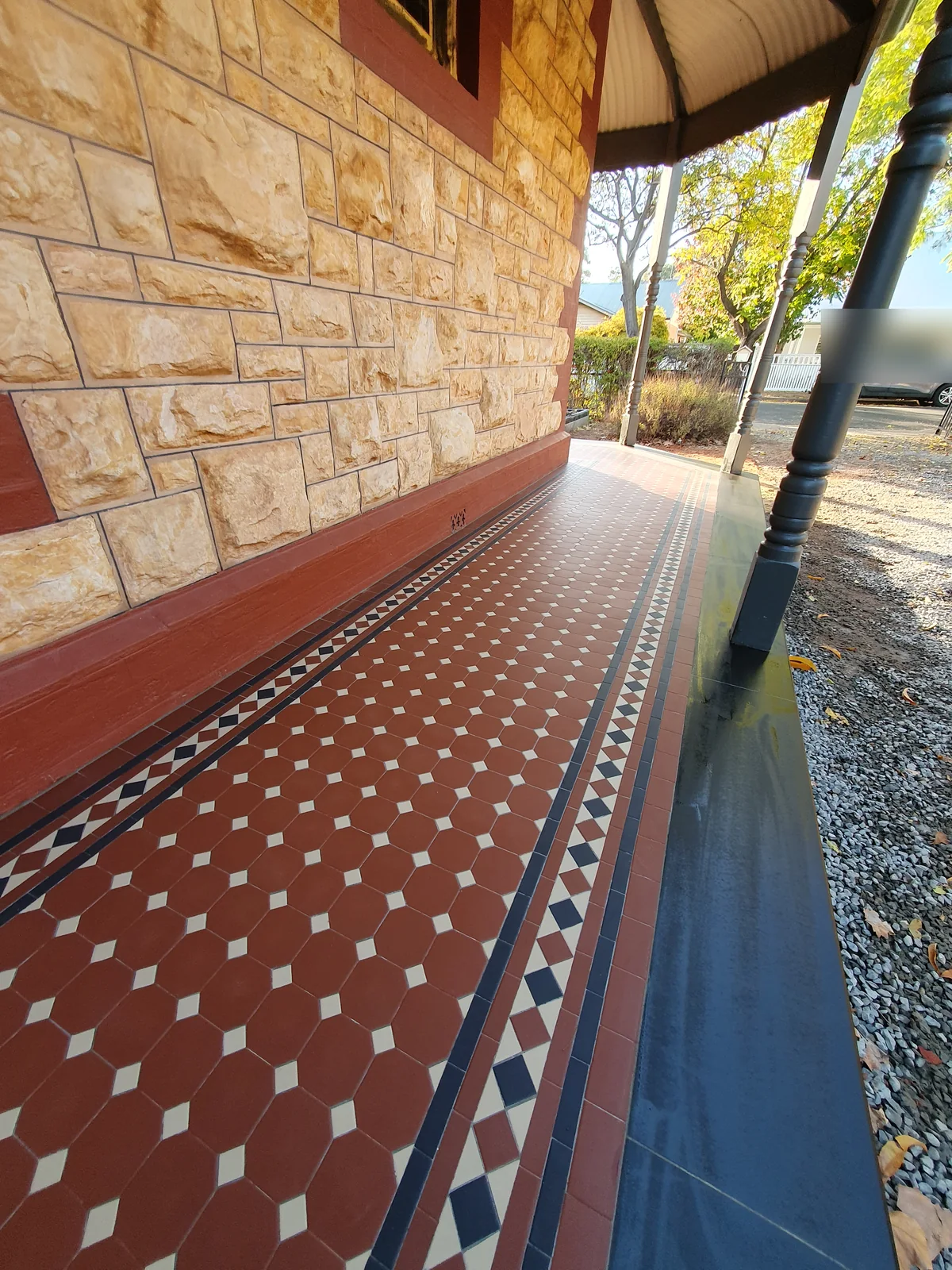
A tile brief that responds to Glenelg North's older streetscapes
The South Australian character statement for Glenelg North east of Tapleys Hill Road describes an 1880s to 1920s setting with orderly subdivision, medium front setbacks and visual spacing between dwellings. It records low-scale cottages and villas, semi-detached and row dwellings, as well as some Inter-War Tudor buildings. Those observations are useful starting points for a tile layout, but they do not mean every property has the same age, style or heritage status.
A new verandah, porch or pathway can be designed with attention to the building's proportions and approach from the street. Existing verandah lines, threshold levels, front setbacks, facade materials and the relationship between paving and planting can all affect the right border width, repeat, direction and transition.
Planning patterns, borders and practical transitions
For a Glenelg North verandah or pathway, the design conversation can cover the usable width, sightlines to the entry, door thresholds, steps, drainage falls and how a border meets walls, garden edges or existing paving. A geometric repeat should be sized for the space rather than forced into an awkward cut at the most visible edge.
The character statement notes hip and gable roof forms, verandahs, sandstone and red brick facades, corrugated iron roofing and timber joinery in the identified area. These are cues for a restrained, property-led palette and detailing discussion, not a promise that a particular tile pattern or material is historically correct for every home.
Restoring existing tiles with the property in mind
Where older tessellated tiles survive, assessment should begin with what is actually present: pattern, colour variation, loose or damaged areas, thresholds, edges and the condition of the supporting surface. The aim may be selective repair, careful matching, or a considered new section that reads clearly alongside the retained work.
Heritage status is property-specific. South Australia's heritage database records individual listed places and cautions that development implications should be discussed with Heritage South Australia or the relevant council. Owners should confirm the position for their own property before assuming that work is exempt, approved or subject to the same controls as a neighbouring place.
Your Heritage Tiling Questions
Can tessellated tiles suit a Glenelg North verandah?
They can, when the layout responds to the verandah's width, entry alignment, thresholds and the character of the home. A design discussion can consider border proportions, repeat scale, edges and transitions rather than applying one pattern to every property.
What should I consider for a Glenelg North pathway?
Consider the approach to the front door, usable walking width, steps, drainage, levels and how the tessellated field meets walls, garden beds or existing paving. A site-led layout can reduce awkward cuts and keep the pattern legible from the street.
Does living in a character area mean my home is heritage listed?
No. A character statement describes valued area attributes, while a heritage listing concerns a particular place or property. Check the individual property and seek current advice from the relevant South Australian heritage or council authority before relying on an assumption about controls.
Can existing tessellated tiles in Glenelg North be restored?
Often the first step is an assessment of the surviving pattern, condition, edges, thresholds and supporting surface. The appropriate approach may be selective repair, matching or a carefully designed new section beside retained tiles; the property and existing fabric determine the brief.
Discuss Your Heritage Tiling Project
Share your location, project details and photographs using our enquiry form, or call 0433 932 711.