
Tessellated tiles in North Brighton
North Brighton properties sit within the City of Holdfast Bay's southern metropolitan Adelaide setting, where local character includes both established residential fabric and assessed places with different architectural histories. A tessellated-tile project can be planned around the building rather than imposed on it: consider the existing floor, entry sequence, verandah or path, the pattern scale and the way new work meets older materials. Design consultation, tile supply, installation, restoration and stone bullnose or edging coordination can be considered together for a coherent result.
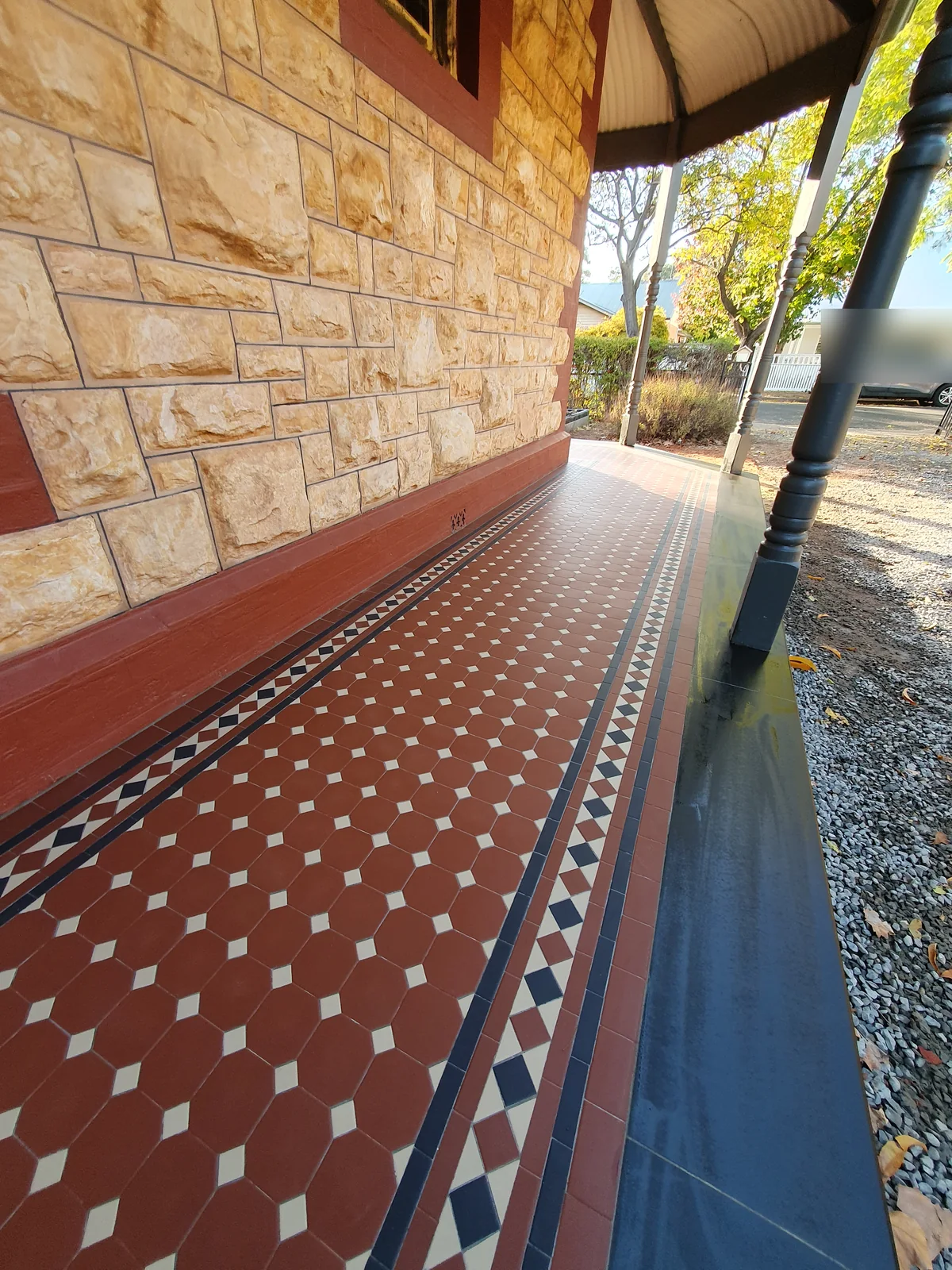
A property-led approach for North Brighton homes
The Brighton Heritage Review gives North Brighton a specific local context. It identifies places including Brighton High School, a former gate house, a River Red Gum avenue, the Frank Hayward House at Minda Home, Good Neighbour Garden Reserve and Woodhurst as having assessed local heritage value. Those assessments relate to particular places; they do not mean every home in North Brighton is heritage listed or subject to the same controls.
For a private project, begin with what is actually present: surviving tiles, thresholds, masonry, verandah posts, steps, garden edges and the relationship between front path and entry. A restrained pattern or a carefully matched restoration may suit an older setting, while a new installation can use tessellation as a deliberate contemporary layer. The right choice depends on the property and the brief.
Where a property may be a listed place, a representative building or within a character or historic overlay, check the current South Australian planning information and council guidance before changing significant external fabric. A heritage-sensitive tiling service can help identify design questions, but it does not replace a property-specific planning or heritage assessment.
Patterns, materials and edges that suit the setting
North Brighton's documented architectural context includes a post-war school building with rendered masonry, a terracotta tiled roof and large windows. That is a reminder to read the lines, materials and scale of each site rather than assume one period style. For a residence, the pattern can be developed from the width of the path, the geometry of the entry and the way the border frames the approach.
Restoration work should start with an inspection of the existing tessellated surface and its setting. Matching colour, geometry and the visual rhythm of sound tiles matters, but so does the transition at stairs, doors, garden walls and drainage points. For new work, supply and installation planning can address the same questions before the final layout is committed.
Stone bullnose or other edging coordination may be useful where a tiled verandah, stair or pathway needs a durable, visually resolved edge. The detail should be selected for the actual exposure, levels and adjoining materials rather than treated as a universal specification.
Checking heritage considerations before work
Holdfast Bay's heritage plan distinguishes State Heritage places, Local Heritage Places and Representative Buildings, and notes that heritage-related development policy is set through South Australian legislation and the Planning and Design Code. Before altering a property, confirm whether any listing, overlay or other planning control applies to that specific site.
The Holdfast Bay History Centre is a useful local historical resource for understanding the area's records and context. For a project enquiry, photographs and dimensions of the existing tiled area can make an early design discussion more useful, especially where the brief involves repair, pattern matching or a transition between old and new work.
Your Heritage Tiling Questions
Are all North Brighton homes heritage listed?
No. The Brighton Heritage Review identifies particular North Brighton places with assessed local heritage value, but that does not make every home in the suburb heritage listed. Check the specific property's current listing or planning controls before changing significant external fabric.
Can tessellated tiles suit a post-war or more contemporary North Brighton property?
They can, when the pattern, scale, border and adjoining materials are designed for the building. The local review's description of Brighton High School's post-war rendered masonry and terracotta roof illustrates why the property's actual lines and materials should guide the design rather than an assumed period label.
What should be checked before restoring an older tiled verandah or path?
Document the existing tiles and edges, check the condition and transitions, and confirm whether a State Heritage, Local Heritage, Representative Building or overlay control applies to the property. Planning and heritage requirements are site-specific.
Can a North Brighton project include pathway, verandah and edging work?
Yes. A project can be discussed as a connected design and installation brief covering tessellated floors, verandah or pathway layouts, restoration questions and stone bullnose or edging coordination. The suitable detail depends on the site's levels, exposure, drainage and adjoining materials.
Discuss Your Heritage Tiling Project
Share your location, project details and photographs using our enquiry form, or call 0433 932 711.