
Tessellated tiles in Asquith
Asquith's ridge setting north of Hornsby brings together established residential streets, bushland edges and a history of local industry. For a new verandah, pathway or interior floor, tessellated tiles can be selected to suit the property's proportions and the way the space meets gardens, steps and existing fabric. We provide design consultation, tessellated tile supply, installation and restoration, with stone bullnose or edging coordination where it is appropriate to the design.
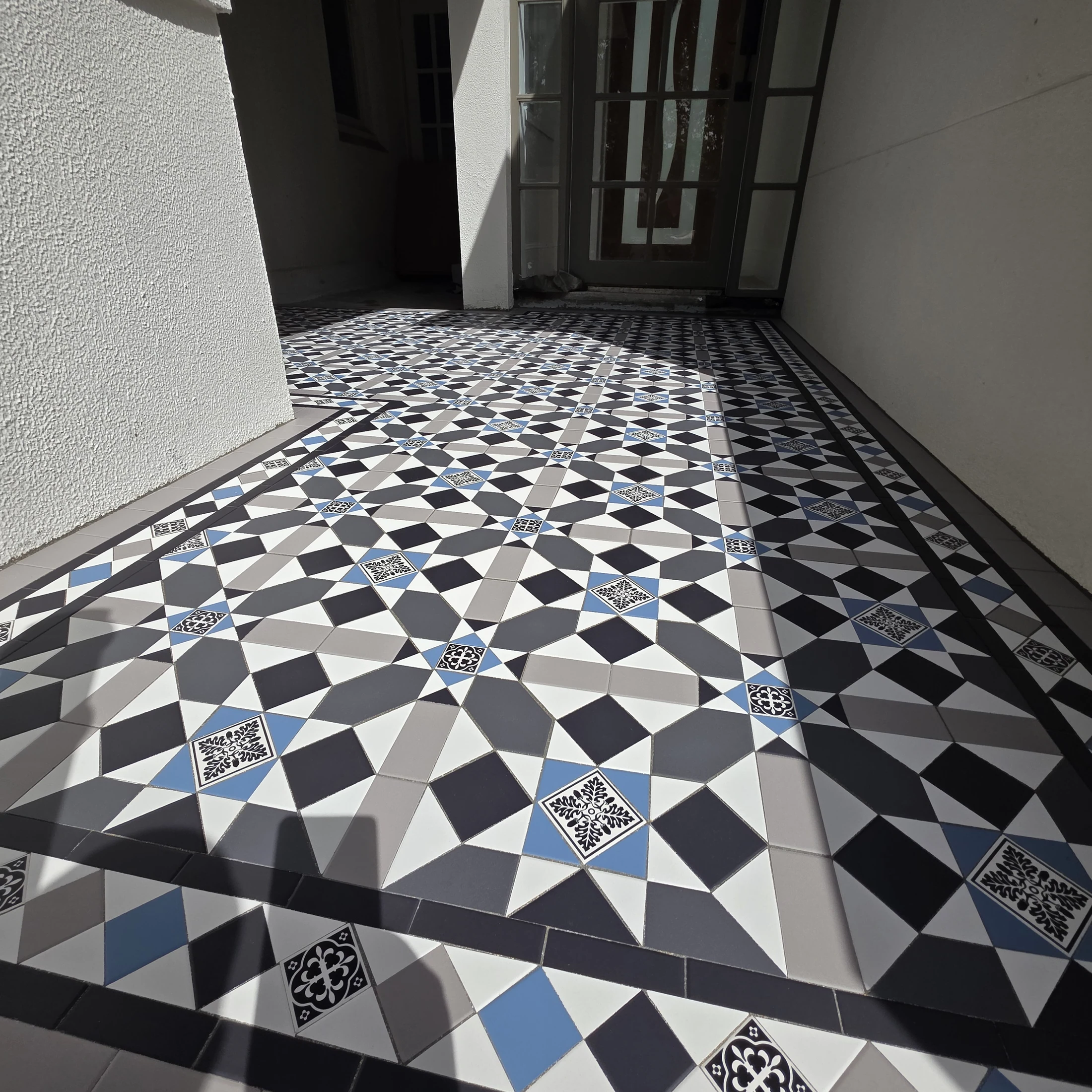
Tile design for Asquith's mixed local character
The Dictionary of Sydney describes Asquith as a ridge locality with bushland, residential and industrial areas. That mix makes a measured, property-led approach more useful than assuming one tile pattern suits every address. Consider the approach to the front door, the width of a verandah, sightlines from the street and the relationship between a tiled area and surrounding planting before settling on a border, field layout or colour balance.
Asquith also has a documented history of pottery, brickworks and other building-material production. That history can inform a thoughtful conversation about ceramic surfaces without turning it into a claim about the age or heritage status of an individual home. Existing tiles should be assessed on their condition, pattern and relationship with adjoining finishes before decisions are made about repair, selective replacement or a new installation.
Existing fabric and property-specific heritage checks
Hornsby Council explains that heritage conservation significance can involve a streetscape's historic character, subdivision, street pattern, materials, form and scale. If your Asquith property has surviving tessellated floors, steps, verandah edges or other early details, document them before removing or covering anything. Matching the visual rhythm of retained work can be more appropriate than replacing a whole surface simply to achieve a new colour scheme.
Council's heritage guidance directs owners to its maps, Property Enquiry service and mapping system when checking a particular property. That check is separate from tile design and should be completed before relying on any heritage-related assumption.
Planning a verandah, pathway or floor project
For an Asquith project, begin with photographs and measurements of the area, the adjoining thresholds and any existing tilework. Design consultation can then address proportions, pattern direction, borders, transitions and the role of stone bullnose or edging. Supply and installation can be coordinated around the selected design, while restoration work should begin with a condition review rather than a presumed method.
If the work involves an older property or a surface that contributes to the home's character, keep the decision focused on what is actually present. A careful brief can distinguish retaining sound original work, repairing local damage and introducing new tilework in a way that reads clearly as a considered addition.
Your Heritage Tiling Questions
Does every Asquith home have heritage protection?
No. Asquith's inclusion in Hornsby Shire and its local history do not by themselves establish heritage protection for an individual property. Hornsby Council recommends checking the relevant maps, Property Enquiry service or mapping system for the address and considering any applicable planning controls before altering significant fabric.
What should I photograph before restoring tessellated tiles in Asquith?
Photograph the whole floor or verandah, close-ups of damaged and intact areas, borders, thresholds, steps, drainage edges and adjoining finishes. Measurements and notes about loose, cracked or missing tiles help separate repairable local damage from areas that may need a broader design decision.
Can a new tessellated pathway suit an Asquith garden setting?
It can be designed to respond to the home's proportions, approach, planting and level changes. A site review should consider pathway width, border rhythm, transitions and edge details rather than selecting a pattern in isolation.
Can existing and new tessellated tiles be considered together?
Yes. The design conversation can compare the retained pattern, colour balance, scale and condition with the proposed new work. The aim is to make a clear decision about what is being retained, repaired, matched or introduced, without assuming that every older-looking surface should be treated the same way.
Discuss Your Heritage Tiling Project
Share your location, project details and photographs using our enquiry form, or call 0433 932 711.