
Tessellated tile services in Galston
Galston's mix of established homes, garden settings and rural-influenced properties calls for a considered approach to tiled verandahs, paths and entry areas. We can help with tessellated tile design, supply, installation and restoration, including pattern development and stone bullnose or edging coordination. Where a property has older fabric or sits near a documented heritage place, the right starting point is to understand what should be retained and what can be renewed.
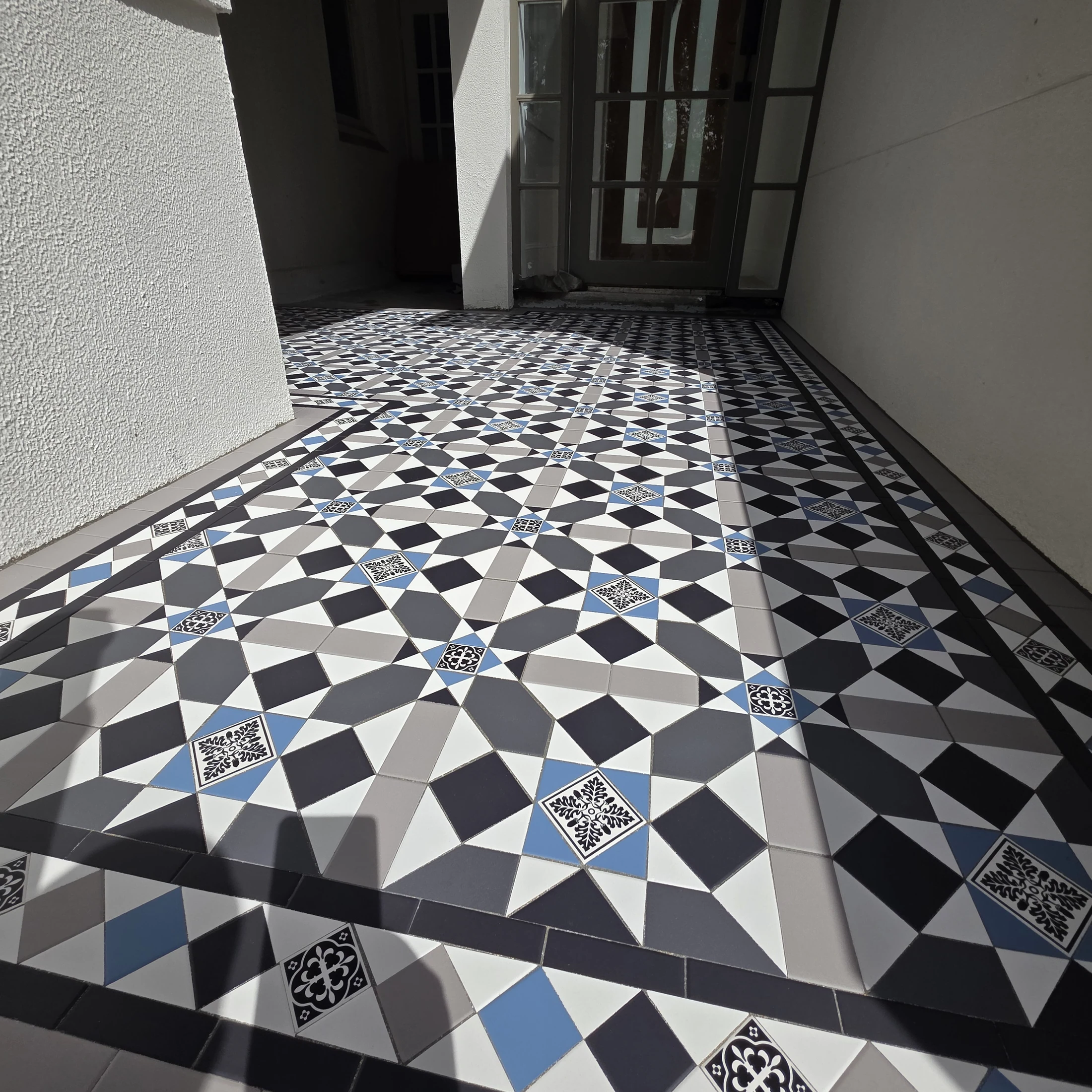
A property-led approach for Galston homes
Galston has a distinctive local setting within Hornsby Shire, with documented cultural landscapes such as Fagan Park and Netherby adding useful architectural context. That history does not make every home heritage listed, so tile choices should respond to the individual property's form, scale, existing materials and approach to the garden.
For a front path or verandah, a measured layout can keep borders, thresholds and changes of direction legible. A restrained geometric pattern may sit more comfortably with an older facade than an unrelated decorative treatment, while a new installation can still be designed for contemporary use.
Check the property before changing older tilework
Hornsby Council distinguishes individual heritage items from heritage conservation areas and provides mapping and enquiry tools for property-specific checks. If existing tiles, a garden setting or a nearby streetscape appears historically significant, document the current layout and seek the relevant planning advice before removing original fabric.
A heritage-sensitive brief can then separate repairable tiles from later additions, identify areas where matching matters, and set out where new work should be clearly compatible without pretending to reproduce evidence that has been lost.
Tessellated tile design, supply and restoration
For a new Galston verandah, entry or pathway, the design stage can consider proportions, border placement, transitions and the relationship between the tiled surface and stone bullnose or edging. Supply and installation can then be coordinated around the selected pattern and the site's access and finish requirements.
For older floors and paths, restoration begins with an assessment of condition, surviving pattern and likely replacement needs. Selective repairs may be preferable to wholesale removal when the existing work contributes to the character of the property.
Respecting local heritage context without overclaiming
Fagan Park's documented cultural landscape and the Galston Uniting Church pipe-organ record show that the locality has recognised historical places. They are useful reminders to work carefully around established fabric, but they are not a basis for assuming that a private residence is protected or that council approval is automatically required.
If you are unsure, begin with the property's address-free heritage and planning checks through Hornsby Council, then bring photographs, dimensions and any surviving tile fragments to the design discussion.
Your Heritage Tiling Questions
Can you help design a tessellated pathway for a Galston property?
Yes. The layout can be developed around the path proportions, entry sequence, border treatment, transitions and the relationship with existing paving, garden edges or stone bullnose details. A site-specific review is needed before recommending a final pattern or material selection.
Does living in Galston mean my home is heritage listed?
No. Heritage status is property-specific. Hornsby Council distinguishes individual heritage items and heritage conservation areas, so use its heritage register, mapping and property enquiry tools to check the particular property before altering older fabric.
How should older Galston tiles be assessed before restoration?
Start by recording the existing pattern, condition, edges, thresholds and any areas that have already been replaced. The restoration brief can then distinguish sound original or contributory work from later additions and identify where careful matching or selective repair is appropriate.
Can new tiles work with an established garden or older facade?
They can, when the pattern scale, border, colour balance and edge detail are chosen in response to the property's architecture and setting. Fagan Park's documented cultural landscape is a local reminder that buildings, gardens and broader site character can be considered together, without assuming a private home shares its heritage status.
Should I check planning or heritage information before replacing a verandah floor?
If the existing floor, building or setting may have heritage significance, check Hornsby Council's heritage register, mapping and property enquiry information first. The applicable requirements depend on the particular property and proposed work.
Discuss Your Heritage Tiling Project
Share your location, project details and photographs using our enquiry form, or call 0433 932 711.