
Tessellated Tiles in Pennant Hills
Pennant Hills has a layered residential story, from timber-getting and orchards to the Federation and interwar homes documented in the local heritage record. For a verandah, entry, pathway or interior floor, tessellated tile choices should respond to the building's proportions, existing fabric and the way the home meets the street. AHTC can help with design consultation, tessellated tile supply, installation and restoration, including coordination of stone bullnose or edging where it suits the project.
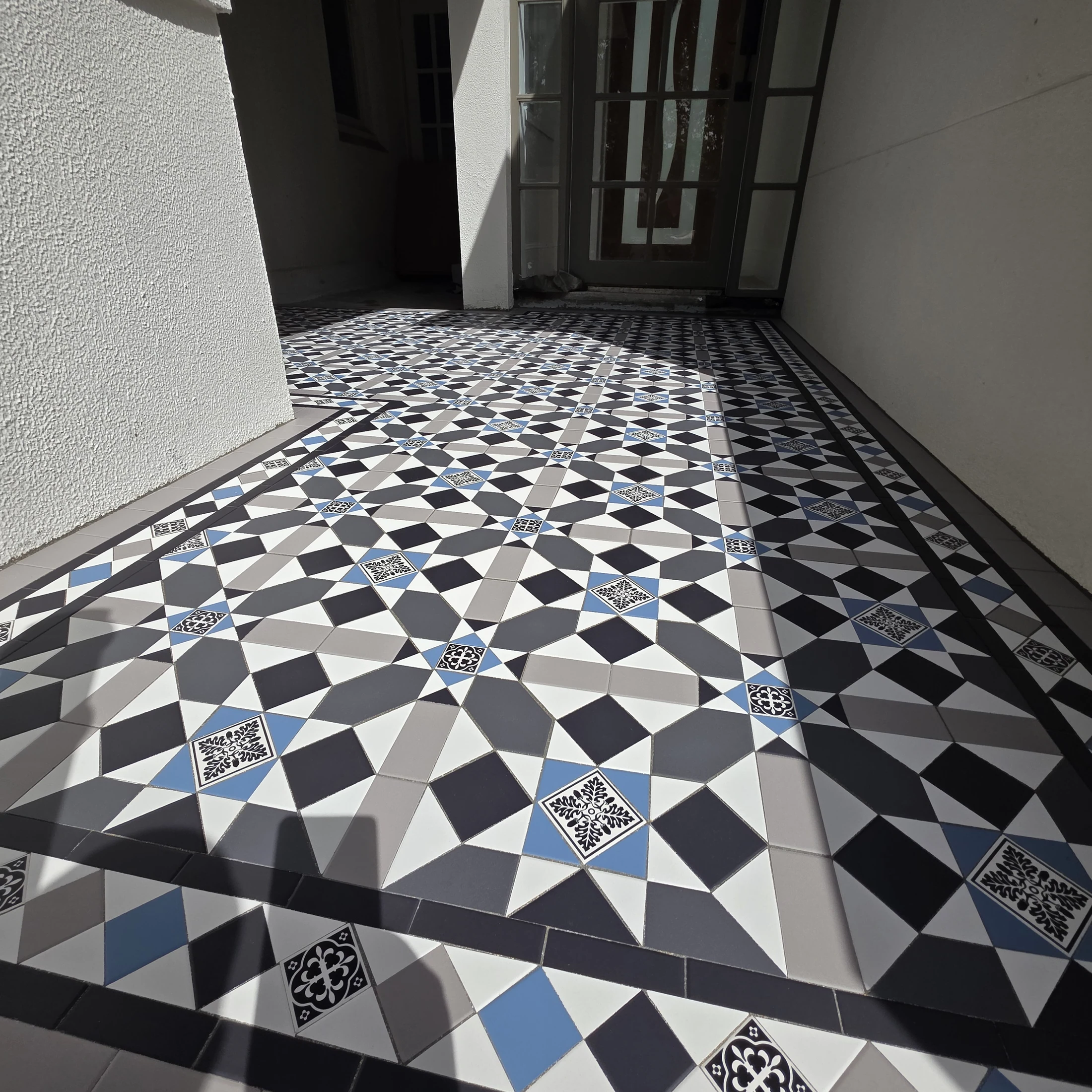
Tessellated tile design for Pennant Hills homes
Hornsby Shire Council's Pennant Hills Heritage Walk records Federation bungalow, interwar bungalow and California Bungalow examples alongside gardens, parks and older residential streets. That does not mean every Pennant Hills property is heritage listed, but it is useful context when a new tiled surface sits beside an older verandah, front path or porch.
A considered design starts with the place rather than a stock pattern. Existing thresholds, stair geometry, brickwork, sandstone, garden edges and the home's front-to-street relationship can guide scale, border treatment and colour balance. Where older tiles survive, documenting their layout and condition before removal can help determine whether restoration or a carefully matched new area is the better path.
Restoration, replacement and new tessellated work
Restoration work can involve assessing loose or damaged tiles, retaining sound original material where practical and planning transitions between repaired and new areas. New installation may be appropriate for a later addition, a renewed pathway or a surface where the original fabric is no longer serviceable. The right approach depends on the substrate, drainage, exposure, access and the relationship between the proposed work and the existing building.
For a listed property or a home within a heritage conservation area, Hornsby Council advises checking the relevant planning controls before changing significant external features. AHTC's design and restoration discussion can help you prepare the project questions and material decisions, but it is not heritage approval or planning advice.
Verandahs, pathways and edging details
Pennant Hills sites vary in slope, garden setting and relationship to busy streets or established residential lanes. For an outdoor pathway or verandah, layout proportions, falls, surface transitions and edge protection deserve attention alongside the tile pattern. Stone bullnose or other edging coordination can help resolve a step, garden boundary or change of plane when the detail is selected for the site rather than added as a generic finish.
A site conversation is especially useful when a new tiled area meets older brick, sandstone, timber steps or an existing threshold. It can clarify what should be retained, what needs repair and how the finished work should read from the street and from inside the home.
Check the property before changing significant fabric
Hornsby Shire Council distinguishes local heritage items from State heritage items and directs owners to the Hornsby Local Environmental Plan, its heritage register and property mapping tools. A Pennant Hills address should be checked individually rather than judged from the suburb name or from the age of a nearby house.
If the property is listed or sits in a conservation area, keep photographs, dimensions, existing tile notes and proposed material information together for the relevant enquiry. This helps separate ordinary maintenance from work that may need consent or written exemption advice.
Your Heritage Tiling Questions
Can tessellated tiles suit a Federation or interwar home in Pennant Hills?
They can, when the layout, scale, colour balance and edge details are designed for the building and its setting. Pennant Hills heritage material records Federation and interwar bungalow examples, but the design should still be based on the individual home's surviving fabric and proportions.
How do I know whether my Pennant Hills property has heritage controls?
Check the Hornsby Local Environmental Plan, Schedule 5, Council's heritage register and the relevant property mapping. Heritage status is property-specific, so the suburb name or the age of a neighbouring home is not enough to determine the controls.
Can an existing tessellated floor be restored instead of replaced?
Often the first step is an assessment of the existing tiles, substrate, movement, moisture and missing areas. Sound original material may be retained where practical, with repairs and new work planned around it. The suitable approach depends on the condition and the proposed use of the space.
What should I consider for a Pennant Hills tiled pathway or verandah?
Consider the building's entry geometry, falls and drainage, exposure, access, thresholds, garden edges and transitions to brick, sandstone or existing paving. A measured site review can also help coordinate stone bullnose or edging where a change in level needs a durable, coherent detail.
Discuss Your Heritage Tiling Project
Share your location, project details and photographs using our enquiry form, or call 0433 932 711.