
Tessellated tiles in Huntleys Cove
Huntleys Cove sits within the Hunters Hill municipality on the peninsula formed around the Lane Cove and Parramatta Rivers.
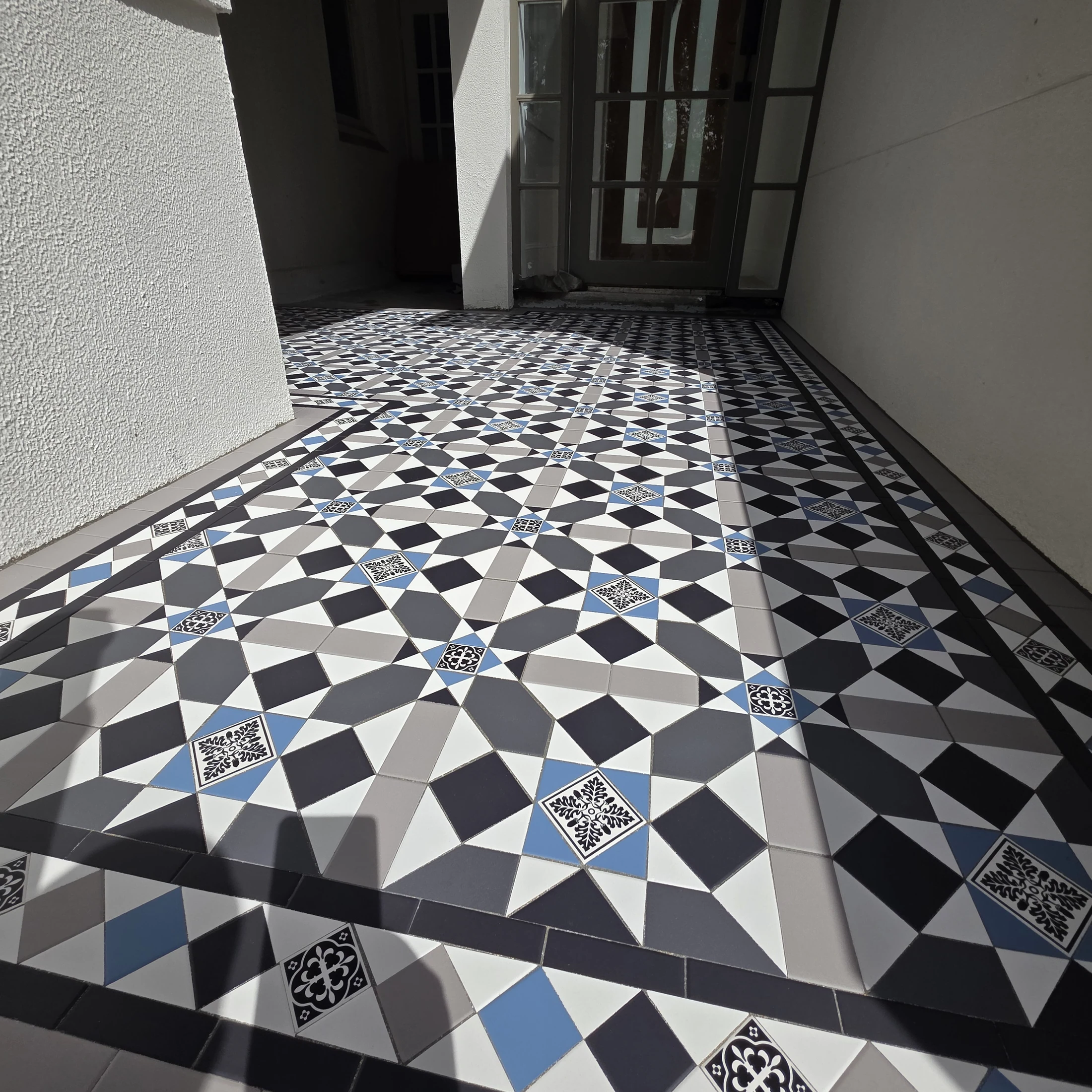
A Hunters Hill setting calls for a property-led approach
Hunters Hill Council identifies Huntleys Cove as one of the municipality's suburbs and describes the wider municipality as a leafy sandstone peninsula between the Lane Cove and Parramatta Rivers. Its planning statement places Huntleys Cove with Henley and Huntleys Point on a distinct peninsula within the local government area. That setting makes the relationship between a tiled surface, garden, path and water-facing outlook important to consider at the design stage.
The council also describes a long-established garden-suburb character, local sandstone traditions and a broad heritage context. Those facts support careful design thinking, but they do not mean every Huntleys Cove property is heritage-listed or within a conservation area. The property's own history, mapping and planning controls should guide the final scope.
History of Hunters HillHunters Hill Council Local Strategic Planning StatementHeritage Areas & Items — Hunters Hill Council
Design considerations for floors, verandahs and pathways
For an entry or internal floor, begin with the proportions of the room and the visual weight of adjoining joinery, masonry and garden views. A restrained border can define a threshold, while a more ordered repeat may suit a larger circulation area. The useful decision is not simply which pattern looks attractive in isolation, but how the pattern meets doors, steps and changes in level.
On a verandah or pathway, set out should account for the approach to the house, edge conditions, drainage and transitions to existing paving. Where stone steps or thresholds are part of the composition, bullnose or edging coordination can help the new work read as one considered detail. Existing tiles should be assessed before removal so that sound fabric and useful evidence of the earlier layout are not discarded unnecessarily.
History of Hunters HillHunters Hill Local Environmental Plan 2012 (2013 EPI 34)
Check the property before changing established fabric
Hunters Hill Council publishes heritage conservation-area information and directs property owners to the NSW Planning Portal maps and the Hunters Hill Local Environmental Plan schedule. Before altering an established tiled floor, front path or verandah, check whether the property or its setting is identified by those records and seek the relevant planning advice where needed.
A heritage-aware brief can still allow practical improvements. It may involve documenting the existing pattern, identifying what can be retained, separating repair from new work, and choosing a new layout that respects the scale and character of the house without claiming that a particular treatment is compulsory.
Heritage Areas & Items — Hunters Hill CouncilHunters Hill Local Environmental Plan 2012 (2013 EPI 34)
From pattern selection to finished edges
A considered result depends on more than the tile pattern. Design consultation can resolve proportion, colour relationships and transitions before supply and installation are planned. Restoration work begins with the condition of the existing surface and the parts worth retaining. For new or repaired work, the finish at borders, steps and stone bullnose or edging deserves the same attention as the field pattern.
The aim is a surface that belongs to the property's scale and setting, whether the brief is a new pathway, a verandah, an interior floor or careful restoration.
History of Hunters HillHeritage Areas & Items — Hunters Hill CouncilHunters Hill Local Environmental Plan 2012 (2013 EPI 34)
Your Heritage Tiling Questions
Does every Huntleys Cove property require heritage approval for tile work?
Not necessarily. Huntleys Cove's wider municipality has heritage conservation areas and listed items, but the applicable status is property-specific. Check the Hunters Hill Local Environmental Plan schedule and NSW Planning Portal heritage maps, then confirm the appropriate planning pathway before changing established fabric.
How can tessellated tiles suit a Huntleys Cove home?
Start with the property's proportions, existing materials and the way the entry, verandah or path meets the garden and outlook. Pattern scale, borders, thresholds and edges can then be selected as part of one setting-led design rather than as isolated decoration.
Can existing tessellated tiles be restored rather than replaced?
Often the first step is an assessment of the existing tiles, layout and condition. That helps separate sound fabric worth retaining from areas needing repair and identifies where a new section may need to meet the earlier pattern. The suitable approach depends on what is found on site.
Are river-facing properties subject to extra design considerations?
The Hunters Hill LEP includes mapped river-front-area provisions that address visual impact, existing trees, views and the significance of the land and surrounding land where the clause applies. Confirm whether the specific property is within the mapped area before relying on that provision for a project decision.
Discuss Your Heritage Tiling Project
Share your location, project details and photographs using our enquiry form, or call 0433 932 711.