
Tessellated Tiles in Woolwich
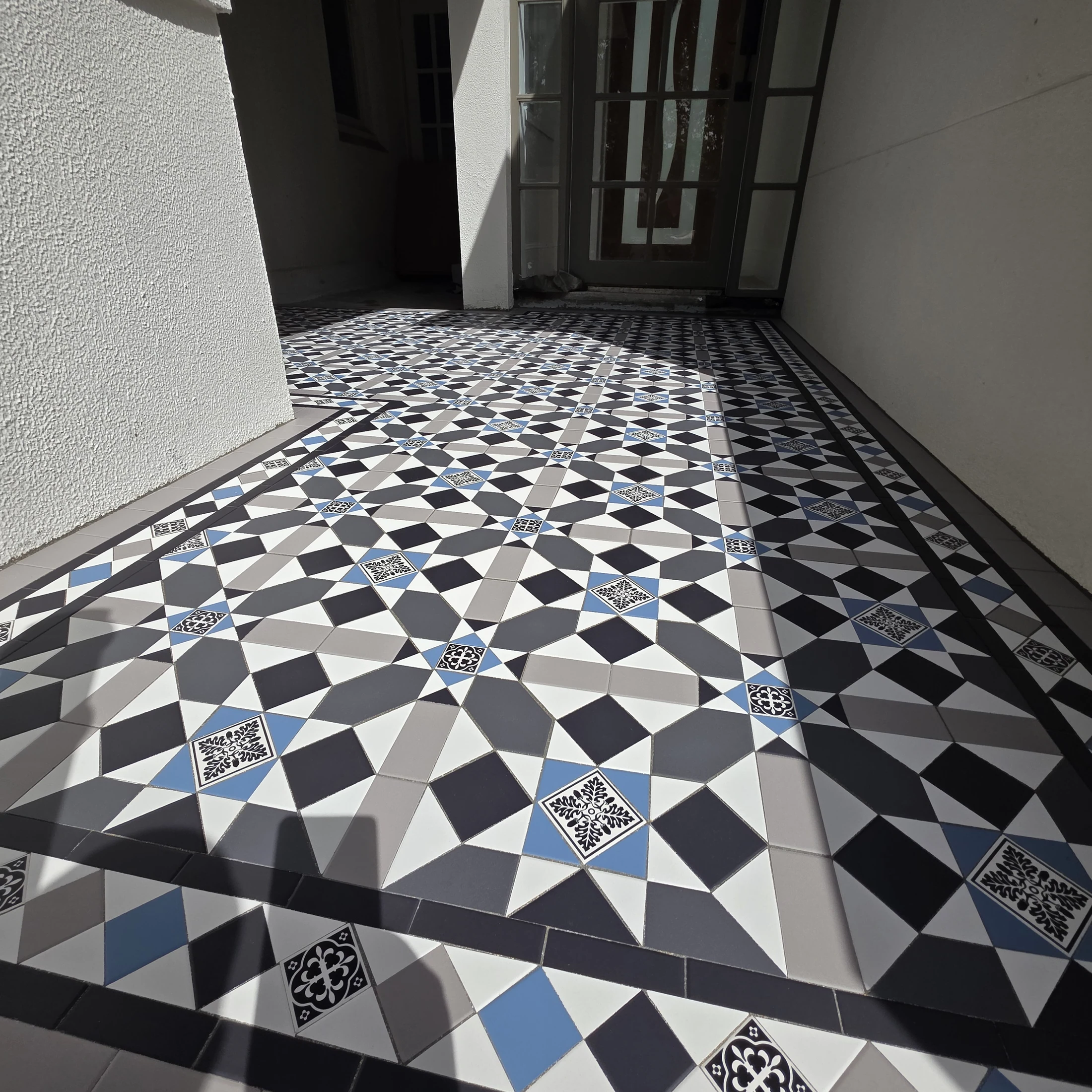
Woolwich sits within the Hunters Hill peninsula, where mature trees, stone walls, leafy streets, foreshore views and older buildings contribute to a distinctive local setting. For a Woolwich verandah, entry, pathway or interior floor, tessellated tile work should respond to the property rather than apply a generic pattern. AHTC can help with design consultation, tessellated tile supply, installation, restoration and stone bullnose or edging coordination.
A peninsula setting with a strong streetscape character
Hunters Hill Council describes the area's character through mature trees, stone walls, natural landscape and foreshore, including leafy streets and water glimpses between older buildings. Its heritage framework includes Hunters Hill Conservation Area No. 1 — The Peninsula. These are area-level considerations, not a statement that every Woolwich property is individually heritage listed.
The council's heritage review records Woolwich and peninsula examples with tiled roofs, verandahs, brick or weatherboard construction and sandstone boundary walls. Those details can inform a sympathetic tile brief: consider the building's proportions, approach sequence, existing thresholds and the relationship between hard surfaces, planting and boundary walls before choosing a pattern or border.
Heritage Significance — Hunters Hill CouncilHeritage Areas & Items — Hunters Hill CouncilHunter's Hill Heritage Review — Paul Davies Pty Ltd
Design considerations for verandahs, entries and pathways
For a verandah or front entry, layout, scale and transitions matter as much as the tile selection. A restrained field with a considered border can sit more comfortably beside a Federation-era frontage, while a pathway needs attention to its width, turning points, door thresholds and connection to the garden or street. Existing stone edging, brickwork, steps and drainage should be assessed as part of the whole composition.
At a property near the foreshore or within a visually sensitive streetscape, the design conversation should also consider views, landscape and water management. Woolwich Dock's management plan emphasises the importance of cultural landscape, views, accessible paths and stormwater outcomes within its own precinct; those principles are useful reminders to treat external paving as part of a site, without implying that the Dock's controls apply to private homes.
Heritage Significance — Hunters Hill CouncilWoolwich Dock Management Plan — Sydney Harbour Federation Trust
Restoring existing tilework with care
Where original or older tessellated tiles remain, start with an assessment of what survives. Matching colour, proportion, edge treatment and the relationship to adjoining materials can be more important than replacing every worn area. AHTC's design consultation and restoration services can help establish a practical scope before supply or installation decisions are made.
If new work is being added beside existing fabric, record the layout and transitions first. Samples, measured drawings and photographs are useful when discussing a border, stair edge, stone bullnose or a repair that needs to sit quietly beside an established Woolwich frontage.
Hunter's Hill Heritage Review — Paul Davies Pty LtdMinor Works — Hunters Hill Council
Check the property before work begins
A conservation-area setting and an individual heritage listing are different matters. Hunters Hill Council directs owners to the Local Environmental Plan, heritage maps and relevant heritage guidance. Council also notes that some minor or maintenance works may be exempt only through the applicable process and, in some cases, a heritage exemption letter.
Before changing an existing tiled surface, front path, verandah or boundary edge, confirm the property's status and the proposed scope with the relevant authority. AHTC can keep the tile design and installation discussion focused on the actual building and site rather than assume that one approval pathway applies to every Woolwich address.
Heritage Areas & Items — Hunters Hill CouncilMinor Works — Hunters Hill Council
Your Heritage Tiling Questions
Is every Woolwich property heritage listed?
No. Woolwich is associated with the Hunters Hill peninsula conservation-area context, but a conservation area and an individually listed heritage item are different designations. Check the Hunters Hill Local Environmental Plan, heritage maps and the property-specific planning position before work begins.
Can tessellated tiles suit a Woolwich Federation-era home?
They can, when the layout responds to the house. The council heritage review records Woolwich and peninsula examples with tiled roofs, verandahs, brickwork and sandstone walls, so proportions, borders, thresholds and adjoining materials should be considered together rather than selected as an isolated pattern.
What should I check before replacing an old Woolwich path or verandah floor?
Document the existing surface, check whether the property is within a conservation area or is an individual heritage item, and confirm whether the proposed work falls within a relevant minor-works or exemption process. Council says applications may require a precise work location, description, photographs and product information.
Can you help match existing tessellated tiles?
Design consultation and restoration planning can examine the surviving field, border, colour relationships, edge treatment and adjoining materials before deciding whether repair, selective replacement or new work is appropriate. The right approach depends on the condition and evidence at the property.
Discuss Your Heritage Tiling Project
Share your location, project details and photographs using our enquiry form, or call 0433 932 711.