
Tessellated Tiles in Mordialloc
Mordialloc's coastal-village setting brings together Mordialloc Creek, Port Phillip Bay, a lively main street and a mix of traditional and newer buildings. For a verandah, pathway, entry or interior floor, tessellated tile choices can be developed around the property's proportions, existing fabric and the way the work meets the street. Authentic Heritage Tiling Co provides design consultation, tessellated tile supply, installation, restoration and stone bullnose or edging coordination for Mordialloc projects.
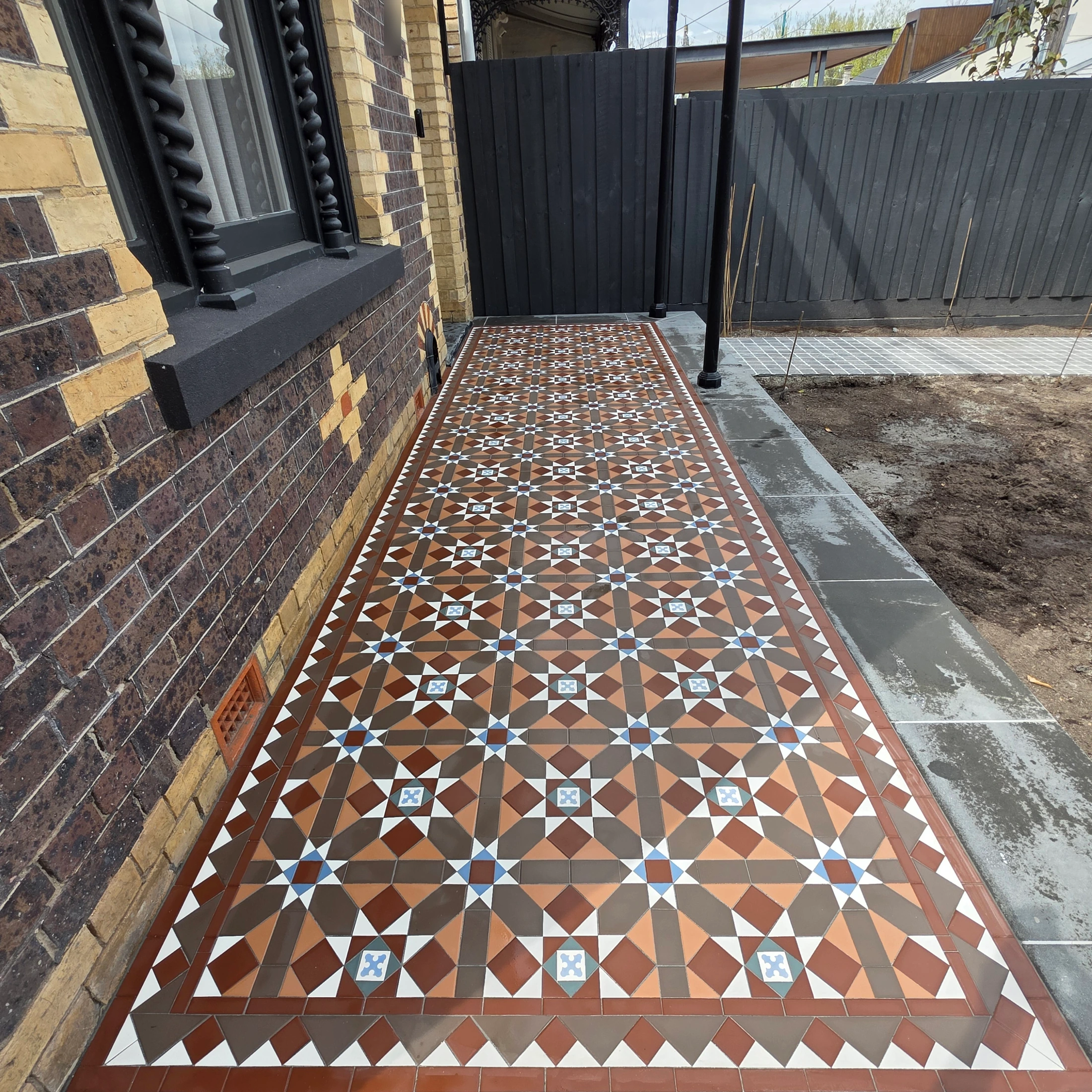
Tiling for Mordialloc's coastal village setting
Council's Mordialloc urban design framework describes a precinct shaped by the creek, bay, boating and fishing activity, a thriving main street and a recreational foreshore. It also notes modest building forms and traditional building fabric in parts of the centre. Those cues can inform proportion, border restraint and transitions between a home, shopfront or shared entry and its surrounding streetscape, without assuming that every property has the same period or heritage status.
A considered scheme starts with the building rather than a standard pattern. The existing threshold, verandah width, sightlines, drainage, step heights and adjoining materials all affect whether a small tessellated field, a defined border or a simpler transition will sit comfortably. Where an existing floor survives, matching and selective restoration may be more appropriate than replacing sound fabric.
For exposed coastal edges and busy accessways, tile selection and detailing should be discussed alongside falls, movement, junctions and maintenance. A site review can help identify how the finish should meet paving, masonry, stone bullnose or other edging while keeping the design legible from the street.
Heritage-sensitive decisions are property-specific
The Mordialloc Activity Centre provisions seek a low-rise coastal village form and ask new development to respond to established heritage values, streetscape and development patterns. That makes scale, siting, colour, finish and the relationship to adjoining fabric useful design questions when planning visible tile work in or near the centre.
A Heritage Overlay may apply to an individual place or an area, and Kingston advises that works affecting an overlay property may need a planning permit. Before altering an older floor, verandah or frontage, confirm the property's current planning controls with the relevant authority. Heritage-sensitive tiling advice does not replace a permit assessment or guarantee an approval.
Where a project is part of a broader alteration or addition, the council's planning application guidance identifies site context, a design response and detailed plans among the information that may be required. Keeping the tile proposal coordinated with the wider design can make the intended relationship between old and new work easier to explain.
Design, supply, restoration and installation
For a new Mordialloc scheme, consultation can cover layout, colour balance, border treatment and the transition into adjoining surfaces before supply and installation are scheduled. Existing patterns, uneven levels and the intended use of the space should guide the design rather than a borrowed template.
For restoration, the first question is what can be retained. A condition review can help distinguish sound original or earlier work from loose, cracked or incompatible sections and can inform a measured approach to repairs, replacement and edge detailing. Stone bullnose or other edging coordination can be considered where the design needs a durable, visually resolved boundary.
The same property-led approach suits a front path, porch, verandah, foyer or commercial threshold. The final recommendation should reflect the site's exposure, access, substrate and existing architectural language, with any planning or heritage checks handled separately by the owner and the relevant authority.
Your Heritage Tiling Questions
Does every Mordialloc property have heritage protection?
No. Kingston explains that the Heritage Overlay can apply to individual places or areas, including buildings, objects and trees. Check the specific property's current planning controls rather than assuming that a Mordialloc address is heritage-listed.
Can tessellated tiles suit a Mordialloc verandah or pathway?
They can, when the layout is designed for the property's proportions, access, exposure and junctions. A consultation can consider a restrained field, border or transition that relates to the existing building and adjoining paving rather than imposing a generic pattern.
What should I check before changing tiles on an older Mordialloc property?
First identify whether the property or precinct is affected by a Heritage Overlay or other planning control. Kingston advises that works on an overlay property may need a planning permit, so confirm the current requirements before removing or changing significant fabric.
Can existing Mordialloc tiles be restored rather than replaced?
Often the appropriate choice depends on condition, extent of loss, access and the significance of the existing work. A review can help identify what is sound, what needs selective repair and where new work should be clearly and carefully integrated.
Discuss Your Heritage Tiling Project
Share your location, project details and photographs using our enquiry form, or call 0433 932 711.