
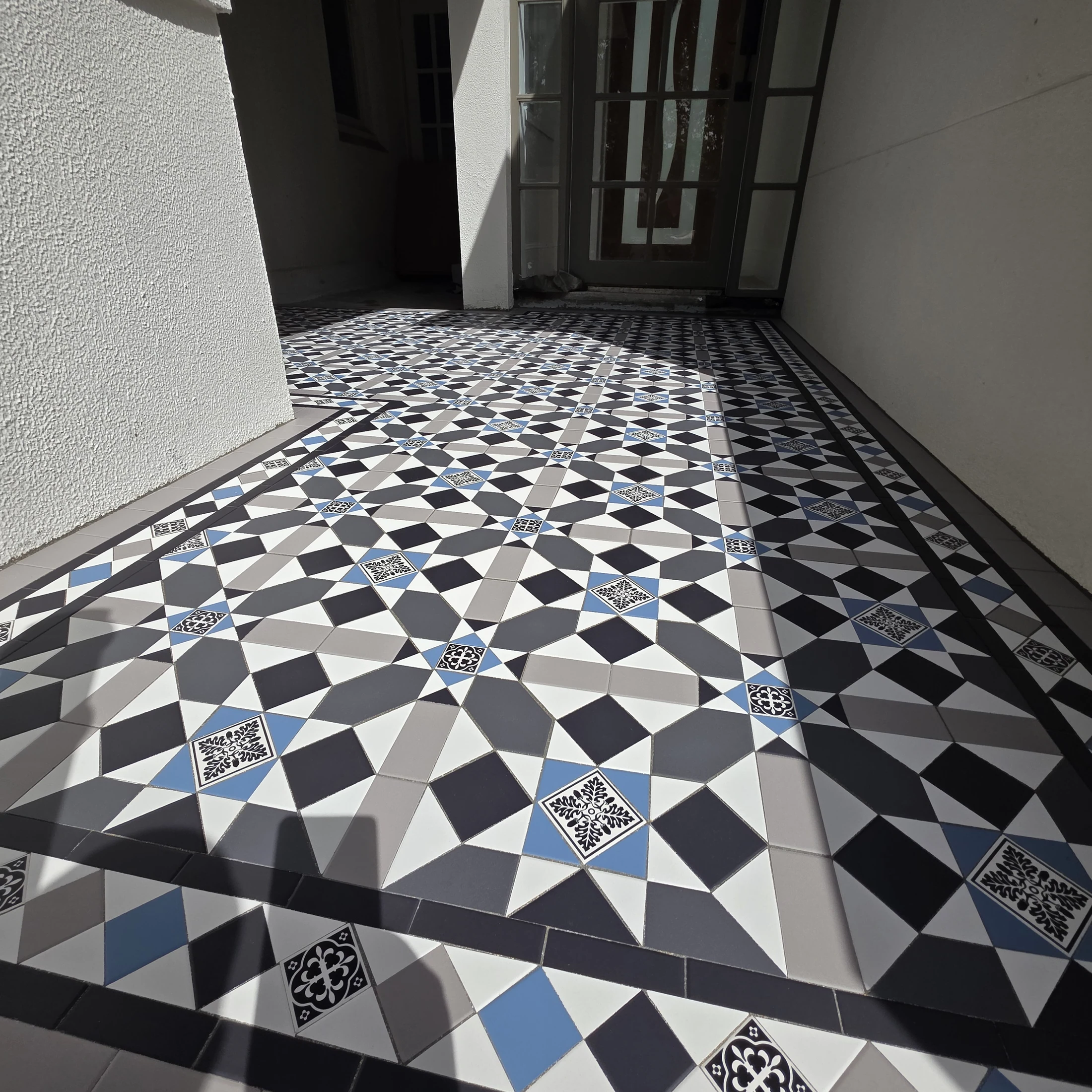
Tessellated tiles in Hoxton Park
Hoxton Park's local story includes an 1887 subdivision, changing rural land uses and later residential growth. For a home, verandah or pathway here, a good tessellated tile scheme should respond to the building, the setting and the job's practical conditions rather than apply a period label by assumption. AHTC can help with design consultation, tessellated tile supply, installation, restoration and stone bullnose or edging coordination.
A local setting with more than one layer of history
Liverpool City Council's local history records Hoxton Park's 1887 subdivision from Thomas Amos's property, while the council's thematic history places the locality in the higher parts of the Liverpool landscape and describes Wianamatta shale across much of the area. That history is useful context, but it does not mean every current house has historic fabric or heritage protection.
Council planning material also records the former Hoxton Park Airport as a distinct layer of local history, with interpretation and landscape considerations in the former-airport development area. A tile design can acknowledge a property's actual architecture and landscape without imitating an unrelated aviation or rural motif.
Designing for a Hoxton Park home, verandah or pathway
Start with the building's proportions, entry sequence and existing materials. On a verandah, the border, field and threshold need to sit comfortably with steps, doors and balustrades. On a pathway, the pattern should be read at walking pace and allow practical transitions at gates, driveways and changes in level.
The surrounding ground and drainage conditions matter as much as the pattern. Liverpool's planning material makes clear that controls vary with the property and type of development, so the design conversation should distinguish a straightforward surface renewal from structural, landscape or subdivision work.
Restoration, replacement or a new tessellated layout
Where existing tiles survive, record the layout, edge conditions and areas of loss before choosing a repair approach. Matching is a visual and practical exercise: colour, scale, joint rhythm, wear and the relationship to adjacent stone or masonry all matter. If the original pattern cannot be established, a new design should be described as new work rather than presented as historic reconstruction.
For newer homes or altered properties, a tessellated floor can still be carefully designed without pretending that the house belongs to a particular historical period. Consultation can cover tile selection, layout, supply, installation sequencing, restoration and stone bullnose or edging coordination.
Check the property before work begins
Liverpool City Council publishes development-control material for Hoxton Park and explains that the relevant controls depend on the site and proposed work. Before altering a frontage, pathway or landscape, check the property's planning information and any applicable consent or certification requirements with the appropriate authority or adviser.
AHTC's role is to provide tile and design guidance, not to grant heritage or planning approval. Property-specific checks are especially important where the work changes levels, drainage, access, subdivision works or a documented heritage place.
Your Heritage Tiling Questions
Can you design tessellated tiles for a newer Hoxton Park home?
Yes. A tessellated layout can be designed as contemporary work, with the pattern, border and colour selected to suit the home's proportions and materials. It should not be described as historic unless the property and evidence support that description.
What should I check before tiling a Hoxton Park pathway or verandah?
Check the existing surface, falls, drainage, thresholds and access first. Liverpool City Council's planning information says the applicable controls depend on the property and the type of development, so confirm any approval or certification questions before changing levels or carrying out associated landscape work.
Can an existing tessellated floor be restored rather than replaced?
Often the first step is an on-site assessment of surviving tiles, pattern, edges and the condition beneath them. A repair or partial replacement may be appropriate where the existing fabric can be retained; where the layout is unknown or extensively altered, a clearly identified new design may be more suitable.
Does Hoxton Park's history mean my house is heritage-listed?
No. The locality's documented subdivision and former airport history provide context, but they do not by themselves establish that an individual house or floor is heritage-listed. Check the property-specific planning and heritage information before relying on a heritage assumption.
Discuss Your Heritage Tiling Project
Share your location, project details and photographs using our enquiry form, or call 0433 932 711.