
Tessellated tile services in Lurnea
Lurnea has a layered residential story, from the earlier Hillview soldiers' settlement to the substantial post-war housing program that shaped much of the suburb. For a verandah, entry, path or interior floor, a useful tile scheme starts with the property in front of you: its proportions, existing surfaces, exposure and the way new work will meet older fabric. AHTC can help with tessellated tile design, supply, installation and restoration planning in Lurnea.
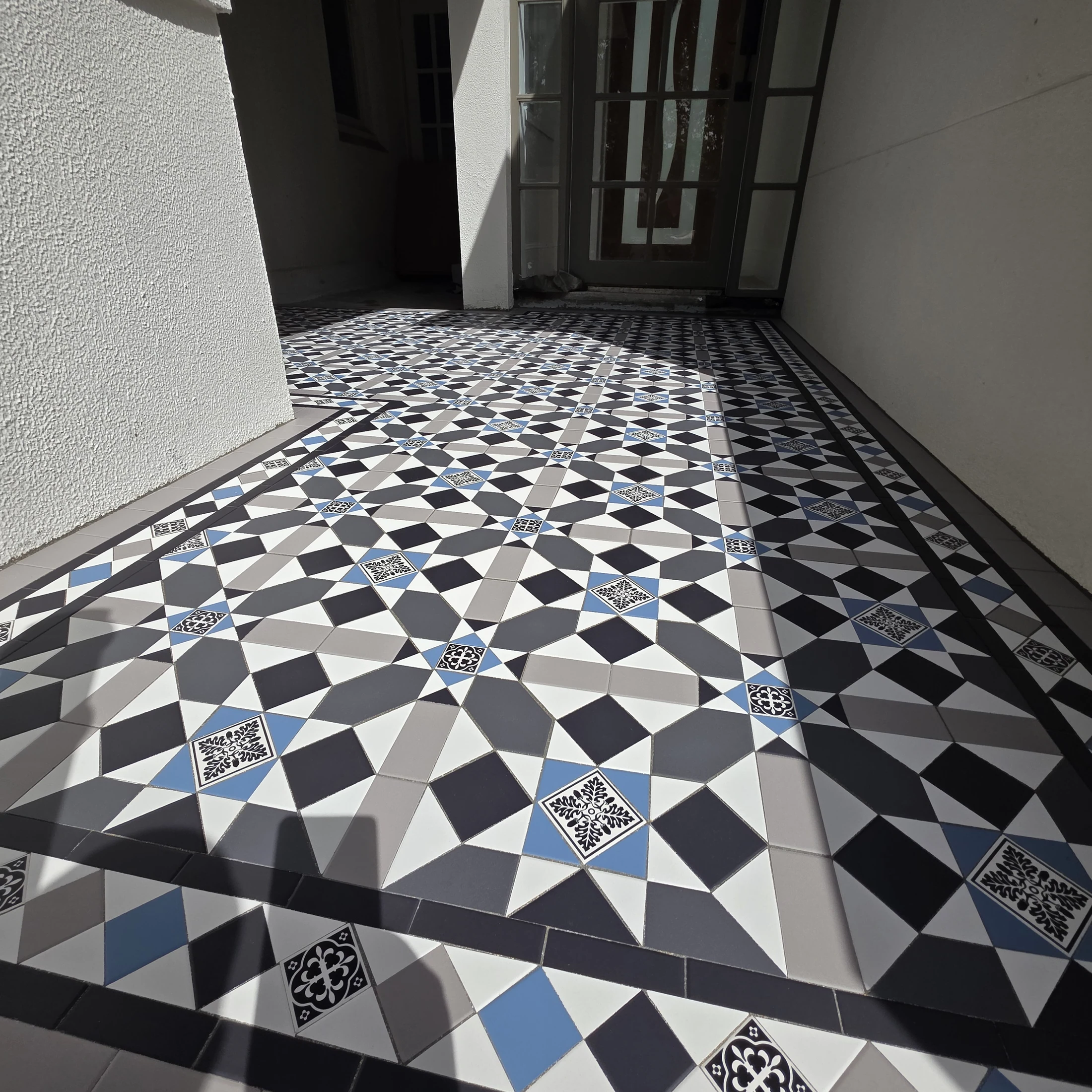
A post-war residential setting with earlier layers
Liverpool City Library records that the former Hillview area was redeveloped by the NSW Housing Commission from the early 1950s, with 946 new homes completed by 1967. That history helps explain why Lurnea contains a strong post-war residential layer alongside earlier settlement traces and later changes.
The same local record describes a mixture of renting and home ownership, while the Phillips Park plan documents the continuing importance of community facilities. These facts are useful context, not a claim that every house follows one architectural pattern or carries heritage protection.
Plan the tile layout around the property
On a Lurnea entry or verandah, the right layout depends on the width of the threshold, the direction of approach and how borders meet steps, walls and garden edges. A restrained field with a considered border can suit a modest post-war frontage, while a more decorative scheme may need careful proportion so it does not overwhelm the existing elevation.
Where a path or porch is being renewed, the existing surface, falls, drainage and junctions should be assessed before a pattern is selected. For an older floor or surviving external detail, restoration may call for careful matching and selective repair rather than automatic replacement.
Design, supply, installation and restoration
AHTC's Lurnea service can cover design consultation, tessellated tile supply, installation and restoration, with stone bullnose or edging coordination where the project requires it. The practical sequence should follow the property: confirm the intended pattern and edge treatment, review the surface and transitions, then coordinate the installation approach.
If the work affects an individually listed property or a property within a conservation area, owners should check the applicable Liverpool planning and heritage controls before work begins. Heritage-sensitive advice is property-specific and does not amount to council or heritage-authority approval.
Your Heritage Tiling Questions
Can tessellated tiles suit a post-war Lurnea home?
They can, when the pattern, scale and edge detail are chosen to work with the home's frontage and the intended area. A consultation can compare a quiet border treatment with a more decorative layout rather than assuming one period style suits every property.
Can an existing Lurnea tiled entry or path be restored?
Often the first step is an assessment of the surviving tiles, substrate, drainage and adjoining surfaces. Selective repair, careful matching or a new coordinated section may each be appropriate depending on condition and the owner's brief.
Does Lurnea's history mean my property is heritage-listed?
No. Lurnea's documented settlement and post-war development history does not by itself establish heritage listing or a conservation-area control for an individual property. Check the relevant property record and current Liverpool planning controls before making assumptions about approvals.
What should be considered for a Lurnea verandah or pathway?
Consider the approach width, thresholds, steps, drainage, exposure, border proportions and how the tiles meet existing paving or stone edging. These site details usually matter more than applying a generic suburb-wide pattern.
Discuss Your Heritage Tiling Project
Share your location, project details and photographs using our enquiry form, or call 0433 932 711.