
Tessellated tiles in Moorebank
Moorebank properties sit in a locality shaped by the Georges River, changing residential areas and a layered history that reaches back to the Moore Bank estate. For a verandah, entry, pathway or interior floor, a useful tessellated tile scheme starts with the building and site in front of you: its proportions, existing surfaces, thresholds, drainage and the way new work will meet the surrounding streetscape.
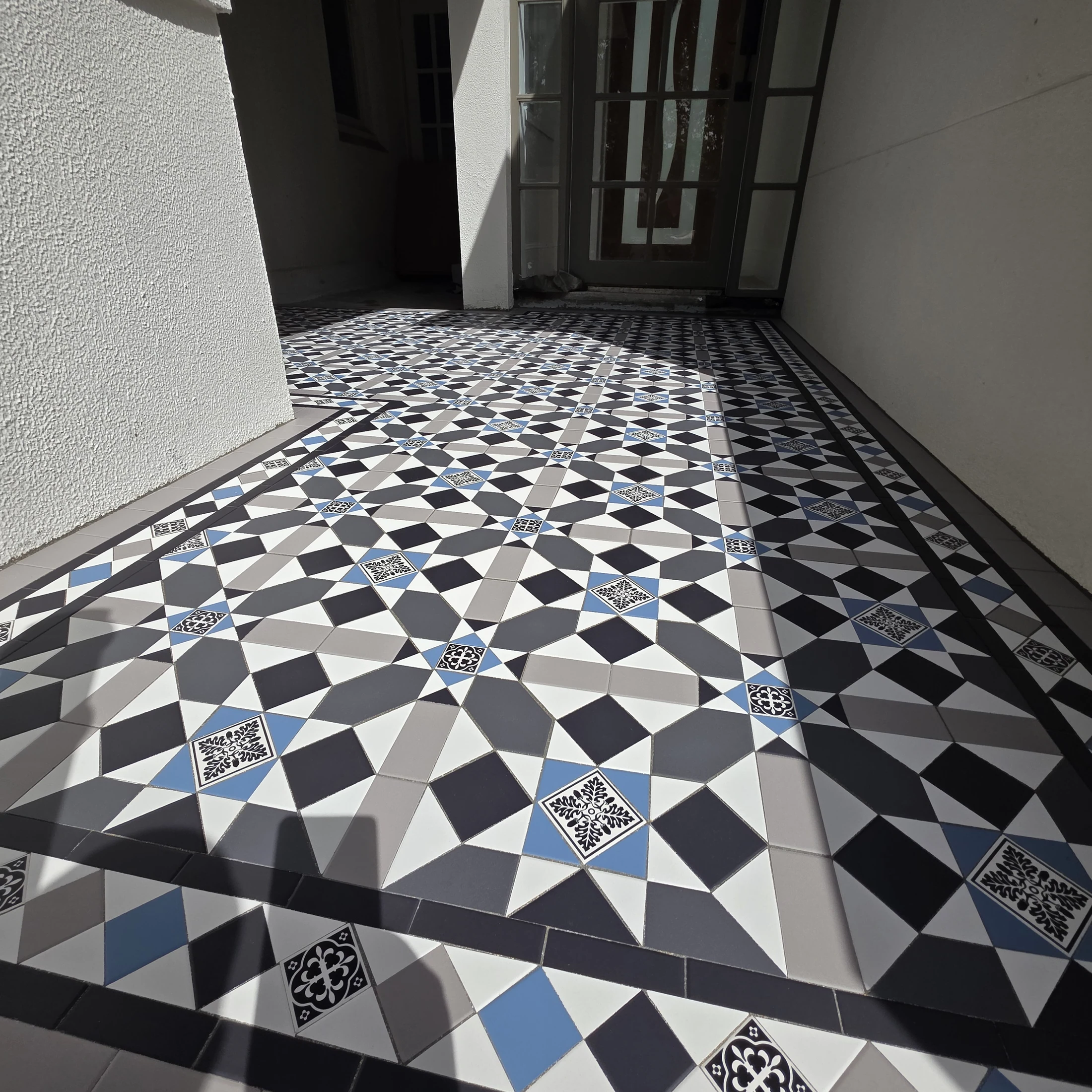
Designing for Moorebank homes and sites
Liverpool Council planning material for Moorebank East highlights the importance of streetscape, riverscape, open space, views, drainage and building design. Those considerations are relevant when setting out a tiled path or verandah, choosing borders and transitions, or coordinating work around an existing garden and driveway. A site assessment can keep the pattern legible while allowing access and water-management details to work together.
Moorebank's documented history includes rural land along the Georges River, later subdivision, military use and continuing change. That does not make every house a heritage property. It does mean that a design consultation should distinguish original fabric from later alterations and respond to the actual character of the property rather than applying a period label by suburb name alone.
A measured approach to existing fabric
Where an older entry, verandah or pathway survives, matching is best treated as a design and condition question. Colour balance, module size, border proportions, thresholds and the condition of the existing substrate all influence whether selective repair, careful replacement or a new adjoining section will sit comfortably with the building.
Liverpool Council is updating its heritage study and considering places of local significance. Before altering a property that may have heritage controls, check the current planning and heritage position for that individual site. Tiling advice can support a careful design response, but it is not heritage approval.
Liverpool Comprehensive Heritage Study | Liverpool City Council
Planning supply, installation or restoration
A useful first conversation can cover the intended area, photographs, dimensions, access, existing tile condition and how the work meets doors, steps, walls and garden edges. From there, design consultation can inform tessellated tile supply, installation planning, restoration or coordination of stone bullnose and edging where it suits the project.
For exposed paths and verandahs, consider falls, thresholds, drainage and movement between surfaces early. These are site-specific decisions; the Moorebank East controls themselves distinguish public-domain, private-domain and environmental matters rather than prescribing one universal tile build-up.
Your Heritage Tiling Questions
Can tessellated tiles suit a Moorebank verandah or pathway?
Yes, they can be designed for a verandah, entry or pathway when the layout responds to the building, exposure, thresholds, access and drainage. A site review is important before selecting a pattern or installation approach.
Does living in Moorebank mean my property is heritage-listed?
No. Moorebank has documented historical layers, but heritage status is specific to a property or place. Check the current Liverpool planning and heritage information for the individual site before making heritage-related changes.
What should I consider when tiling near the Georges River?
Consider how the design meets existing ground levels and doors, how water is directed away from the work, and how paths, planting and access connect. The exact response depends on the site and existing surfaces.
Can existing Moorebank tiles be restored or matched?
Often the options can be assessed through the surviving pattern, tile condition, dimensions, colour balance and the substrate. The appropriate outcome may be selective restoration, a carefully matched extension or a new design that is clearly differentiated from older work.
Discuss Your Heritage Tiling Project
Share your location, project details and photographs using our enquiry form, or call 0433 932 711.