
Tessellated Tiles in Warwick Farm
Warwick Farm sits within Liverpool’s Western Parkland City context and includes a long-documented racing landscape. For a home, verandah or pathway, tile choices should respond to the building, outdoor setting and intended use rather than assume a single suburb-wide style. We can help with design consultation, tessellated tile supply, installation, restoration and stone bullnose or edging coordination.
A local setting shaped by racing and changing development
Liverpool’s local history records Warwick Farm’s 1880s homestead and the development of a racing venue that opened to public meetings in 1889. That history gives the area a distinctive reference point, but it does not make every nearby house a heritage property.
The Greater Sydney planning context describes Warwick Farm as part of the Liverpool Collaboration Area, alongside residential, employment and infrastructure land. A practical tile scheme therefore needs to work with the actual property: its proportions, access, exposure, drainage and relationship to the street or garden.
When a property is near a heritage-listed precinct
The Warwick Farm Racecourse Group is identified as a locally significant item under Liverpool LEP 2008. The heritage assessment describes a precinct with buildings from different periods and core 1920s buildings, set within landscaped grounds. If work directly affects a listed property, its curtilage or a nearby setting, begin with a property-specific heritage and planning check before fixing a pattern, border or removal approach.
For a residential verandah, entry or path, a measured survey and photographs can help compare existing edges, thresholds and surviving tile fragments. Retaining sound original fabric, matching proportions and making new work legible without looking disconnected are more useful starting points than applying a period label by assumption.
Plan the tile layout around the property
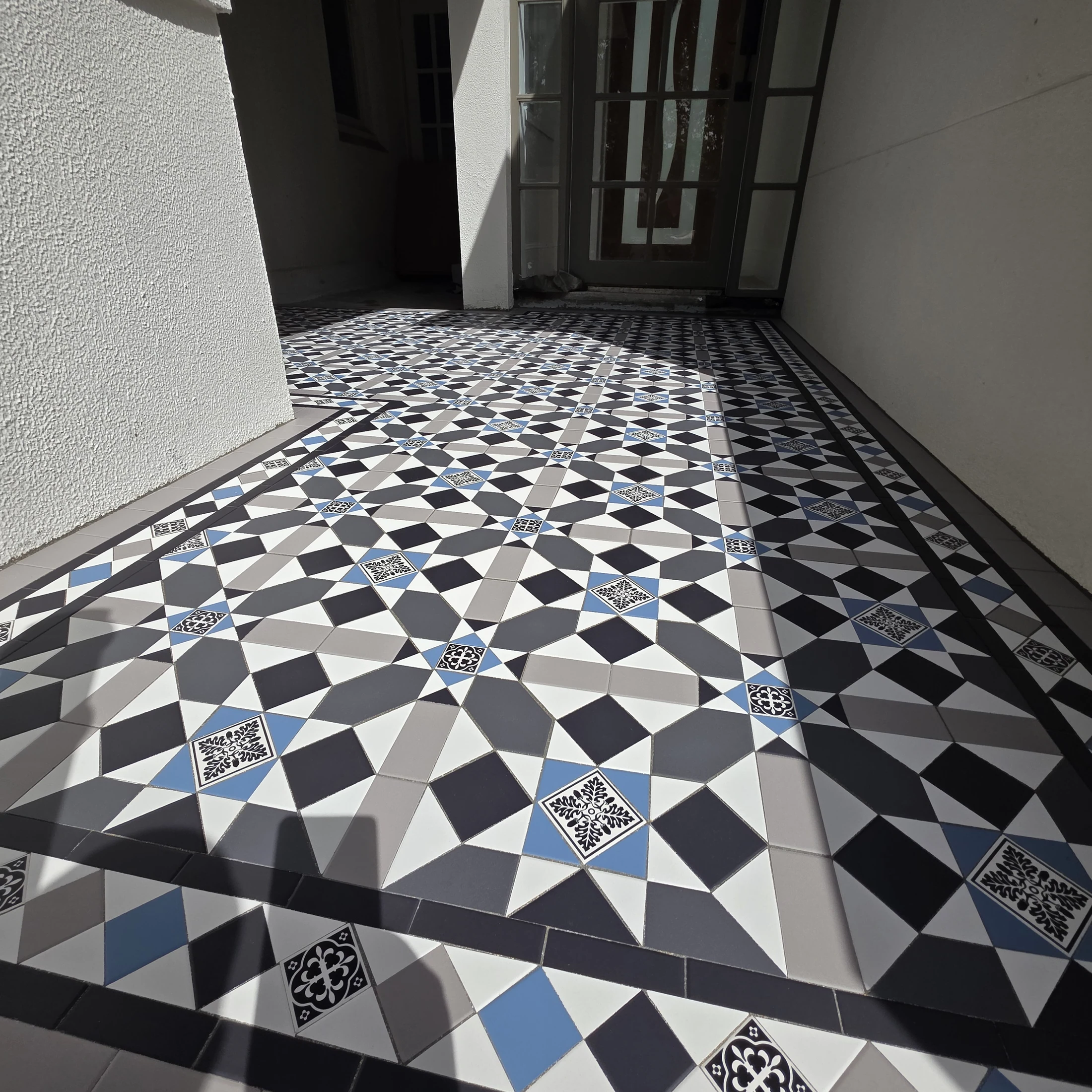
Tessellated floors are read through their geometry, borders and transitions. We can help develop a layout that suits the approach to the front door, a verandah width, a garden path or an internal floor, then coordinate supply and installation around the site conditions.
Restoration decisions depend on what remains. Loose or damaged tiles, uneven thresholds, moisture movement and edge details each need to be assessed on site; a repair may be preferable to wholesale replacement, but that decision belongs to the condition of the particular floor.
Design, supply, restoration and installation in Warwick Farm
AHTC can assist Warwick Farm clients with design consultation, tessellated tile supply, installation and restoration, including coordination of stone bullnose or edging where the design calls for it. Share the property type, the area to be tiled and any existing details so the approach can be considered against the building rather than a generic template.
Where a project sits within or beside a heritage-listed place, property-specific advice from the relevant authority or a qualified heritage professional may also be appropriate. A heritage listing does not by itself mean that every tile change needs approval, and this service does not represent council or heritage-authority endorsement.
Your Heritage Tiling Questions
Does Warwick Farm have a heritage character across the whole suburb?
The available evidence does not establish a suburb-wide heritage character. It identifies the Warwick Farm Racecourse Group as a locally significant precinct, while individual homes and other properties need to be considered on their own history, fabric and planning context.
Can you help with tessellated tiles for a Warwick Farm verandah or pathway?
Yes. Design consultation can consider the proportions, border, transitions, access and exposure of a verandah or path, followed by tessellated tile supply and installation planning suited to the property.
What should I do if my property is near Warwick Farm Racecourse?
Start by confirming the property boundary, the proposed work and whether the site or its setting is affected by a heritage listing or planning control. The racecourse group is locally significant under Liverpool LEP 2008, so work that may affect a listed place or curtilage should be checked specifically rather than judged from the suburb name alone.
Is restoration always better than replacing old tiles?
Not necessarily. The right choice depends on the condition and significance of the existing floor, the extent of loss, moisture and movement, and how new work will meet thresholds and edges. An inspection can help distinguish repairable fabric from areas that need carefully coordinated replacement.
Discuss Your Heritage Tiling Project
Share your location, project details and photographs using our enquiry form, or call 0433 932 711.