
Tessellated tiles in Donvale
Donvale's established residential setting and, in some areas, mature tree and ridgeline character call for tile choices that respond to the property rather than follow a preset pattern. Authentic Heritage Tiling Co. can help with tessellated tile design consultation, supply, installation, restoration and stone bullnose or edging coordination for verandahs, entries, pathways and other considered surfaces.
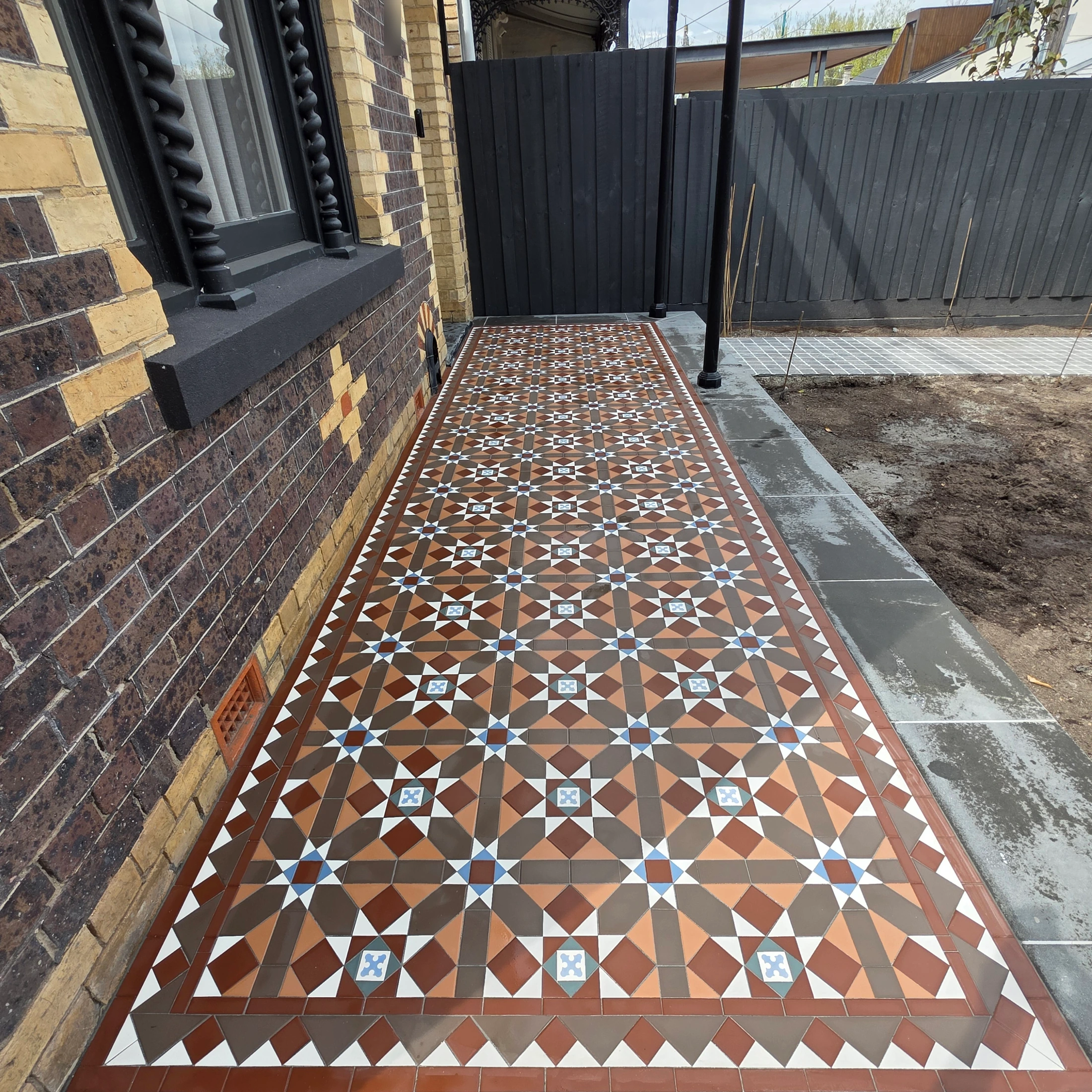
Tiling for Donvale's established residential character
Manningham Council records Donvale's development from the 1950s, with low-density development continuing into the 1980s. A Donvale project may therefore involve an established garden, a post-war house, later alterations or a newer replacement dwelling. The useful starting point is the actual relationship between the entry, verandah, path, façade and surrounding landscape, not an assumption that every property belongs to one architectural period.
For a new tiled area, pattern scale, border width, thresholds and transitions should be resolved against the available space and the building's proportions. Where older tiles survive, photographs and measured observations can help distinguish retained fabric, later repairs and new work before deciding between restoration, selective repair or a complementary installation.
Discover our area, history and demographics — Manningham Council
Paths and verandahs in a tree-rich landscape
The Manningham planning scheme identifies parts of Donvale and Doncaster East for pine and cypress plantings associated with former orchards and homesteads. The schedule also refers to prominent ridgelines, large canopy trees, topography, drainage and visual impact. Where those controls apply, a tiled path, terrace or verandah should be considered alongside excavation, finished levels, runoff, setbacks and the way the work sits within the garden and views from the street.
This is not a blanket description of every Donvale property. Before a layout is finalised, check the current planning controls for the individual site. A design discussion can then address borders, exposed edges, stone bullnose or other edging, access and transitions without assuming that one construction detail or approval applies throughout the suburb.
Check existing fabric and property controls before altering it
Manningham Council explains that a heritage overlay may affect building, renovation or maintenance work, and that the planning scheme identifies the location and level of controls. For an older Donvale property, check the address and proposed scope before removing, covering or substantially changing existing tiles, steps, paving or related external details.
Restoration can focus on documenting the surviving pattern, retaining sound material and selecting compatible repairs where evidence supports them. New work can instead be designed to sit comfortably beside an older building without being presented as original fabric. Tile design and installation do not provide heritage approval, so any permit or specialist advice remains specific to the property and proposed work.
How to build on or renovate your heritage listed property — Manningham Council
Plan the pattern, supply and installation together
A Donvale enquiry can begin with photographs, approximate dimensions and the intended use of the space. We can discuss geometric layout, borders and junctions, then coordinate tessellated tile supply with installation planning. For existing work, the condition of the tiles, substrate, edges and adjoining levels should guide whether the brief is restoration, selective repair or a new section.
Verandah steps, front paths and garden edges benefit from early attention to falls, thresholds and durable transitions. The final design should be buildable for the particular site and proportioned to the home, rather than treated as a generic locality pattern.
Your Heritage Tiling Questions
Can tessellated tiles suit a Donvale verandah or front path?
Yes. The layout can be developed around the property's proportions, entry sequence, steps, garden setting and adjoining surfaces. Borders, thresholds, drainage and edging should be considered before the pattern is finalised.
Does the Donvale/Doncaster East landscape overlay apply to every Donvale property?
No. The SLO7 schedule identifies particular pine and cypress tree areas. Check the individual property and current planning controls before relying on the schedule for a design or works decision.
How should I approach older tessellated tiles in a Donvale home?
Photograph the area and record the pattern, borders, condition, repairs and transitions before work begins. Then check the property's heritage information and consider retention, selective repair, compatible new work or replacement according to the surviving fabric and proposed use.
What site issues matter for a tiled path or verandah in a tree-rich Donvale setting?
Consider levels, excavation, drainage, runoff, tree relationships, setbacks, access and visual impact. The Manningham landscape schedule highlights topography, canopy, earthworks and site drainage in the areas it covers.
Do I need heritage approval for tiling work in Donvale?
That depends on the individual property's controls and the proposed work. Manningham Council advises checking whether a heritage overlay applies and what the planning scheme requires; tile design or installation is not approval in itself.
Discuss Your Heritage Tiling Project
Share your location, project details and photographs using our enquiry form, or call 0433 932 711.