
Tessellated Tiles in Park Orchards
Park Orchards has a distinctive local story: part of an orchard became a country club estate in 1925, with a planned layout associated with Saxil Tuxen and design ideas linked to Walter Burley Griffin's Ranelagh Estate. For a home, verandah or pathway here, tessellated tiles can be selected and laid as new work or approached as a repair project around the proportions, light and materials of the property. AHTC can discuss design, tessellated tile supply, installation, restoration and stone bullnose or edging coordination for projects in Park Orchards.
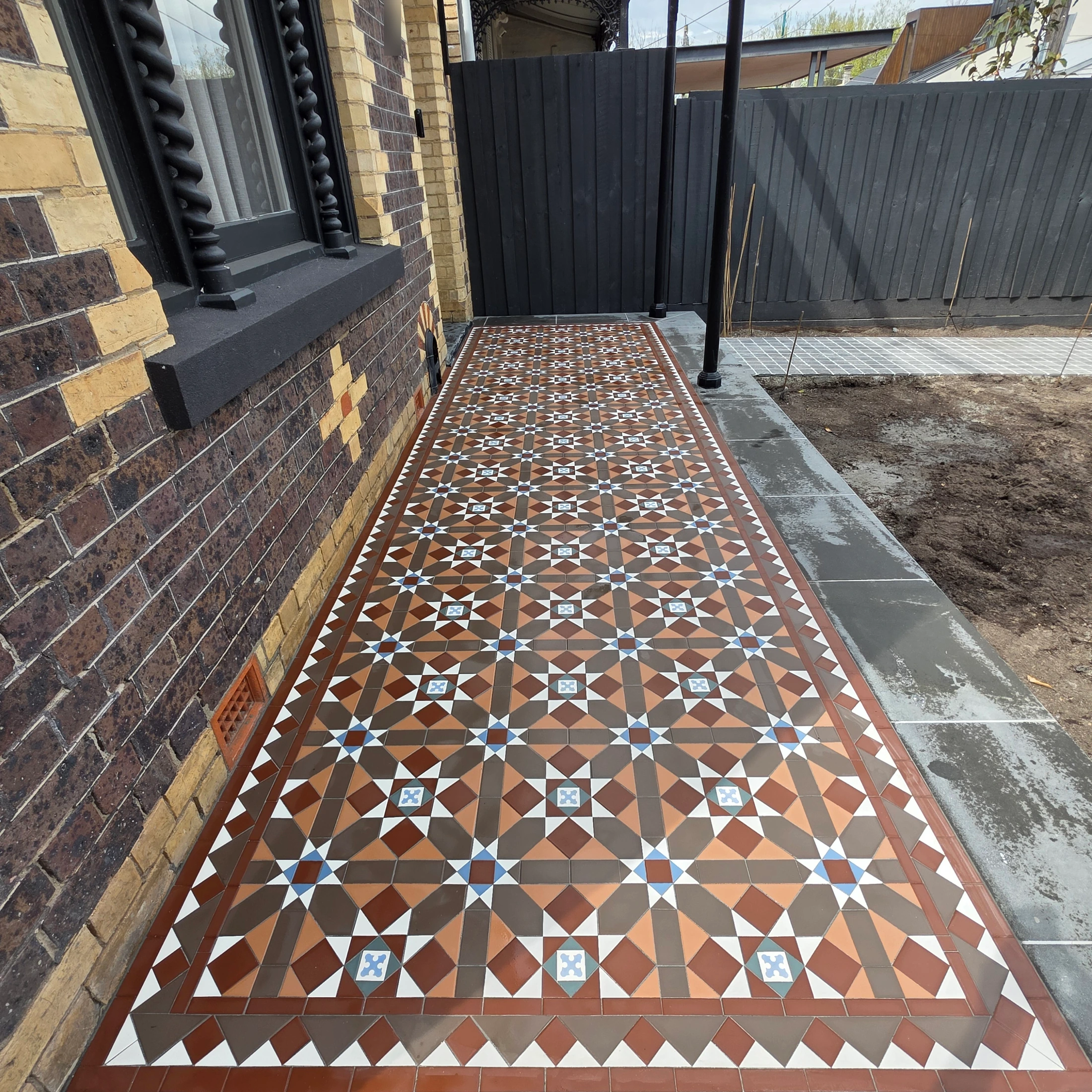
Tile decisions for Park Orchards homes
Park Orchards' country-club-estate origins make the relationship between a house, its garden setting and its approach worth considering. A tessellated floor for a verandah, entry or path should be designed around the actual footprint and circulation rather than applied as a generic pattern. Border width, field scale, step transitions and the direction of the path can all affect how a new tiled surface sits beside an established home.
The local record includes a planned estate and individually identified heritage places, but that does not make every property heritage listed. A property-led discussion can separate a new decorative choice from work intended to retain or repair existing fabric, while keeping the design practical for the site's exposure and use.
For a new project, AHTC can help develop a tessellated layout, coordinate tile supply and plan installation. For an existing floor, the first step is to understand what remains, what has moved or worn, and which visual relationships should be retained before discussing restoration or selective replacement.
Discover our area, history and demographics — Manningham Council
Working carefully around heritage context
The Victorian Heritage Database records the Park Orchards Country Club Chalet as a locally significant Spanish Mission building with a terracotta tile roof and roughcast render. That is a specific place record, not a description of every house in the suburb. It is a useful reminder to consider rooflines, rendered surfaces, entry proportions and the visual weight of a tiled approach when a project sits near an identified heritage place.
Manningham Council advises that a Heritage Overlay may affect building, renovation or maintenance work and that the relevant statement of significance and planning controls should guide what is conserved. Before external alterations or work to an identified place, check the property-specific overlay and permit position with the council. AHTC can keep the tile design conversation focused on the existing fabric and the proposed work; it does not provide heritage approvals.
How to build on or renovate your heritage listed property — Manningham Council
Design, restoration and installation support
A Park Orchards enquiry may involve a new tessellated verandah, a pathway that needs a considered border and transition, or an older tiled surface where the pattern and surviving pieces matter. The appropriate scope depends on the site and the condition of the work. AHTC's service conversation can cover design consultation, tessellated tile supply, installation, restoration and coordination of stone bullnose or edging details.
Share the locality, the type of area and photographs through the existing enquiry process when you are ready to discuss the next step. For heritage-listed or overlay-affected property, seek the relevant council advice before assuming that proposed external works are exempt or approved.
How to build on or renovate your heritage listed property — Manningham Council
Your Heritage Tiling Questions
Does every Park Orchards home have heritage protection?
No. Park Orchards has individually identified heritage places and a documented country-club-estate history, but heritage controls are property-specific. Check the relevant planning maps and schedule for the particular property before planning external alterations.
Can tessellated tiles suit a Park Orchards verandah or pathway?
They can be considered for either setting when the layout is designed around the property's proportions, access and existing materials. Border scale, transitions and the relationship to the garden or entry are more useful starting points than choosing a pattern in isolation.
What should I do before restoring tiles at a heritage-overlay property?
First establish whether the property is affected by a Heritage Overlay and read the applicable statement of significance and controls. Manningham Council says permit requirements depend on the proposed work; routine repairs that do not change appearance may be treated differently from external alterations or new works. Confirm the position with council before starting.
Can new tiles be matched to an existing Park Orchards floor?
Matching is assessed from the floor itself, including its surviving colours, geometry, border treatment, wear and the dimensions available for replacement. A site review can clarify whether selective restoration, a closely related new layout or a broader replacement is the more appropriate direction.
Discuss Your Heritage Tiling Project
Share your location, project details and photographs using our enquiry form, or call 0433 932 711.