
Tessellated tiles in Templestowe
Templestowe's village history, established streetscapes and varied sites call for tile choices that belong to the property rather than a one-size-fits-all pattern. Authentic Heritage Tiling Co. can help with tessellated tile design consultation, supply, installation and restoration for verandahs, pathways and other areas where proportion, transitions and existing fabric matter.
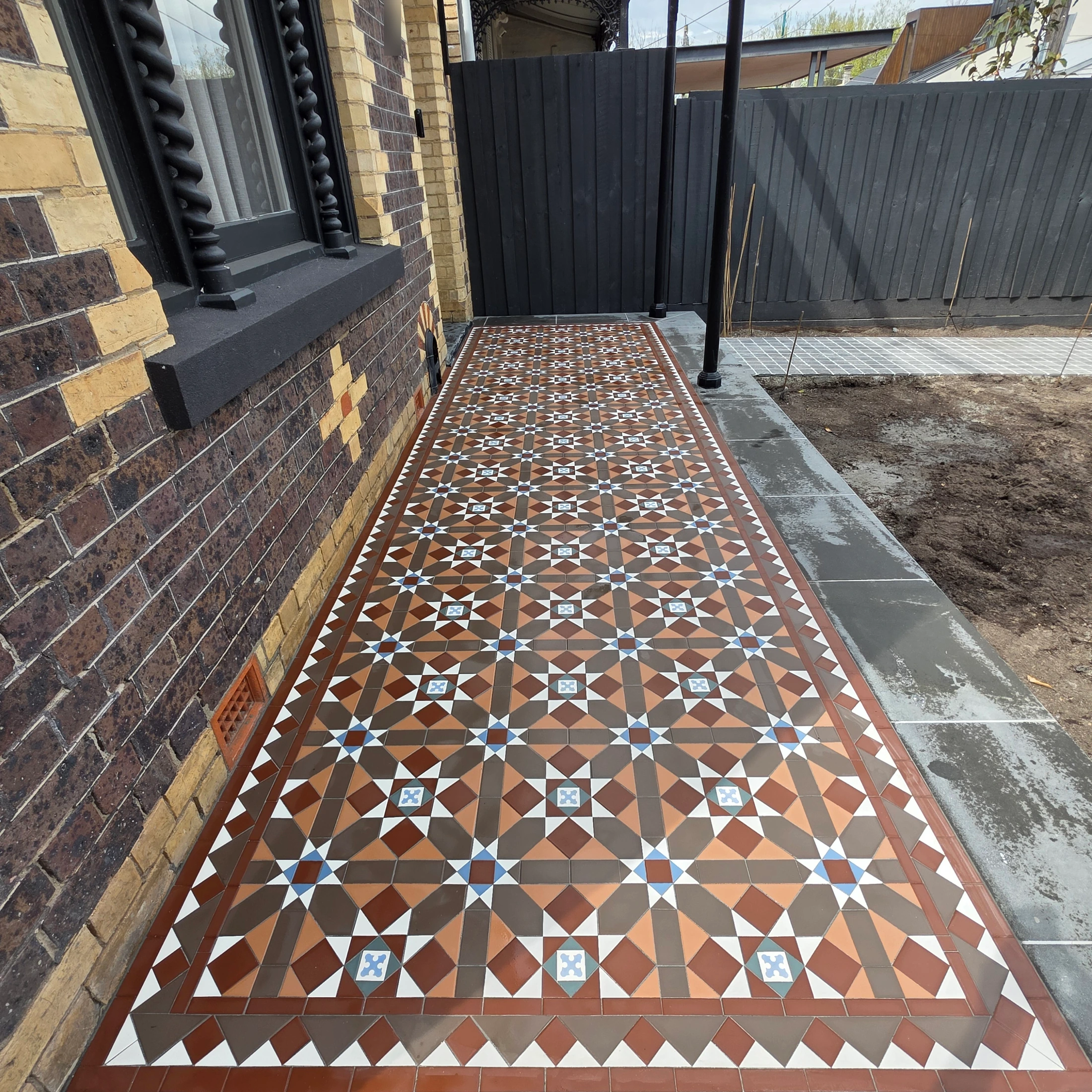
A village setting with a layered local character
Templestowe grew as a village on the route to the Warrandyte gold fields during the 1850s. Manningham's local history also records orchards outside the village into the twentieth century. That layered history can inform a restrained approach to pattern, scale and edging without assuming that every Templestowe home is heritage-listed or belongs to one architectural period.
The Manningham Heritage Study Review records a Templestowe Township precinct and a range of local places, while the former Templestowe Primary School is a documented nineteenth-century building. When an existing property has older tilework or other significant fabric, the starting point is an inspection of what survives and how it relates to the building, garden and approach.
For a new verandah or pathway, a design consultation can consider the home's proportions, sightlines from the street, adjacent paving and the transition between indoor and outdoor surfaces. The aim is a coherent result, not an invented claim about the property's history.
Discover our area, history and demographics — Manningham Council
Plan for slope, movement and existing landscape
The Templestowe Village structure plan describes challenging topography and an established streetscape theme that includes feature brick paving and important street trees. Manningham planning policy similarly highlights aspect, topography, soils, waterways, vegetation and view lines as matters for site-responsive design.
Those considerations are practical when planning a tiled entry, terrace, verandah or pathway. Levels, drainage, thresholds, edges and the relationship with trees should be reviewed before a pattern is finalised. Where a site changes level, the layout and transitions need to be resolved with the existing access and surrounding surfaces rather than treated as a flat graphic.
Stone bullnose or other edging coordination may help define exposed edges and transitions, subject to the site's dimensions and the selected materials. Installation details remain property-specific and should follow an assessment of the existing substrate and conditions.
Restoring older tilework with care
If a Templestowe property retains original or early tessellated tiles, restoration can begin with documenting the pattern, colours, borders, damaged areas and transitions. Matching decisions should distinguish sound original fabric from later repairs, and any replacement should be selected for a compatible appearance and appropriate use rather than assuming an exact match is available.
A heritage listing or precinct context does not by itself mean that every tiling change needs the same treatment. Property-specific controls and the proposed scope should be checked with the relevant authority or heritage adviser where applicable. AHTC can provide design, supply, installation and restoration guidance, but does not provide heritage approvals or represent council endorsement.
Local tessellated tile services
For Templestowe projects, the useful first step is to discuss the space, the property's existing character and the intended use. The service can then be shaped around design consultation, tessellated tile supply, installation, restoration or stone bullnose and edging coordination as appropriate.
Share photographs and dimensions through the existing enquiry process if helpful. A considered brief can cover the pattern direction, border treatment, junctions with steps or other paving, and whether existing tiles should be retained, repaired or replaced.
Your Heritage Tiling Questions
Can tessellated tiles suit a Templestowe verandah or pathway?
Yes, provided the layout is designed for the actual space. Verandahs and pathways benefit from checking proportions, borders, thresholds, falls and transitions before selecting a pattern. Templestowe's varied sites and established streetscapes make a property-led design review more useful than a generic pattern choice.
Does a Templestowe heritage place automatically require heritage approval for tiling work?
Not automatically. Heritage controls depend on the particular property, precinct and proposed work. Check the relevant planning or heritage controls before altering significant fabric, especially where an older building or documented heritage place is involved. The former Templestowe Primary School, for example, is listed in the Manningham Planning Scheme heritage schedule.
How should older tessellated tiles in a Templestowe property be assessed?
Begin by recording the existing pattern, borders, colours, condition and areas that appear to be later work. The next decision is whether to retain, repair, carefully match or replace sections, taking account of the building and its surrounding surfaces. A site assessment is preferable to assuming that all visible tiles are original or that every damaged area should be removed.
What site issues matter for tiled work on a sloping Templestowe site?
Levels, drainage, access, tree relationships, edges and transitions should be considered before installation. Manningham policy identifies aspect, topography, soils, waterways, vegetation and view lines as relevant site conditions, and the Templestowe Village plan records challenging topography in the village precinct.
Discuss Your Heritage Tiling Project
Share your location, project details and photographs using our enquiry form, or call 0433 932 711.