
Tessellated Tiles in Seddon
Seddon's inner-suburban streets include low-scale homes, narrow lots and a documented neighbourhood-character and heritage context. For a verandah, pathway or interior floor, the right tessellated layout depends on the property's proportions, surviving fabric and the way new work meets the building. We can help with design consultation, tessellated tile supply, installation, restoration and stone bullnose or edging coordination.
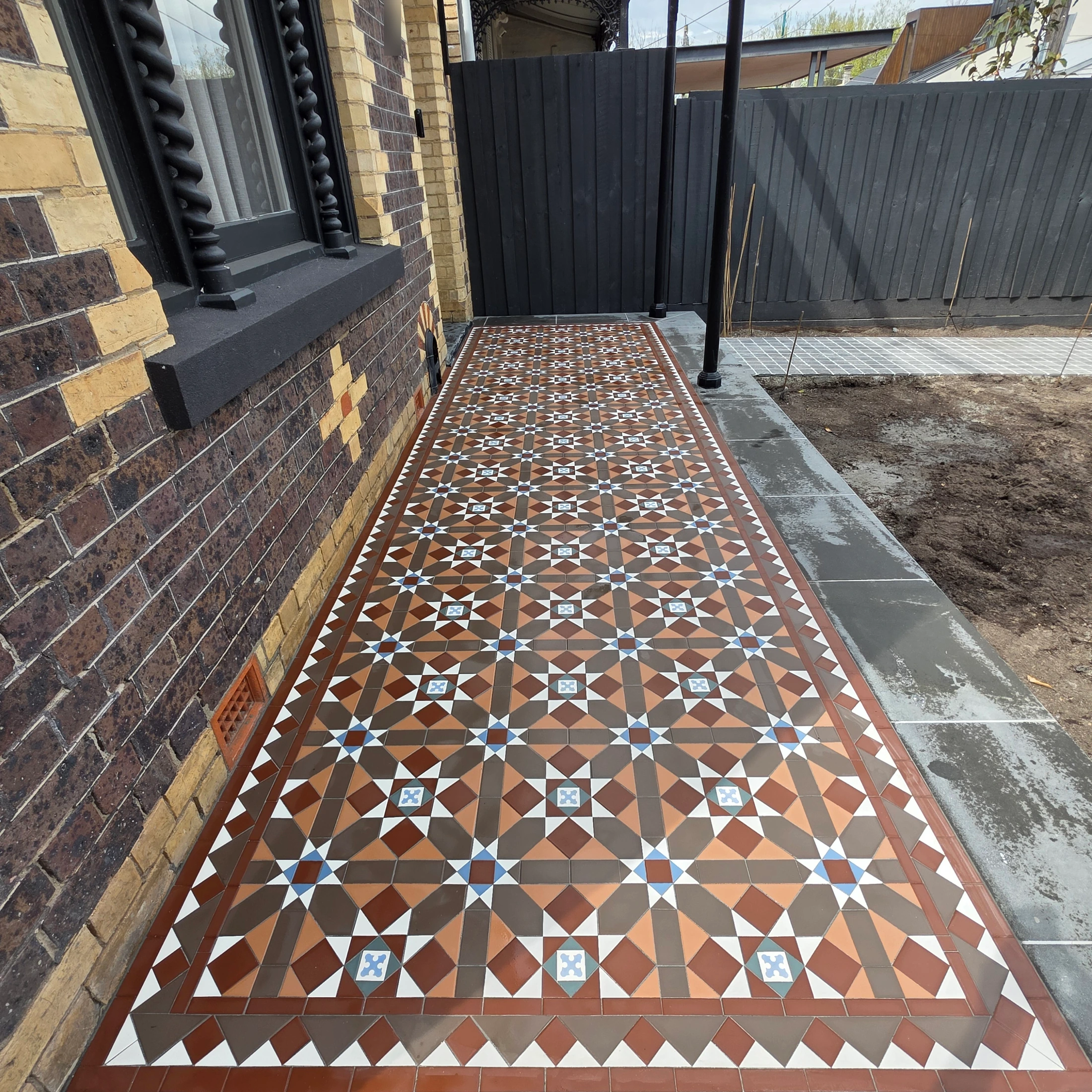
Designing for Seddon's low-scale streetscapes
The Seddon Neighbourhood Character Precinct is described in the planning scheme as architecturally diverse but predominantly low-scale, with timber dwellings, narrow lots, minimal setbacks, pitched roofs and articulated facades. The same guidance highlights front gardens, low front fences and the relationship between new work and older building stock. For a tiled verandah or path, those proportions can be useful design cues: a border, threshold or step should support the frontage rather than overwhelm it.
Maribyrnong heritage material also records Victorian and Edwardian-era housing characteristics in the local context, including front verandahs, narrow frontages and characteristic hip-and-gable villa roof forms. That does not make every Seddon property a heritage place. It does suggest beginning with the actual building, its visible edges and any surviving tile or masonry details before selecting a pattern or replacement approach.
Where a property sits within a heritage overlay or neighbourhood-character control, the relevant planning status should be checked for that site. Tiling design and installation advice can help develop a compatible proposal, but it is not heritage or planning approval.
Plan patterns, thresholds and narrow-site transitions
On a narrow Seddon frontage, the relationship between the field pattern, border width and door or gate threshold can be more important than choosing a pattern from a catalogue. Measure the footprint, steps, posts, drainage points and any existing edge before finalising the layout. A restrained border can help a small verandah read clearly without making the entrance feel crowded.
If older tiles remain, first separate sound areas from loose, cracked or missing sections. Restoration may involve selective repair and matching supply, while a new installation may need a carefully considered transition at the door, path or step. The appropriate sequence depends on the existing surface and site conditions rather than a universal substrate recipe.
Seddon's planning guidance asks new work to respect older building scale and forms while allowing contemporary responses that remain distinguishable from the old. A new tiled element can therefore be designed to sit comfortably with the dwelling without pretending to be original fabric.
Local tessellated tile services
A Seddon project can start with design consultation for a new geometric floor, a review of an existing verandah or pathway, or an assessment of damaged and missing tiles. The service scope can include tessellated tile supply, installation, restoration and coordination of stone bullnose or edging details, shaped around the property and the brief.
Photographs of the existing surface, approximate dimensions, edge details and access conditions are useful when discussing the next step. If the property is affected by a planning or heritage control, confirm the current requirements with the relevant authority before work begins; the local tiling conversation should complement that check.
Your Heritage Tiling Questions
Are all Seddon homes heritage-listed?
No. Maribyrnong's planning material distinguishes heritage-overlay precinct context from individually significant and Victorian Heritage Register places, and properties within a precinct do not all have identical significance. Check the current status of the specific property rather than inferring it from the suburb or the age of the dwelling.
Can tessellated tiles suit a Seddon Victorian or Edwardian home?
They can, when the layout responds to the building's frontage, verandah proportions, thresholds and surviving details. Seddon-specific heritage material records narrow frontages, front verandahs and characteristic Victorian and Edwardian housing forms, which are useful starting points for a property-led design discussion.
Should older Seddon tiles be restored or replaced?
That depends on the condition and extent of the existing work, whether tiles can be matched and how the surface meets adjoining areas. An assessment can separate sound fabric from failed sections and consider selective repair, matching supply or a new design that transitions appropriately.
Do Seddon's neighbourhood-character rules decide my tile pattern?
They do not prescribe a particular tessellated pattern. They provide broader guidance about building scale, roof form, setbacks, front gardens, fences and the relationship of new work to older buildings. Confirm the controls applying to the individual property, then use those constraints to inform the tile layout and edge treatment.
Discuss Your Heritage Tiling Project
Share your location, project details and photographs using our enquiry form, or call 0433 932 711.