
Tessellated tiles in Clovelly Park
Clovelly Park sits within the City of Marion and metropolitan Adelaide's Eastern Marion area. Its post-war suburban growth sits alongside individual historic places recorded in the Marion Heritage Survey, so tile decisions are best made from the particular property's age, layout and surviving fabric rather than from a suburb-wide assumption. AHTC can help with design consultation, tessellated tile supply, installation, restoration and stone bullnose or edging coordination.
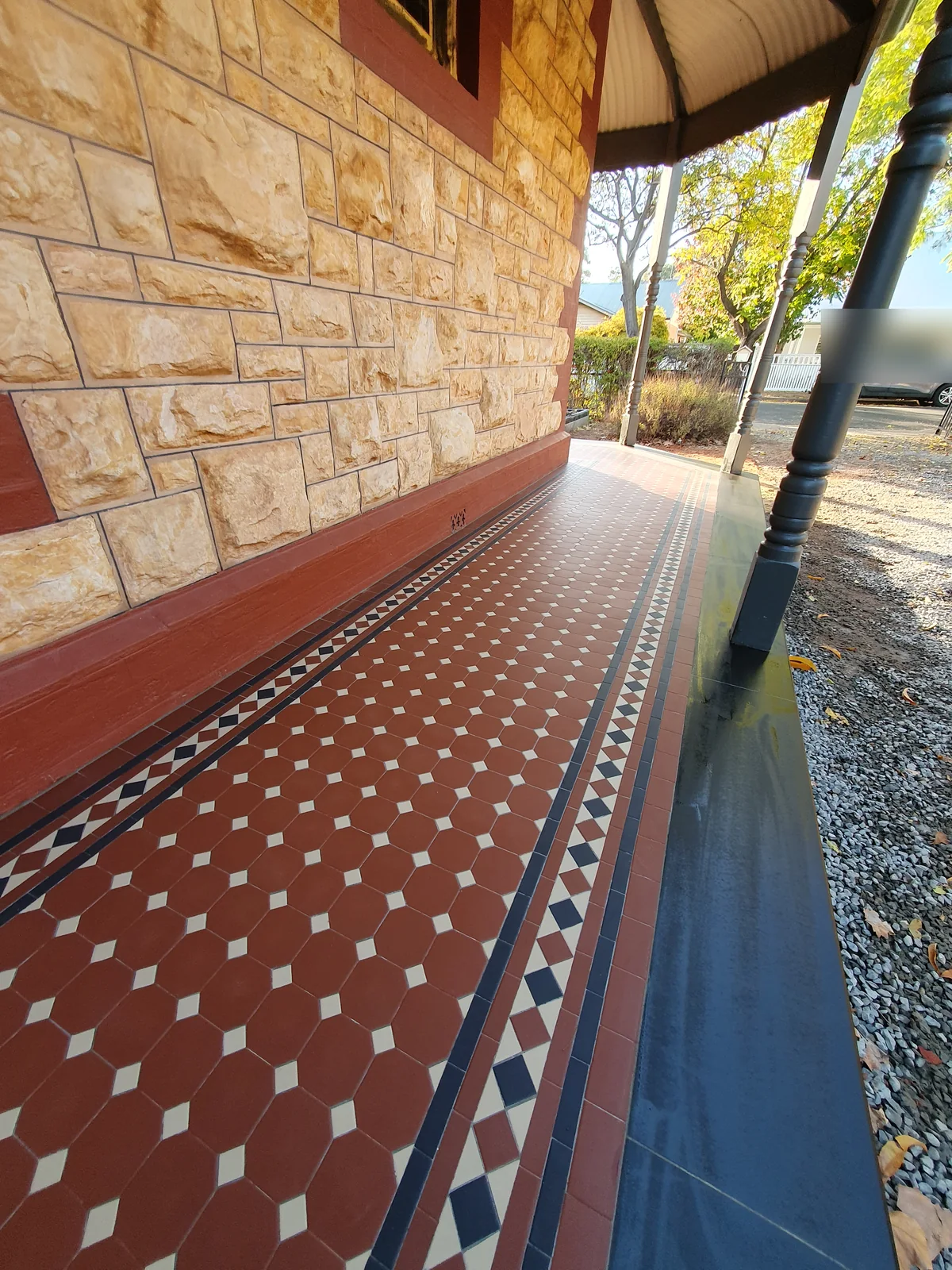
A local setting shaped by post-war growth
The City of Marion's local history describes Clovelly Park as one of the new suburbs that developed after the First World War, when roads were being bitumised and drainage improved. Later post-war housing and industry changed the district again. For a tile project, that history is a useful prompt to inspect the actual building rather than assume that every property shares one period style.
The same local history records major industrial change in Clovelly Park, including the establishment of a large car assembly plant in 1955. That broader suburban story can sit beside, but should not be confused with, the separate heritage value of an individual home or surviving feature.
Plan the pattern around the property
For an older Clovelly Park home, begin by documenting the entry, verandah, path or floor area that will receive the tiles. Check existing edges, thresholds, steps, falls and drainage before selecting a pattern. A restrained border, a carefully scaled field and compatible transitions can make new work sit comfortably with an existing facade without pretending that a modern addition is original fabric.
Where older tiles remain, retain a representative sample and record the layout before lifting anything. Matching colour, format and geometry is only part of the decision; the condition of the substrate, movement at thresholds and exposure to weather also affect whether selective repair, careful restoration or new installation is the more suitable path.
Use heritage evidence carefully
The Marion Heritage Survey records particular historic places in Clovelly Park, including an early Federation dwelling and a vineyard. Those records support a property-specific heritage conversation, not a claim that every property in the suburb is listed or that ordinary tile work automatically needs heritage approval. If a property is identified in a register or local planning control, confirm the current requirements with the relevant authority before work begins.
AHTC's design consultation can help compare a new layout with surviving fabric, and the installation or restoration scope can then be planned around the property's access, levels, edges and intended use.
Tessellated tile services for Clovelly Park properties
The existing local service route can be used to discuss tessellated tile design, supply, installation and restoration for entries, verandahs, pathways and selected interior floors. Stone bullnose or edging coordination can also be considered where the design needs a durable, resolved transition.
A useful first brief includes photographs, approximate dimensions, the property's suburb, access constraints and any known history of the existing tiles. The final recommendation should follow an inspection and the condition of the specific area, rather than a universal installation recipe.
Your Heritage Tiling Questions
Does living in Clovelly Park mean my property is heritage listed?
No. The Marion Heritage Survey identifies particular places and their individual significance; it does not establish blanket heritage listing for every Clovelly Park property. Check the property-specific register and planning position before making a heritage-related assumption.
Can existing tessellated tiles in a Clovelly Park home be restored?
Often the first step is to document the existing pattern, retain samples and assess the condition of the tiles, edges and substrate. That assessment helps distinguish selective restoration from a new layout, particularly where thresholds, movement or weather exposure are involved.
Are tessellated tiles suitable for a Clovelly Park verandah or pathway?
They can be considered for verandahs and pathways when the layout, falls, drainage, access and edge details are planned for the particular site. A consultation can compare pattern scale and transitions with the property's facade and existing surfaces.
What should I provide when asking about a Clovelly Park tile project?
Share clear photographs, approximate measurements, the intended area and any details about existing tiles or previous repairs. Notes about steps, thresholds, access and exposure are also useful when considering supply, installation or restoration.
Discuss Your Heritage Tiling Project
Share your location, project details and photographs using our enquiry form, or call 0433 932 711.