
Tessellated Tiles in Edwardstown
Edwardstown sits in Adelaide's inner southwest within the City of Marion. Its documented story moves from rural and dairy land through subdivision to a major industrial and business precinct, so local properties can present very different design conditions. For a period home, verandah, pathway or newer property, tessellated tile decisions are best made from the building's proportions, existing surfaces, access and intended use rather than from a suburb label alone.
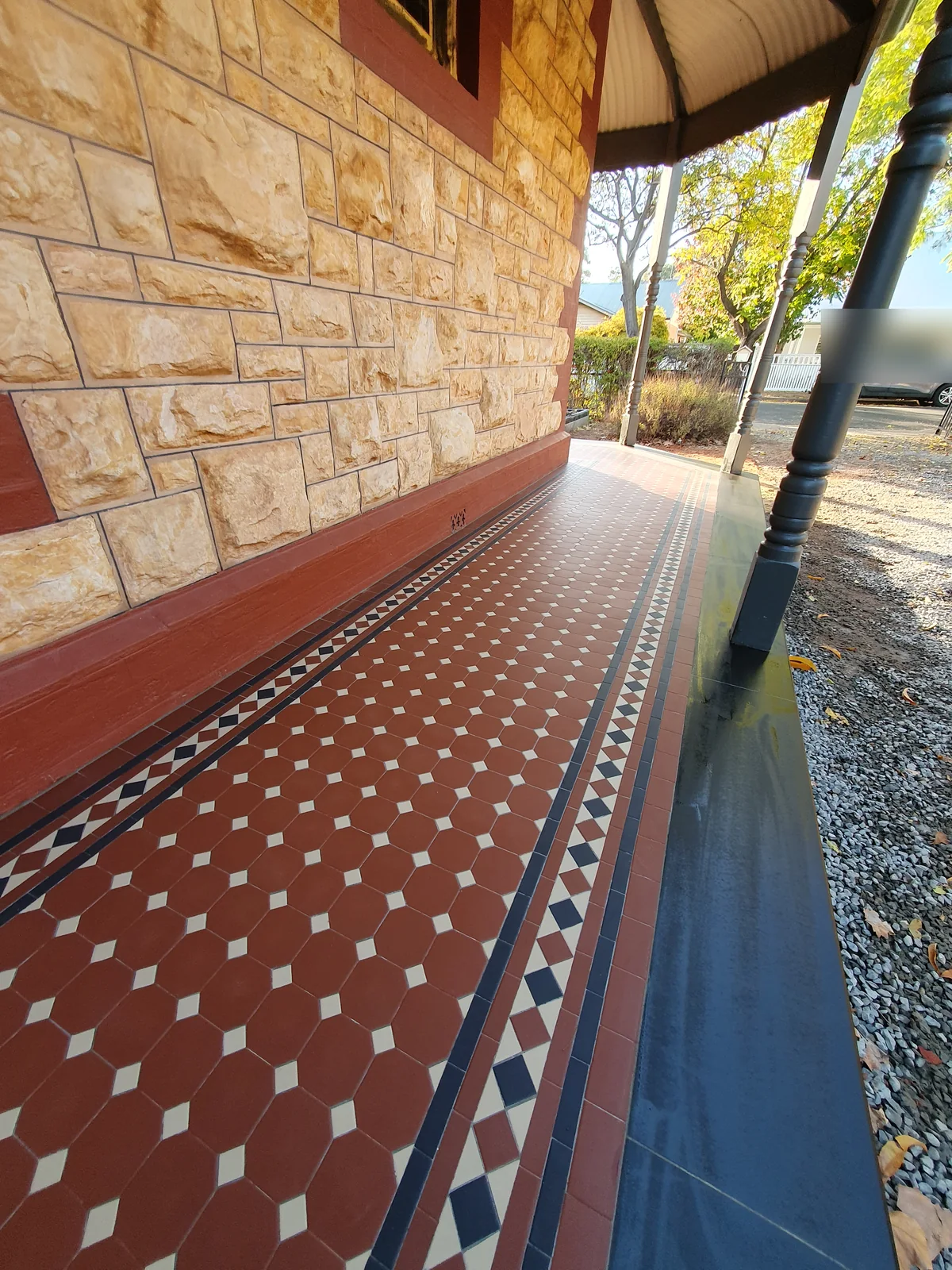
A varied Edwardstown setting
Edwardstown's local precinct history records rural and dairy activity in the early twentieth century, increasing subdivision by the middle of the century, and a strong industrial and business role by 1970. The surrounding setting now combines established housing with employment, retail and mixed-use activity. That range matters when planning a tiled entry, verandah, pathway or interior floor: the right response may be a quiet continuation of an older building or a clearly contemporary composition that sits comfortably beside it.
The Marion Heritage Survey records individual Edwardstown cottages, villas, a hotel, a dwelling and shop, and the former Hamilton's Winery. These records point to a layered local history, not a single standard house type. They are useful prompts for careful observation, but they do not mean every nearby property is heritage-listed or that a particular pattern should be imposed without checking the building itself.
Where a property appears to have older fabric, compare surviving thresholds, steps, verandah lines, skirtings and adjacent finishes before selecting new tiles. A measured layout can respect established proportions while allowing new work to remain legible. For a newer or substantially altered property, colour, border scale, slip considerations and transitions can be designed around current use instead of imitating an unverified period.
Design, supply and restoration decisions
For Edwardstown verandahs and paths, start with the route from street to door, the width of the space, drainage exposure and the relationship between borders and field tiles. A restrained border can help a narrow path read clearly, while a broader verandah may support a more developed geometric layout. The final arrangement should follow a measured plan and the property's actual thresholds rather than a generic pattern catalogue.
When existing tessellated tiles remain, assessment should separate sound original material from later repairs, movement, staining or failed edges. Matching is often influenced by dimensions, colour variation, wear and the way the pattern turns at corners. Restoration can therefore involve selective repair and careful transitions, while replacement may be more appropriate where the substrate or surviving layout cannot be retained. The property and the condition of the floor determine the response.
A project can include design consultation, tessellated tile supply, installation, restoration and coordination of stone bullnose or edging where those elements suit the brief. Access and sequencing are particularly worth discussing in a locality with established housing alongside active employment and transport corridors.
Check the property, not just the suburb
The South Australian Heritage Places Database distinguishes Local and State Heritage Places and Areas. If an Edwardstown property appears in a heritage record, or if proposed work affects significant fabric, confirm the current property-specific requirements with the relevant authority before work is finalised. Heritage listing does not give a tiling contractor authority to approve development, and an unlisted property may still require careful design for its existing character.
A useful brief can include photographs of the existing floor and edges, approximate dimensions, the intended use, access constraints and any known property documentation. Those details allow tile selection and layout discussions to stay grounded in what is actually present at the site.
Your Heritage Tiling Questions
Does every Edwardstown home have heritage protection?
No. The Marion Heritage Survey records particular places and the South Australian heritage system distinguishes individual Local and State Heritage Places and Areas. Heritage status should be checked for the specific property rather than inferred from its Edwardstown address or age.
Can tessellated tiles suit a newer Edwardstown property?
Yes. A newer or substantially altered property can use tessellated tiles through a contemporary layout, proportion and colour selection. The design should respond to the building, access and intended use rather than assume that a historic imitation is appropriate.
What should I document before asking about restoration?
Photograph the full pattern and close details of edges, thresholds, corners, damaged areas and adjoining surfaces. Note approximate dimensions, access and how the area is used. This helps distinguish a repair or matching question from a full replacement or new installation brief.
Are verandah and pathway layouts the same as indoor floor layouts?
Not necessarily. Outdoor routes need decisions about exposure, drainage, transitions and movement through the space, while an indoor floor may be read mainly through room proportions and adjoining finishes. A measured site plan should guide the border, field and edging arrangement in each case.
Can a heritage check be completed from the suburb name alone?
No. The South Australian heritage information is organised around particular places, objects and areas. Provide the property details to the relevant authority for a current check before relying on a heritage assumption in the design or construction plan.
Discuss Your Heritage Tiling Project
Share your location, project details and photographs using our enquiry form, or call 0433 932 711.