
Tessellated tiles in Sturt, SA
For a Sturt property, a tessellated tile scheme works best when it responds to the house, the approach and the existing ground conditions rather than imposing a pattern by postcode. Sturt sits within the City of Marion's broader river, horticultural and post-war suburban story, so a thoughtful project may need to balance established character with later additions. AHTC can help with design consultation, tessellated tile supply, installation, restoration and stone bullnose or edging coordination.
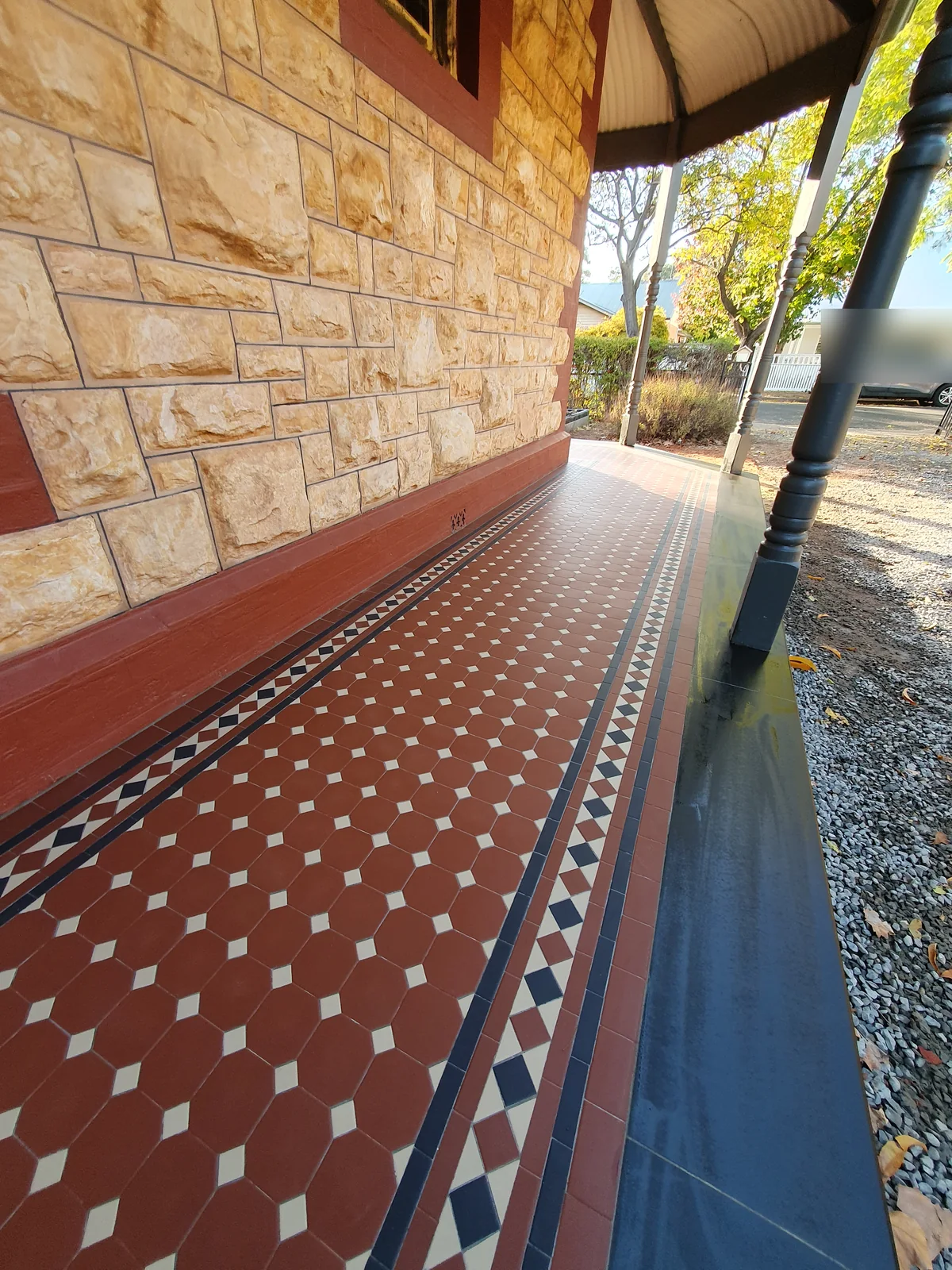
A local setting shaped by the Sturt River and suburban change
The City of Marion describes Warripari, the Sturt River, as an important route for Kaurna people and records how river water and fertile alluvial soils supported early settlement and agriculture. Later accounts describe vineyards, market gardens and local industries before rapid post-war housing growth changed the landscape. For a Sturt home, that history is a useful design prompt rather than a claim that every property has the same period character.
When planning a new verandah, entry path or courtyard, consider how the tiled work meets the building's current proportions, garden edges and drainage lines. On an older-looking property, restrained borders and a pattern scaled to the frontage can sit more comfortably than a dense motif applied without regard to the existing architecture. On a substantially altered home, a clear contemporary layout may be more honest while still using tessellated geometry.
The council and local historical society material also show why heritage language should be used carefully in Sturt. Individual properties can have different histories and listing outcomes. A property-specific review can help distinguish original fabric from later work before a restoration or replacement decision is made.
Design decisions for Sturt verandahs, paths and entries
Start by recording the areas that must be connected: front steps, verandah, side path, garden threshold or an internal-to-external transition. The available width, sightlines and door swings will influence whether a simple field, a framed border or a more directional arrangement is practical.
Where existing tiles remain, matching should look beyond colour. Module size, border rhythm, wear, surface condition and the way the pattern turns at corners all affect the result. Selective restoration may preserve more character than replacing an entire surface, while a new installation can be designed around the proportions of an extension or rebuilt approach.
Sturt's broader history of changing land uses is a reminder to treat each site as it is now. Confirm levels, falls, thresholds and the relationship between paving and finished floor levels before fixing a layout. AHTC can coordinate tessellated tile supply and installation, restoration work and stone bullnose or edging choices around the reviewed design.
Check the property before describing work as heritage restoration
A local address may sit within a historically interesting suburb without being individually heritage listed. The Sturt example recorded by the Marion Historical Society shows why the status, age and surviving fabric of one property should be checked on their own terms. If a project involves original tiles, an early verandah or a significant entry sequence, document what survives and seek the relevant planning or heritage advice before removing it.
That check does not prevent practical work. It helps clarify whether the brief is to retain and repair, reproduce a visual language in new work, or create a contemporary surface that sits comfortably beside an older building. The design consultation can then focus on a clear, property-led scope.
Your Heritage Tiling Questions
Can tessellated tiles suit a newer or substantially altered Sturt home?
Yes. The layout should be designed around the current building and approach rather than assuming a period style. A quieter border, a limited palette or a clearly contemporary geometric arrangement can make the relationship intentional.
Should I repair existing tiles or replace them?
Begin with a condition and layout review. Sound original areas may be worth retaining, while isolated failures or later additions may call for selective repair or a new adjoining scheme. Matching module size, pattern, wear and transitions is usually more useful than comparing colour alone.
Does living in Sturt mean my property is heritage listed?
No. Suburb location does not establish an individual property's heritage status. Check the relevant property and planning records, and obtain property-specific advice where original fabric or a significant older structure may be involved.
What should be reviewed before tiling a Sturt verandah or path?
Review the existing surface, levels, thresholds, drainage, access and the way the pattern will meet steps, walls and garden edges. These practical details help determine whether a framed layout, a directional path or a simpler field will perform and look coherent.
Discuss Your Heritage Tiling Project
Share your location, project details and photographs using our enquiry form, or call 0433 932 711.