
Tessellated Tiles in Croydon
Croydon's early farming roots, railway-led growth and established residential and commercial character create a varied setting for tiled thresholds, verandahs, paths and interior floors. Authentic Heritage Tiling Co can help you consider tessellated tile design, supply, installation, restoration and stone bullnose or edging coordination for your property. Start with the building, the surface and the way the space is used, rather than assuming a period pattern or installation method.
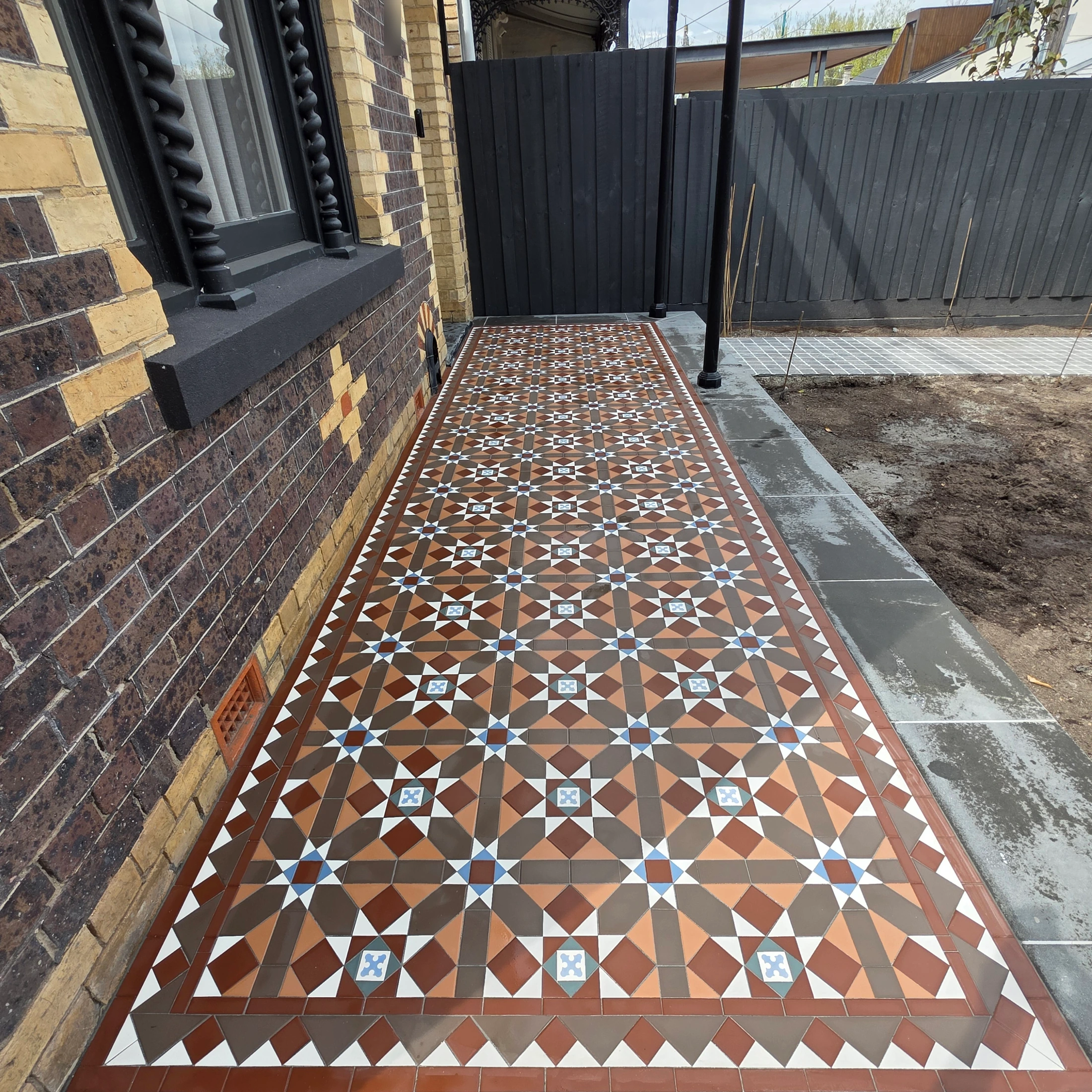
A Croydon setting shaped by growth and movement
Maroondah Council's history of Croydon describes a place that grew from White Flats into a residential and commercial centre. The council's heritage study also links the locality's development to transport and the railway, followed by subdivision and post-war suburban change. That layered history is useful context when a new tiled surface needs to sit comfortably beside an older home, a renewed frontage or a practical contemporary addition.
For a Croydon project, look at the proportions of the entry, verandah or path, the relationship between indoor and outdoor levels, and the colours already present in the building. A restrained border, a measured field or a carefully matched repair may be more appropriate than treating every property as if it came from one uniform period. Design consultation can help test those choices before supply or installation is arranged.
Heritage-sensitive tile decisions in Croydon
Croydon includes recorded heritage places, including the Croydon Roundabout and War Memorial, and Maroondah Council manages local heritage significance through Heritage Overlays. A heritage reference in the neighbourhood does not by itself mean a private home is protected. Before altering an older frontage, verandah or pathway, check the property's planning controls and ask the responsible authority whether the proposed work needs approval.
Where existing tiles survive, document their layout, edges and condition before lifting or covering anything. Restoration may involve a different decision from new installation: retaining sound original material, matching an incomplete pattern, or making a clearly legible new section can each be appropriate depending on the evidence and the property's requirements. AHTC can provide design and restoration guidance, but does not provide heritage authority approval.
Plan the surface around the property
An entry or verandah in Croydon needs more than a pattern decision. Consider how rain reaches the threshold, how the surface meets adjoining finishes, where steps or doors land, and how the proposed border will read from the street. For a pathway, circulation width and transitions matter as much as the central motif. For an indoor floor, the room's sightlines and existing joinery can guide scale and contrast.
The practical sequence should be based on the site and the condition of the existing surface. Discuss the intended use, access, levels and any surviving fabric during design consultation, then coordinate tile supply, installation and stone bullnose or edging details as required. This keeps the design coherent without turning one property's construction solution into a universal recipe.
Tessellated tile services for Croydon properties
Services can be considered individually or as a coordinated project: pattern and layout design, tessellated tile supply, installation, restoration and stone bullnose or edging coordination. The right balance depends on whether the project is a new verandah or path, a replacement surface, or an attempt to retain and repair existing work.
Share clear photographs and dimensions when requesting an initial discussion, including the surrounding finishes and any areas where original tiles remain. That helps frame the design and condition questions before a site-specific recommendation is made.
Your Heritage Tiling Questions
Does every older Croydon property need heritage approval for tessellated tiles?
No. Maroondah Council explains that Heritage Overlays apply to particular places or precincts, and permit requirements depend on the property's controls and the proposed work. Check the planning controls for the property and seek council advice where needed before changing an older frontage, verandah or path.
Can existing tessellated tiles in Croydon be restored rather than replaced?
Often the first question is what remains sound and whether the pattern, edges and substrate can be documented. Restoration, selective repair, careful matching or a new adjoining section may each be suitable; the decision should follow an inspection of the existing surface and the property's design requirements.
Are Croydon homes all suited to the same heritage tile pattern?
No. Croydon's documented growth includes farming, railway and transport development, subdivision and post-war suburban change. Use the individual building, its proportions and surviving finishes to guide the pattern and border rather than assuming one suburb-wide style.
What should be considered for a Croydon tessellated-tile pathway?
Consider the path's width and direction, the entry threshold, drainage and exposure, step and edge transitions, and how the border relates to the building. A design consultation can bring those site conditions together before supply and installation are coordinated.
Discuss Your Heritage Tiling Project
Share your location, project details and photographs using our enquiry form, or call 0433 932 711.