
Tessellated tiles in Heathmont
Heathmont combines a post-war suburban landscape with older local stories of orchards, railway travel and community places. Tessellated tiles can suit a carefully considered verandah, entry, path or interior floor, whether the brief is a new pattern for a later home or a sensitive response to surviving fabric. Authentic Heritage Tiling Co. can help with design consultation, tessellated tile supply, installation, restoration and stone bullnose or edging coordination for projects in Heathmont.
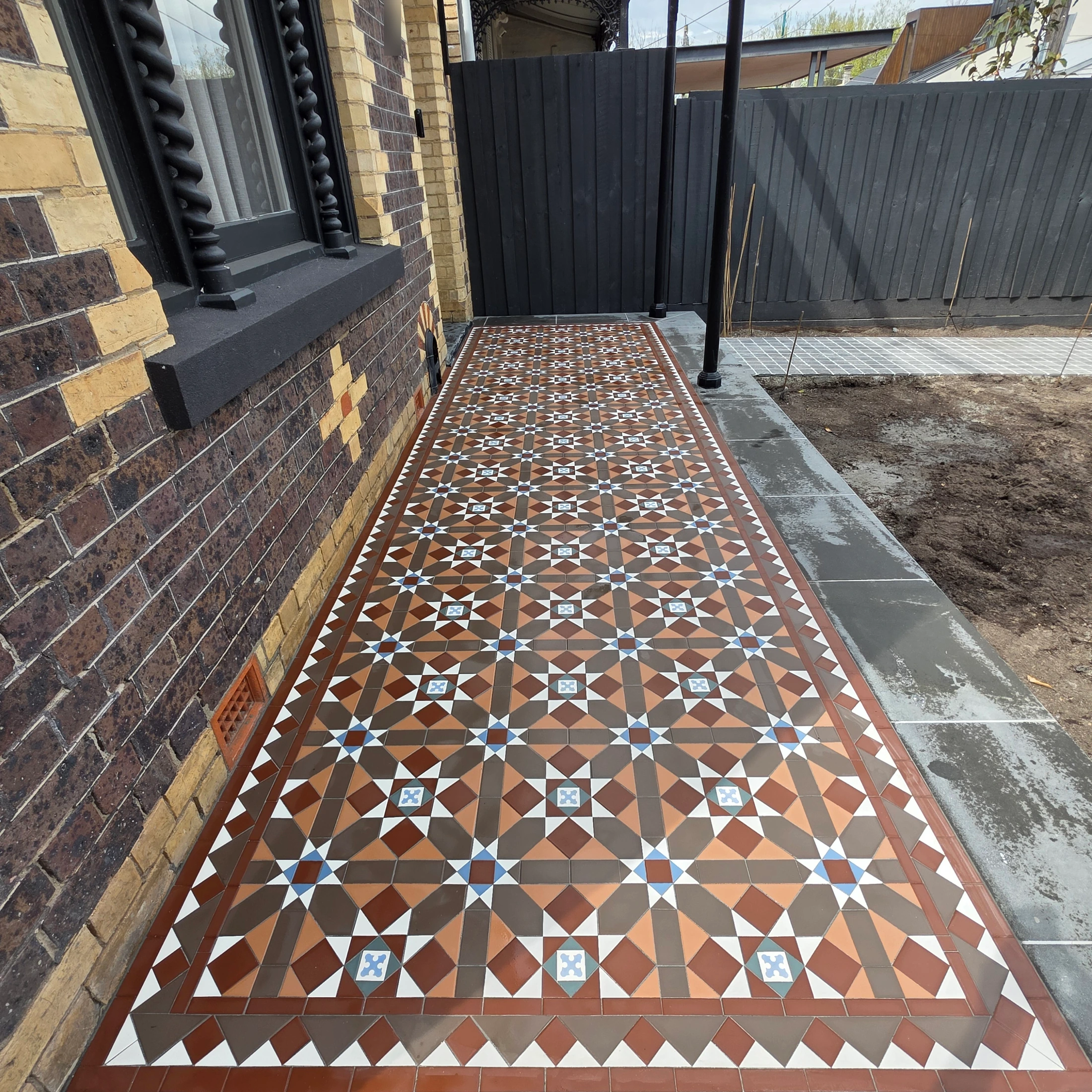
A Heathmont setting with more than one architectural story
Heathmont's local story reaches from orchard-era land use to the 1926 railway station and the later growth of a suburban community. Maroondah's heritage material identifies Heathmont among the municipality's areas shaped strongly by post-World War II development, so a tile brief should respond to the individual property rather than assume one universal period style.
The Canterbury Road activity centre is described in the local structure plan as three village nodes around a railway precinct, with reserves and a residential hinterland. That mix makes thresholds, paths and verandahs important parts of a property's relationship with the street and garden. A design consultation can consider the home's proportions, existing finishes, sightlines and the way a tiled edge meets paving, steps or planting.
Designing or restoring a tiled floor in Heathmont
For a new installation, pattern scale, border treatment, colour balance and movement through the entry or verandah should be considered together. Heathmont's mix of compact activity-centre housing, established gardens and post-war homes may call for a restrained geometric layout, a more decorative threshold or a practical pathway scheme, depending on the building and its setting.
Where tiles already survive, the first question is what can be retained. Condition, previous repairs, loose or missing pieces, damp exposure and the transition to adjacent surfaces all affect the appropriate restoration approach. Matching should be based on the existing pattern and available evidence, not on a generic period label.
Check the property context before work begins
Maroondah Council explains that heritage protection can apply to an individual place or to a group of contributory properties through a Heritage Overlay. That does not mean every Heathmont home is heritage listed, and the relevant control must be checked for the particular property before work is planned.
If the address is affected by a Heritage Overlay or another planning control, retain the existing fabric where practical and confirm the applicable requirements with the responsible authority. A tile consultation can help document the design and condition questions, but it is not a substitute for planning or heritage advice.
Tessellated tile services for Heathmont properties
The project can begin with a discussion of the property, the intended use and the condition of any existing tiles. Services include design consultation, tessellated tile supply, installation and restoration, with stone bullnose or edging coordination where the detail requires it.
For a verandah or pathway, the layout should be reviewed with the thresholds, steps, exposure and drainage conditions in mind. For an interior floor, the pattern should be considered alongside room proportions, adjoining finishes and the character the owner wants to preserve or create.
Your Heritage Tiling Questions
Can tessellated tiles suit a post-war Heathmont home?
Yes, when the design is chosen for the actual building rather than applied as a presumed historic style. A measured pattern, border and colour palette can work with a post-war home, while the entry, verandah, path and adjoining finishes determine the most convincing scale and transition.
How do I know whether a Heathmont property has heritage controls?
Check the applicable Maroondah Planning Scheme for the particular property. Council explains that Heritage Overlays can apply to an individual place or to a contributory group, so the suburb name alone does not establish whether a permit or other approval is needed.
Can existing tessellated tiles be restored instead of replaced?
Often that is the first question to investigate. The condition of the existing tiles, missing areas, earlier repairs, moisture exposure and the joins to surrounding surfaces should be assessed before deciding whether selective restoration, matching or replacement is appropriate.
What should be considered for a Heathmont tiled pathway or verandah?
Consider the route from the street to the home, pattern scale, border and edge details, steps and thresholds, exposure, drainage and how the tiled surface meets paving or garden areas. The local setting around Heathmont's activity centre, reserves and established residential streets makes the relationship between the tilework and its edges especially important.
Discuss Your Heritage Tiling Project
Share your location, project details and photographs using our enquiry form, or call 0433 932 711.